
By: Chloe Matthews
From weddings to disaster response to working farms, portable sanitation equipment is being asked to do far more than it used to.
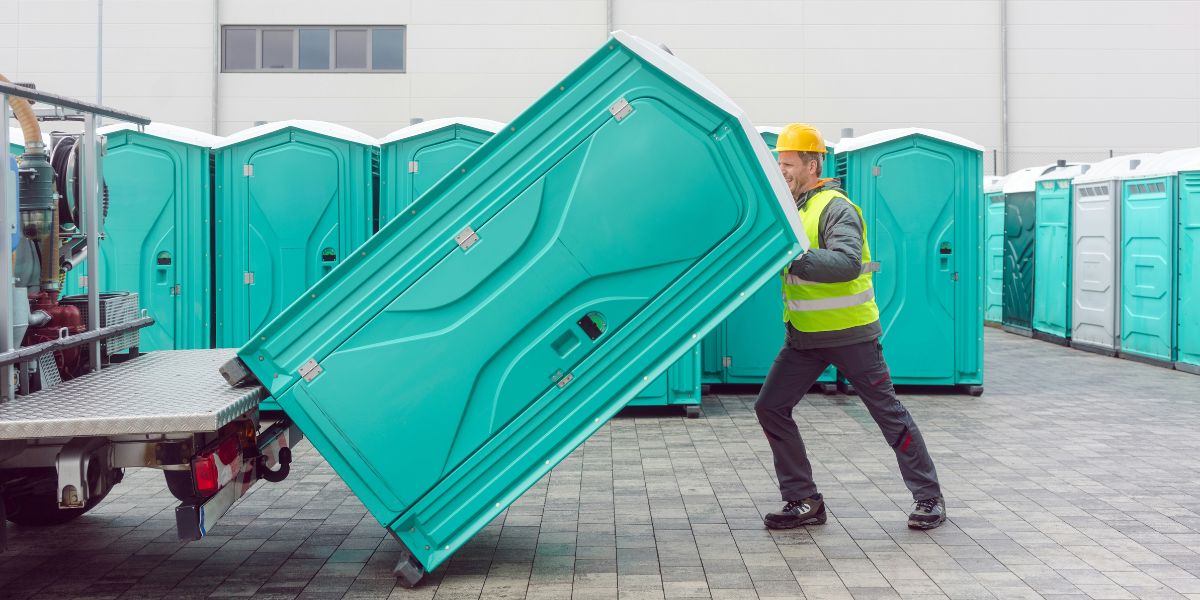
For most of its history, the portable restroom did one job: keep a construction crew running when there was no plumbing on site. That is no longer the whole story. Across the country, the same basic technology- a sealed tank, a vented shell, a door that locks- has been adapted into equipment for weddings, municipal parks, working farms, schools, and disaster response operations, each with its own set of requirements that look nothing like a job site.
Construction still drives the largest share of demand, and the reasons are unglamorous but consistent. Crews need units that can be moved between phases of work, hold up to heavy daily traffic, and be serviced without disrupting a site. Sink attachments have become more common as contractors face closer scrutiny on hygiene standards, and Americans with Disabilities Act access is now a routine part of site planning rather than an afterthought.
Outdoor events have pulled the category in a different direction entirely. Wedding planners and venue operators are increasingly expected to provide restroom trailers that look and feel like an extension of the reception rather than a utility. Multi-station trailers with finished interiors, running water and climate control have become standard requests for weddings in the 50 to 150 guest range, and larger festival deployments now plan restroom count the same way they plan parking or security.
Parks departments and municipalities face a different problem. Public use is heavy but predictable, spread across trailheads, athletic fields and seasonal programming, with accessibility law shaping much of the equipment specification. A unit built for a fall festival still has to hold up through a summer of daily foot traffic from families, sports leagues and tourists, which pushes buyers toward more durable, ADA-aware configurations than a short-term rental would typically require.
Community organizations add another layer to the picture. Schools, churches and civic groups running outdoor services, fundraisers and seasonal camps tend to need short bursts of coverage rather than a standing fleet, usually a handful of ADA-aware units with handwashing placed close to the activity itself. The planning looks closer to the municipal and event categories than to a construction site, just scaled down to fit a single weekend or program.
Agriculture is a quieter but growing customer base. Farms and ranches often need sanitation coverage for seasonal labor crews working fields that sit miles from the nearest building, a use case that has almost nothing in common with a wedding or a downtown construction site but draws on the same base equipment.
Emergency and disaster response sits at the far end of the spectrum. Agencies and nonprofits building sanitation stockpiles for hurricanes, wildfires, and extended power outages need equipment that can be deployed quickly and serviced under difficult conditions, often alongside portable shower units and hand washing stations for shelters and field operations. Existing rental companies serve as a backstop in these situations too, drawing on fleets built from a mix of standard and specialty units to cover whatever a region needs on short notice.
What ties these uses together is not the equipment so much as how buyers now find it. Online retailers such as Porta Potties For Sale have replaced a purchasing process that used to run almost entirely through regional dealer relationships with searchable catalogs, published specifications and nationwide delivery, along with financing options for buyers spreading out equipment costs. For a park district comparing ADA-compliant restrooms to a wedding planner sizing a restroom trailer for a fall event, that visibility has made it easier to match equipment to a specific use case without depending on a single regional supplier’s inventory.
That shift has not changed what portable sanitation equipment is for. It has changed who is buying it and why, and the range of answers now stretches from a remote farm to a hurricane shelter to a wedding reception, all served by the same basic piece of equipment doing considerably more than it used to.