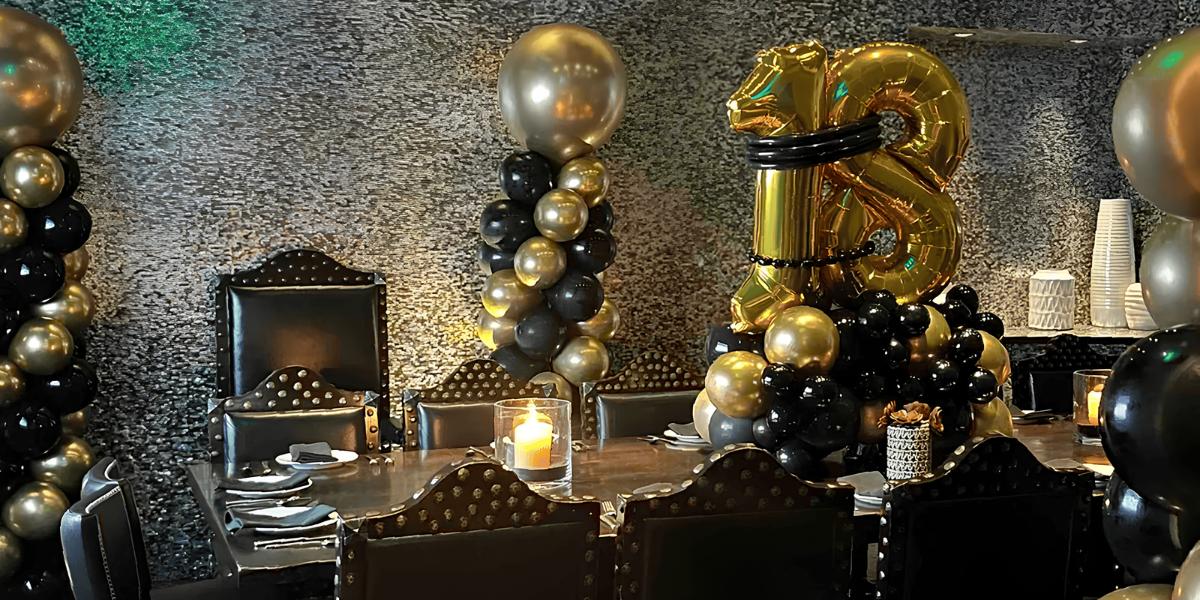

A giant number standing at a party looks simple: inflate it, prop it up, done. Treated that way, it usually reads as exactly that. But the difference between a number that photographs as a backdrop and one that works as a centerpiece comes down to decisions most guests never notice were made at all.
Why Milestone Numbers Get Their Own Design Category
Milestone birthday decor has a short list of pieces that carry more weight than everything else in the room. A well-designed balloon number sculpture is not a bigger version of the bouquet by the door. It is its own thing. A 16th, a 30th, a 50th, these are ages people build an entire party around, not just decorate for. Treating the number like anything else in the room misses why people are throwing that party in the first place. A number has to hold up as a freestanding shape and read clearly from across a room. None of that happens by accident. So the milestone ages people actually throw parties for are exactly where that design work matters most.
What Separates a Number Sculpture From an Arch or a Backdrop
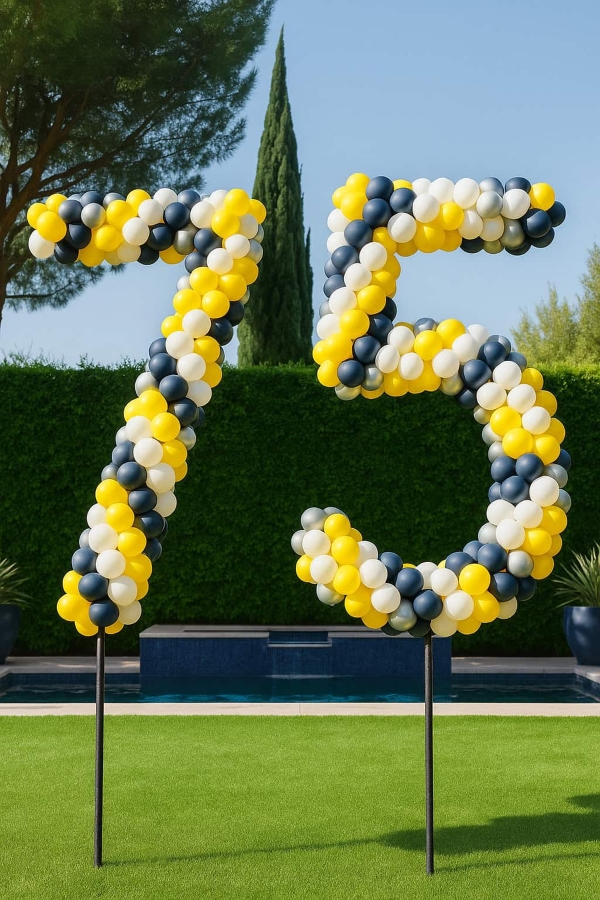
An arch is symmetrical by nature, which does a lot of the design work on its own. A number is not. Digits are asymmetrical, some wider than others, some open in the middle, and getting one to read as a clean shape takes real planning. A “1” is narrow and top-heavy. An “8” is different. It has two closed loops that both need to hold their own shape, and a “0” behaves like a ring rather than a flat panel. Sculptors who work at large scale describe the same challenge: big work has to simplify into clear forms that read from distance and survive partial viewing. A number is no different. It has to hold its shape and its proportions from fifteen feet away, not just up close in a photo. Getting that balance right is what turns a pile of balloons into a legible shape instead of a blob.
Building a Number That Matches the Occasion
A generic number template works fine for a quick photo op. But a number built for a specific milestone, in someone’s chosen colors and sized for their actual room, is a different kind of project. Sean Edwards, Founder of The Balloon Guy, a Los Angeles design studio, treats that customization as the actual job, not an upsell. “A number should look like it belongs to that person’s party, not like it was pulled off a shelf,” Edwards said. “That means real decisions about color, texture, and proportion before anyone even starts building.” That is what custom balloon design actually means at this scale: choices made for one specific event, not a repeatable template. That starts with a conversation about the milestone itself, not a catalog of pre-set designs. The colors, the finish, even the exact placement inside the venue get worked out ahead of time, not improvised on the day. Nothing about it is automatic.
Getting the Scale and Placement Right
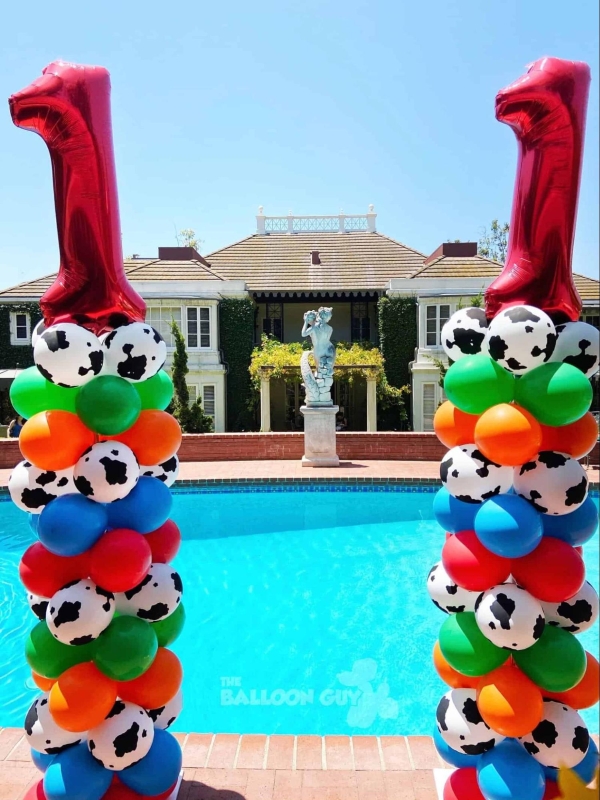
A balloon centerpiece only works if its scale matches the room it is standing in. Too small and it disappears next to a dance floor or a full dining room; too large and it stops being a centerpiece and starts being an obstacle. Edwards sees this constantly. “People sometimes want it as big as possible,” Edwards said. “But the goal isn’t the biggest number in the room, it’s the one that actually fits the room.” Event designers describe the same balance for any focal point: it should be large enough to stand out from the rest of the space, but it should not be so large that it is overwhelming. Placement matters just as much. A number set too close to a wall or tucked into a corner loses the presence it was built to have. A number built to stand at the center of a room needs a sturdier base than one pushed up against a wall for support. That difference shapes the whole build, not just where it ends up. Guests should be able to read the number from the doorway, not squint at it up close to figure out what it says.
Why the Small Decisions Carry the Most Weight
A milestone number was never meant to be an afterthought bolted onto the rest of the decor. It earns its place as a genuine design category the same way an arch or a backdrop does, through decisions about shape, balance, and scale made well before the party starts. The category exists because the stakes are different at this scale; a small mistake is far more visible on a six-foot number than on a garland. That is the real standard. Anyone evaluating a number sculpture for their own event should weigh proportion, placement, and build quality well ahead of raw size. Edwards’s own training at the California Institute of the Arts shows up exactly here, in how closely a number’s proportions get checked before it ever leaves the workshop. A number is still, in the end, just balloons. What separates a forgettable one from a genuine centerpiece is everything that happened before it was ever inflated.