
By: Esteban Hewitt
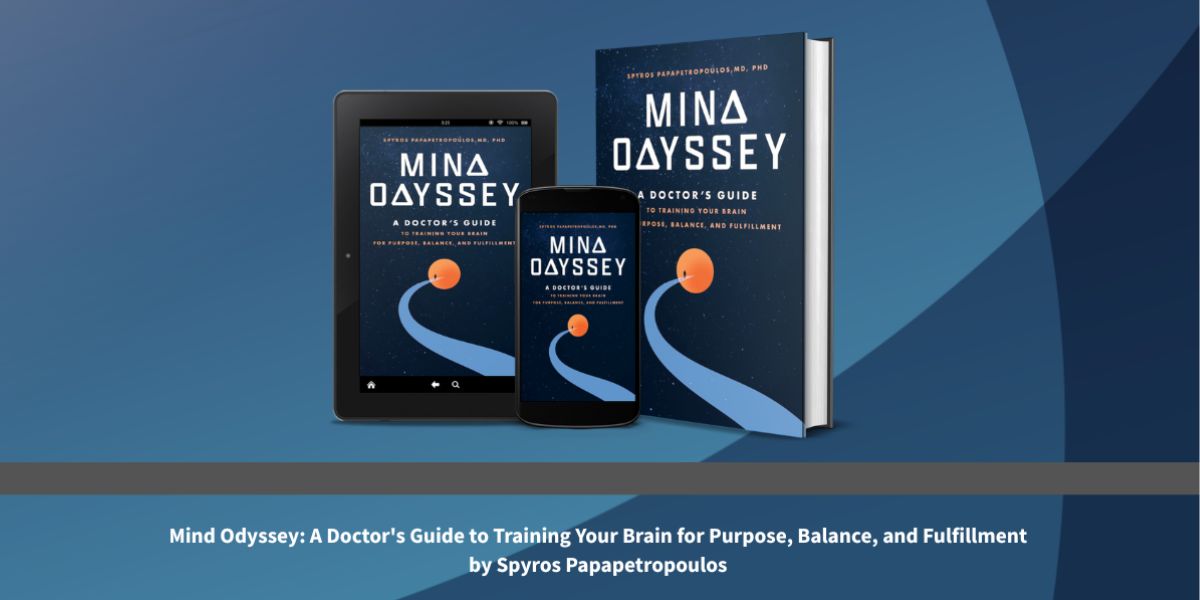
There is a particular kind of book that only becomes possible when its author has spent equal time inside the laboratory and inside the human experience of trying to build a meaningful professional life, and Mind Odyssey is exactly that kind of book. Dr. Spyros Papapetropoulos is a board-certified neurologist, neuroscientist, and biopharmaceutical CEO whose scientific résumé includes more than two hundred peer-reviewed papers and contributions to multiple FDA-approved therapies, and yet the book he has written is not primarily a scientific document. It is a deeply human one, grounded in neuroscience but animated by the genuine curiosity about people that he credits as the force behind his entire career.
The decision to use Homer’s Odyssey as the organizing metaphor for a book about professional purpose and brain training is one that could easily have felt forced, and the fact that it doesn’t is a measure of how completely Papapetropoulos has inhabited both the ancient text and the contemporary challenge he is addressing. Like Odysseus navigating toward Ithaca through storms and temptations and encounters that test every dimension of his character, the modern professional navigating toward a fulfilling career needs a clear sense of why they are sailing, the emotional equilibrium to survive the difficult passages without losing their direction, and the capacity to recognize what genuine arrival feels like rather than mistaking every temporary pleasure for the destination. That framework gives the book a coherence and a resonance that purely practical career guides never quite achieve.
What makes reading this book feel genuinely different from the crowded shelf of professional development literature it sits beside is the quality of the neuroscience underneath the narrative. Papapetropoulos is not borrowing brain science to give his advice a veneer of credibility. He is drawing on decades of actual research into how the brain processes purpose, regulates emotion, and generates the sustained sense of meaning that he distinguishes carefully and importantly from the fleeting happiness that most success culture is actually chasing. The distinction he draws between dopamine-driven happiness and endorphin-fueled fulfillment is one of the most clarifying ideas in the book and one that reorganizes a lot of assumptions about what professional success is actually supposed to feel like when you get there.
His three-part structure, purpose, balance, and fulfillment mirror the journey of the Odyssey with enough specificity that the metaphor earns its place rather than simply decorating the content. Each section builds on the previous one with the logic of someone who understands that these three qualities are not independent variables but deeply interconnected aspects of a single coherent way of engaging with your professional life. The tools he offers, introspection during calm periods, gratitude as a counterweight to runaway ambition, and conscious appreciation of time as a finite resource, are practical in the specific sense of being immediately applicable rather than just conceptually appealing.
Mind Odyssey is the book for anyone who has achieved enough success to know that success alone was not the point and is ready to think more carefully about what actually is. Papapetropoulos has written something that is simultaneously rigorously grounded and genuinely warm, and that combination is what makes it worth carrying with you well beyond the reading.
If you have achieved enough professional success to know that success alone was never really the point, and you are ready to use actual neuroscience to figure out what actually is, Mind Odyssey by Dr. Spyros Papapetropoulos is the book that takes you there. Grab your copy on Amazon today and begin the kind of odyssey your brain was always designed to make.