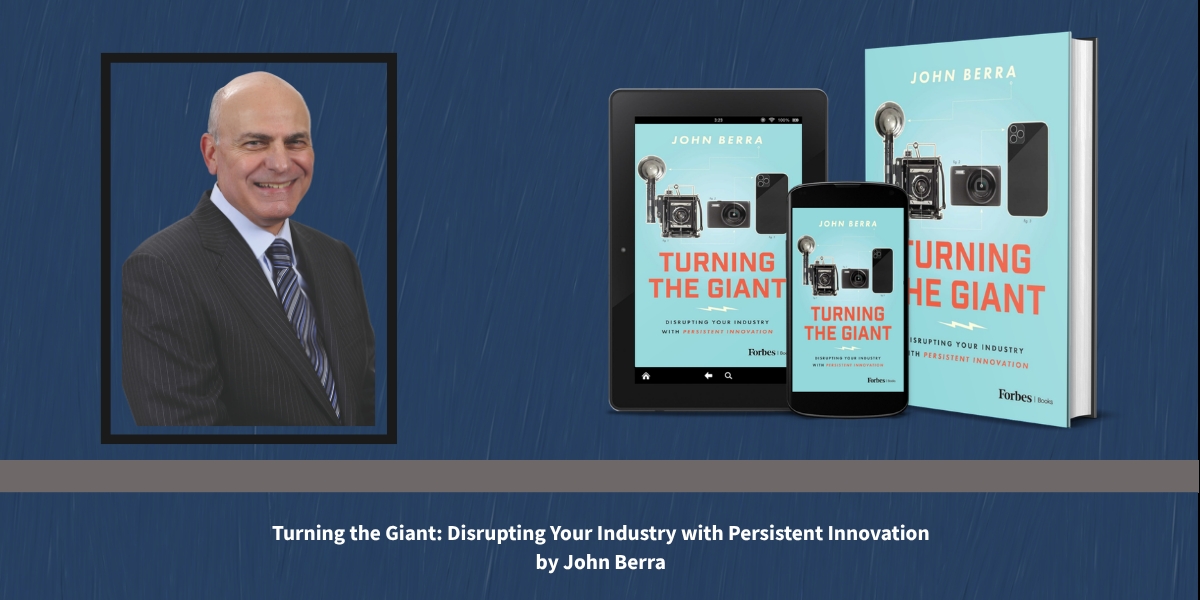

Many people have that thought at some point in a job they don’t love. Isn’t there a better way to do this? For some people, the thought passes. For John Berra, it became a career.
John eventually became Chairman of Emerson Process Management and was inducted into the Process Automation Hall of Fame. But the starting point for all of it was a young engineer at Monsanto, doing repetitive technical work, asking that exact question on repeat.
His book Turning the Giant is essentially an extended answer to it.
The Job Was Boring. The Thought Wasn’t.
There’s nothing dramatic about the work John describes from his early career. Wiring connections. Repetitive tasks. The kind of job that’s easy to coast through without thinking too hard about it.
Except John did think about it. Constantly. And what kept surfacing wasn’t a complaint exactly. It was curiosity. There has to be a better way. That phrase, repeated enough times over enough days, started to function less like a frustration and more like a direction.
He calls this properly channeled frustration, and he credits it as one of the useful forces in his entire career.
Giants Are Permanent. Your Approach to Them Isn’t.
The central image of John’s book is the “giant,” the kind of obstacle that doesn’t go away no matter how senior you become. Bureaucracy. Skepticism. Competition. Self-doubt. These don’t get solved once. They show up again and again, often bigger than before.
John’s insight isn’t about eliminating them. It’s about recognizing that your relationship to them can change even when they don’t. Early in his career, he assumed giants needed to be defeated. By the time he was leading large parts of Emerson, he understood they needed to be turned, redirected toward something productive instead of being treated purely as a barrier.
Skeptics Aren’t the Enemy Either
One of the more grounded pieces of advice in John’s reflections is about how change actually spreads inside organizations. It’s not through mandates or big announcements. It’s through individual conversations with individual skeptics, repeated patiently over time.
He learned this clearly as the organizations he worked in got bigger and the resistance to new ideas got more entrenched. Trust building, in his experience, doesn’t scale the way some leaders wish it would. It happens one person at a time, and it requires sticking with a vision even when immediate feedback is doubtful.
Big Companies Aren’t Innovation Deserts
John also takes aim at a common assumption: that real innovation only happens in small, scrappy companies without much structure in the way.
His career argues otherwise. Several of the significant changes he was part of happened inside very large organizations, the kind people assume are too slow or too bureaucratic to change meaningfully. What made the difference was leaders willing to challenge the default way of doing things and stick with that challenge through resistance.
Where to Start
If you take one thing from John’s experience, it’s this. The next time something in your work frustrates you enough to make you think there has to be a better way, don’t dismiss that thought. Don’t just vent about it either.
Ask what it might be pointing toward. According to John, that’s often where the real opportunities are hiding.
John’s journey from shy engineer to industry Hall of Famer is the throughline of Turning the Giant, where he lays out how he learned to turn each of these obstacles into momentum.