
Flexible construction storage solutions can help contractors secure tools and materials while simplifying freight, placement, and reuse across active job sites.
Construction storage decisions affect more than the amount of space available on a jobsite. The wrong setup can leave tools exposed, occupy valuable working areas, complicate deliveries, and create additional costs when a unit must be moved or replaced.
For general contractors and construction company owners, the practical objective is to protect project assets without introducing another logistical problem. That requires evaluating security, site access, internal organization, and long-term value before selecting a storage system.
Start With the Assets That Need Protection
The first step is to define what the project will store. Power tools, small equipment, personal protective equipment, building materials, and replacement parts have different requirements. Some items need fast daily access, while others may remain stored until a later construction phase.
This distinction affects container capacity, internal layout, locking requirements, and placement. A unit intended for frequently used tools should be positioned near active work areas without obstructing vehicles or pedestrian routes. Materials needed later in the project can be stored farther inside, provided they remain accessible without repeated unloading.
Security should also be treated as a process rather than a product feature. Controlled key access, closing checks, lighting, and an updated inventory can support the physical protection provided by the container. The National Insurance Crime Bureau continues to document theft involving construction equipment and materials, demonstrating why contractors should include asset protection in routine site planning.
Plan for Delivery Before Selecting a Unit
A storage container may meet every capacity requirement and still be unsuitable if it cannot reach the intended location.
Before ordering, site teams should assess gate width, turning room, overhead clearance, ground stability, unloading space, and the effect of future construction phases. A location that is open during mobilization may become inaccessible once fencing, scaffolding, materials, or heavy equipment arrive.
This is where different construction storage solutions should be compared according to deployment requirements, not capacity alone. Flat-pack systems, for example, are transported in compact modular form and are intended to reduce the freight footprint associated with moving conventional welded units. That format may be relevant for multi-site operations or projects where delivery access is constrained.
The selected position should be level, well drained, and clear of essential traffic routes. Planning delivery early can reduce relocation costs and prevent storage from competing with laydown areas, deliveries, or emergency access.
Use Internal Organization to Reduce Lost Labor
A secure container does not automatically create an efficient storage system. Without an internal plan, it can become a crowded space where tools are difficult to locate, and materials must be moved repeatedly.
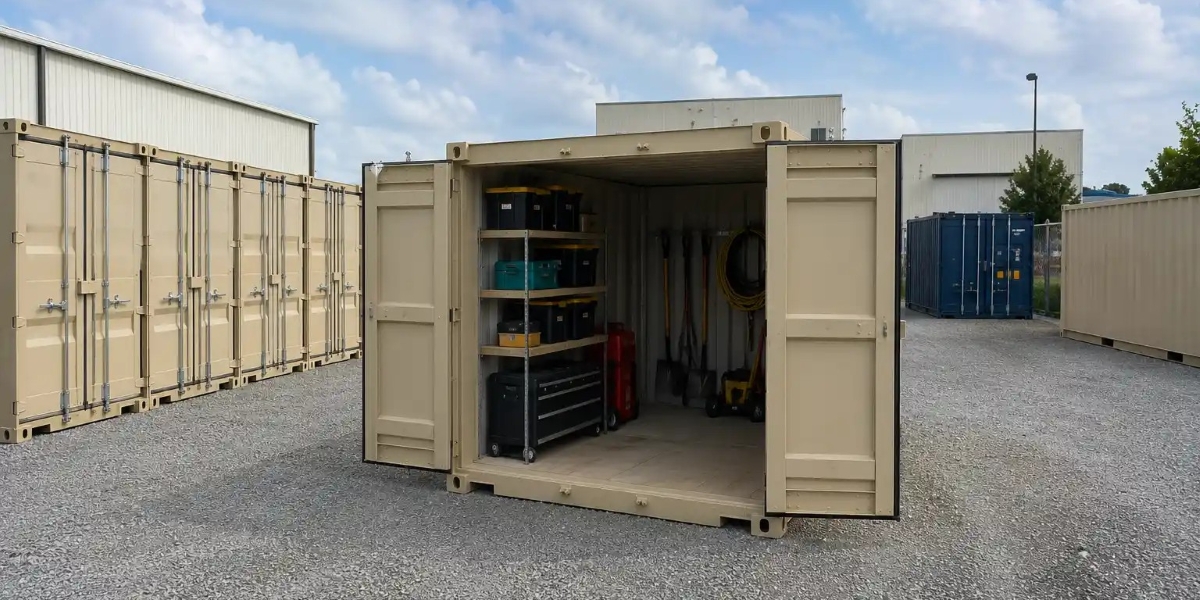
Divide the interior according to use. Frequently needed tools should remain near the entrance, while bulky or later-phase materials can be placed farther inside. Shelving, labeled zones, equipment racks, and sign-out procedures can make missing items easier to identify before they interrupt scheduled work.
Safe access must remain part of the layout. The Occupational Safety and Health Administration requires stored materials to be secured against sliding, falling, or collapse, and it requires aisles and passageways to remain clear for workers and material-handling equipment. Its construction housekeeping rules also require debris to be cleared from work areas and passageways. These principles provide a useful baseline for planning organized storage, even when the container itself is only one part of the jobsite.
A weekly review can keep the system useful as the project changes. Materials that are no longer needed should be removed, and incoming equipment should be assigned a location rather than placed wherever space remains.
Account for Weather and Moisture Conditions
Enclosed steel storage can reduce direct exposure to rain, snow, wind, and dust, but contractors must still plan for moisture inside the unit.
Wet tools, damp lumber, and changing temperatures can increase condensation. Sensitive items should be raised from the floor where appropriate, and wet and dry materials should be separated. Door seals, ventilation, drainage, and the condition of the unit should be checked before valuable materials are stored.
The storage requirements of the contents should determine the final setup. Manufacturer instructions may specify temperature, ventilation, stacking, or handling conditions that a standard container cannot provide on its own. Chemicals, fuels, batteries, and other regulated materials may also require specialized controls and should not be placed in general storage without reviewing applicable safety requirements.
Treating weather protection as an operating procedure, not simply a feature of the enclosure, helps reduce corrosion, packaging damage, and avoidable material waste.
Compare Total Cost Instead of Unit Price
Purchase price or monthly rent tells only part of the financial story. A useful comparison should include freight, unloading, assembly, accessories, site preparation, relocation, maintenance, and anticipated reuse.
Rental storage may suit a short project with a defined end date. Ownership may be more practical when the company expects to move units among several job sites or establish a repeatable storage standard. Flat-pack units may also change the calculation when compact transport and multi-location deployment are priorities.
Decision-makers should calculate the expected cost over the period the unit will be used. They should also consider whether the size and configuration can support future projects. A low-cost unit that cannot be delivered to the next site or lacks sufficient capacity may provide less value than a more adaptable option.
Standardize Storage Across Multiple Projects
Companies operating several job sites can reduce guesswork by creating a repeatable storage specification. This may include approved sizes, lock types, shelving layouts, placement checks, and responsibility for inspections.
Standardization helps crews understand how equipment should be stored regardless of location. It can also simplify purchasing, replacement parts, and deployment planning. However, each project should still complete a site-specific assessment because access, weather, security exposure, and storage volume will vary.
A practical storage plan should protect assets while supporting the work taking place around it. Define the contents, confirm delivery access, organize the interior, and evaluate total cost before committing to a unit. Those steps can help contractors add secure capacity without adding unnecessary operational friction.
Additional Resources
Construction site storage container: Review considerations for secure storage, restricted-access delivery, and repeatable deployment across active jobsites.