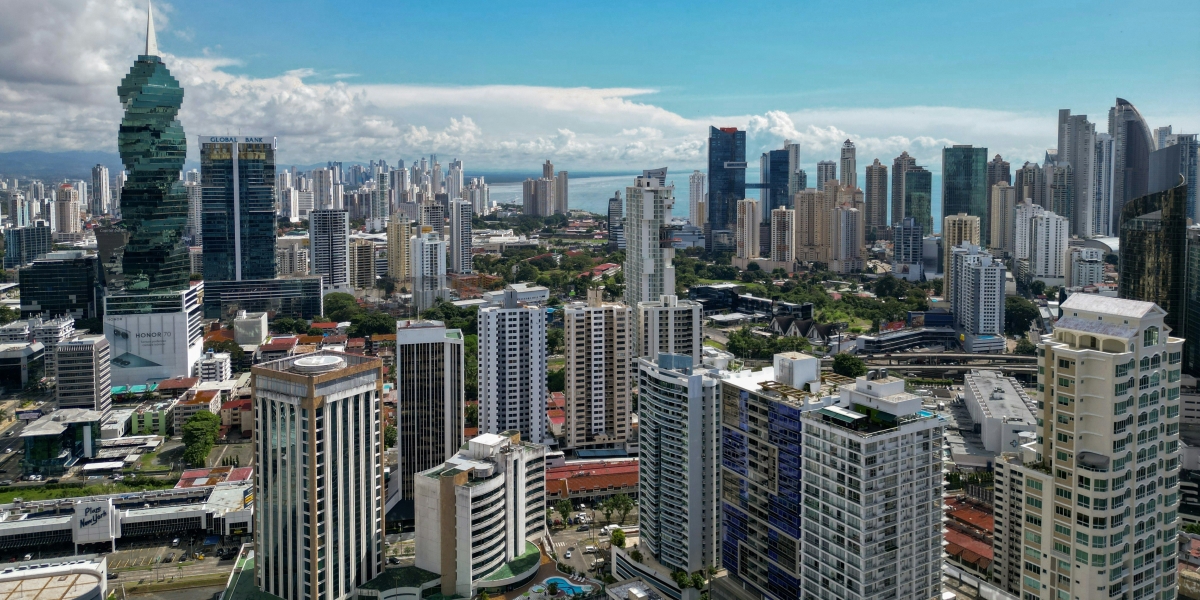

Many people who haven’t been to Panama arrive with an incomplete picture of the country. The assumption, particularly among North Americans, tends to run toward the Caribbean template: a pleasant place to visit, a developing economy, limited infrastructure beyond the tourist corridors. What they find when they land in Panama City is something considerably different.
Panama’s economy was not built around tourism. It was built around the canal, and everything that followed from it.
The Canal as Economic Foundation
The Panama Canal processes roughly five to six percent of global trade annually. That single fact has shaped the country’s entire economic identity. To support the volume of shipping, logistics, finance, and legal activity the canal generates, Panama developed one of the most concentrated international banking sectors in Latin America, home to dozens of international banks.
That financial infrastructure, in turn, made Panama attractive to multinational corporations looking for a stable, well-connected regional headquarters. The country’s SEM law, which grants qualifying multinationals favorable tax treatment on foreign-sourced income, accelerated that trend. Today, more than 180 multinational companies have established regional operations in Panama City, including Dell, Caterpillar, and a range of other large-scale enterprises.
The result is a capital city with a professional workforce, a consistent flow of international talent, and a business district whose skyline reflects decades of corporate rather than leisure-driven development.
Nearshoring and the Panama Proposition
The nearshoring conversation (the broad corporate reassessment of supply chains and regional offices that accelerated after COVID-19) has added another layer to Panama’s corporate appeal. For companies looking to position regional operations closer to North American time zones while maintaining access to Latin American markets, Panama checks several practical boxes.
Panama offers the shortest maritime route between the Atlantic and Pacific, an advantage no other country in the Western Hemisphere can match. Its Tocumen International Airport is the largest hub in Central America, with direct connections to more than 90 destinations. A dollarized economy removes currency friction for companies whose revenues and reporting are denominated in U.S. dollars. And its legal and banking infrastructure is sophisticated enough to support the compliance requirements of large international operations.
Steve Luther, who leads CHORD Real Estate’s international division and has spent considerable time on the ground in Panama across multiple research and investment trips, describes the first encounter with Panama’s business environment as genuinely surprising for most North American visitors. The expectation, he notes, tends to be something closer to a Caribbean island economy. What they find instead is a functioning international business hub with the infrastructure to match.
What the Corporate Presence Means for the City
A concentration of multinational headquarters does specific things to a city’s character. It generates demand for high-quality office space, reliable connectivity, international schools, and the kind of residential options that attract professional expatriates. Panama City has developed all of these.
Neighborhoods like Costa del Este have emerged as purpose-built business districts, with corporate campuses, hotels, and residential towers designed to serve the professional population those companies bring in. The area sits alongside one of the busiest commercial corridors in the country and continues to attract new corporate tenants as nearshoring trends push more companies to evaluate Panama as a base.
That professional housing demand is structural rather than seasonal. It does not fluctuate with tourism patterns or contracts during periods of reduced leisure travel. It is tied, instead, to the employment decisions of companies that have made long-term commitments to operating in the country.
A Market Most People Haven’t Discovered Yet
Despite the corporate infrastructure, the banking sector, and the canal, Panama remains relatively unknown as an international business destination outside of logistics and finance circles. The country has not historically invested in broad international marketing, which means its profile among North American professionals and business travelers lags considerably behind what the city actually offers.
That gap between perception and reality is one of the more consistent observations made by people who visit Panama for the first time, whether they are arriving for business or to evaluate the market more broadly. The city that greets them (modern, connected, and grounded in commerce rather than tourism) is rarely the city they expected to find.
About the Expert: Steve Luther is Principal | Chief Strategist & Advisor of CHORD Real Estate, a Nashville-based firm with an international division focused on markets including Panama. chordrealestate.com
Disclaimer: This article is intended for informational purposes only. The views expressed reflect those of the individuals quoted and do not constitute financial, legal, or real estate advice.