Thursday, August 6
Business · Technology · Leadership

Jeff Kaliel Discusses How Predatory Lending Practices Target the Vulnerable

Predatory lending preys upon the economically vulnerable: Jeffrey Kaliel highlights common practices. 

Predatory loan practices cover a full range of behaviors, from the fully deceptive to the offering of more expensive credit with devastating fees and interest rates. Washington D.C.-based attorney Jeffrey Kaliel has spent much of his career targeting financial and other behaviors that work against consumers’ best interests.  

He advises that knowing some of the more predatory lending practices can help some consumers avoid falling into financial traps. However, with many exploitive loans and credit offers targeting those needing credit and with few options, education only addresses part of the problem. 

Jeff Kaliel outlines predatory lending practices to avoid

Repetitive offers

Aggressive credit offers to bombard all consumers, but for those with lower incomes, repairing their credit, or otherwise just starting in finance, many offers swing to the negative. 

From high-interest credit cards with annual fees and monthly maintenance costs with no benefits to frequent offers from payday lenders, these offers are designed to establish a relationship and reel the customer back in, Jeff Kaliel notes.

Rolling over and refinancing fees.

Picture a finance company continually offering additional funds on top of an existing loan with the option to refinance the outstanding balance with new fees. Look at an expensive credit card that caps out the limit at a lower dollar amount but offers a second card with additional annual costs and another extremely low limit. Even homeowners face this scenario when refinancing with new fees is a continuous offer.

The business model is designed to provide the lender with interest to the maximum and more money in fees and costs that can be excluded in interest calculations. When looking for financing, it’s important to assess all fees and consider how they compare to interest charges to determine the overall cost of borrowing.

These disclosures are required by the Truth in Lending Act, but consumers do not always review them in a pinch for cash.

Review other options

Many cash-strapped consumers end up in dire conditions when using payday loans and auto title loans to fill a cash gap between paychecks. With the excessive fees these lenders charge — frequently in excess of 200% and up to 300% in many instances — paying off the loan rarely happens. Instead, the balance is rolled forward each payday. 

Jeffrey Kaliel advises it can be hard to break the cycle without an influx of cash but recommends looking for a way to close the gap. Whether it is a short-term job, using a tax refund in full or taking another big step, such as relocating or seeking financial assistance elsewhere, reestablishing monthly liquidity pays off in the long term. 

He also advises that those who have fallen victim to these lending practices must share their experience when possible to help others avoid the trap. When a consumer suspects some of the lending practices experienced are illegal, such as discrimination, consider contacting an attorney or filing a complaint with the Consumer Financial Protection Bureau.


A Comprehensive Guide to Different Types of Damper Actuators

Image commercially licensed from Unsplash

Home and business owners alike need to be aware of the different types of damper actuators available on the market. By understanding the features and benefits of each type, you can make an informed decision about which one is right for your needs. This comprehensive guide will introduce you to the different types of damper actuators and help you choose the best option for your home or business.

What are damper actuators and how do they work?

Damper actuators are the essential components of a heating, ventilation, and air conditioning (HVAC) system. They are motors that control dampers—valves that shut off or regulate the flow of hot or cold air through ducts—to maintain a comfortable temperature in any room. Damper actuators vary in size, power, and type depending on the application. Some use electricity to turn a small shaft so the entire valve can be opened or closed, while others use centrifugal force created by spinning rotors to operate another mechanism to open and close valves. In larger systems, more powerful actuators can be used depending on the type of dampers installed. With this versatile tool, HVAC technicians can keep any area comfortable no matter what their size or function may be!

Types of damper actuators

Damper actuators are a vital component of HVAC systems, ensuring airflow accuracy, reliability, and safety. While there are many types of these motorized devices, belimo and Honeywell damper actuators are two of the most popular brands on the market today. Belimo damper actuators offer a wide range of reliable and efficient products for controlling air dampers in heating, ventilation, and air conditioning (HVAC) applications. These belimo solutions come with advanced features such as temperature sensing, feedback control loops, and optional network communication capabilities. Honeywell damper actuators are designed to provide precise positioning of firedamper blades in smoke control systems. The high torque output enables these actuators to open or close heavy fire dampers quickly, while their robust construction ensures they remain operational in the harshest environmental conditions. For HVAC applications requiring extreme noise reduction efficiency and the lowest energy consumption, Honeywell offers its miniature open-close style damper actuator solutions – all perfect for demanding applications with tight space regulation requirements.

How to choose the right type of damper actuator for your needs

When it comes to choosing the right type of actuator for your damper system, there are a variety of options. It’s important to consider the space you’re utilizing, as this will narrow down the best option available. An overload damper actuator is most often used for zone control applications that require varying degrees of force and are located in fan enclosures or small rooms. Additionally, an electro-mechanical servo actuator is best for applications where precision positioning and complex movements with high torques are required such as those found in fuel cell systems and larger industrial ducts. Whatever type of damper you choose, make sure to do your research before installation and look at different product specifications to determine whether it is safe and reliable for your application’s needs.

Benefits of using a damper actuator

Damper actuators are becoming increasingly popular within the building automation industry due to their impressive ability to control airflow within an HVAC system. In addition to providing precise temperature regulation, using a damper actuator in a vent can also save energy and help you keep better tabs on your home’s air quality. With a damper actuator, you can create zones in rooms or offices, allowing for separate temperature settings for different areas of your building and reducing volatile temperatures. Damper actuators are also popular due to their reliability and efficiency. They are able to perform for long periods of time without needing manual adjustment or maintenance. Furthermore, since these devices are powered by electricity, they are hard-wired into power supplies, meaning that you will continuously receive accurate readings from them with no need to manually reset them or worry about power outages resulting in data loss. With all of these benefits and more, damper actuators are a great asset when it comes to creating comfortable interiors in any building!

Tips for installing a damper actuator

Installing a damper actuator can be a tricky process, but there are a few tips to keep in mind that will help ensure the job goes smoothly. First, it is important to determine what type of damper actuator is going to be used so that you know exactly what parts and tools you need before beginning. Another essential step is to make sure the power supply to the damper actuator is turned off, as this can prevent any unnecessary damage when installing the device. It’s also wise to double-check all connections and adjuster settings after installation so that your actuator provides optimal performance. With some proper preparation and these simple tips, you’ll be off and running with your newly installed damper actuator in no time!

Conclusion

There are many different types of damper actuators on the market, each with its own unique set of benefits. When choosing a damper actuator for your needs, it is important to consider the environment in which it will be used, the type of load it will be subjected to, and the level of precision required. With so many options available, finding the right damper actuator can seem daunting, but luckily there are experts who can help you select the perfect one for your application. Installing a damper actuator is a simple process that can have a big impact on the performance of your HVAC system. If you have any questions about damper actuators or need help selecting the right one for your needs, please don’t hesitate to contact us. We’re always here to help!

AI Is Disrupting the Marketing Industry Since Its Creation

Artificial Intelligence (AI) has come a long way since its inception, and its applications in modern business are more expansive than ever before. From automating mundane tasks to providing sophisticated data analysis, AI has become a game-changing tool that is revolutionizing industries across the globe.  

It opened up various possibilities for different industries, including marketing. The rapid advancements in AI technology have opened up new ways for marketers to understand customers, optimize campaigns, and drive sales. 

Today, we will explore how AI is revolutionizing customer engagement and personalization in marketing and how businesses can leverage these technologies to stay ahead of the competition.

AI-Driven Customer Profiling and Segmentation

One of the critical aspects of effective industry marketing is understanding your customer’s needs and preferences. 

AI-driven customer profiling and segmentation tools help businesses gather and analyze vast amounts of customer data, such as browsing history, purchase data, social media interactions, and more. These tools then use advanced algorithms to identify patterns and trends, creating detailed customer profiles and segments that help marketers better target their campaigns.

For example, AI can help identify high-value customers who are more likely to make a purchase or churn-risk customers who may need special attention to retain. This level of granularity in customer profiling enables marketers to create personalized content, offers, and promotions, significantly enhancing the effectiveness of their marketing efforts.

AI-Powered Content and Ad Optimization

Creating engaging content and ads is crucial to attract and retain customers. AI-powered tools can analyze large datasets to identify the best-performing content and ad formats, headlines, images, and call-to-actions. These insights help marketers optimize their content and ads, increasing engagement rates and ROI.

Moreover, AI can also help marketers in real-time optimization. For instance, AI-powered ad platforms can automatically adjust bids and budgets based on performance, ensuring that marketers get the best value from their ad spend.

Predictive Analytics for Customer Lifetime Value (CLV)

Customer Lifetime Value (CLV) is a critical metric for any business, as it helps determine the long-term profitability of a customer. AI-driven predictive analytics tools can analyze historical customer data and identify patterns to predict future customer behavior accurately. This enables marketers to pinpoint high-value customers and focus their efforts on retaining and upselling them, thus maximizing CLV.

Furthermore, predictive analytics can also help locate potential churn-risk customers, allowing marketers to proactively engage with them and offer personalized incentives to retain them.

Chatbots and Virtual Assistants for Enhanced Customer Experiences

AI-powered chatbots and virtual assistants have become increasingly popular in recent years as they help businesses provide instant, personalized customer support. These tools leverage natural language processing (NLP) and machine learning algorithms to understand user queries and provide relevant responses.

Chatbots and virtual assistants can significantly reduce response times and improve customer satisfaction by automating routine customer queries and support tasks. Moreover, these tools can also collect valuable customer data, which can be used to personalize content marketing campaigns further and enhance customer experiences.

AI-Driven Email Marketing

Email marketing remains one of the most effective marketing channels for businesses. AI can help marketers optimize their email campaigns by analyzing user behavior, open and click-through rates, and other metrics to identify the best-performing subject lines, email designs, and delivery times.

Compared to manual email marketing, AI-driven email marketing platforms can segment customers based on their behavior and interests, enabling marketers to deliver highly personalized and relevant content to each subscriber, thus improving engagement rates and ROI.

Conclusion

AI technologies are transforming the industry marketing landscape, empowering businesses to make data-driven decisions, enhance customer engagement, and drive sales. By leveraging AI-driven tools and platforms, marketers can unlock the full potential of their marketing efforts and stay ahead of their competition. 

While AI might not replace human intuition and creativity in marketing, it undoubtedly serves as an invaluable tool that can help businesses achieve their marketing goals more effectively and efficiently.

Want to know how to market your brand using the latest technological innovations? Kivo Daily is a global digital media, technology, and brand-building company primarily focusing on business, entrepreneurship, and thought leadership. Check out our other articles today!

New Book “Light Up Your Worth” Reveals Secret Revelation to Overcome Personal Challenges and Find Inner Strength

Image commercially licensed from Unsplash

The journey of self-discovery and personal growth is often shrouded in mystery and uncertainty, but for author and motivational speaker Lala Oroch, it was a revelation that transformed her life. Her new book “Light Up Your Worth” unveils the secret revelation that helped her overcome depression, anxiety, and personal challenges.

Oroch’s story is a testament to the power of spiritual practices and ancient knowledge. Through her own struggle with injury, depression, and feelings of helplessness, she discovered a profound truth that changed her life forever. She received a secret revelation that empowered her to see the world in a new light and to find her inner strength.

“Light Up Your Worth” is now available for purchase on Oroch’s website, www.lalaoroch.com. The book is a compelling and inspiring story of personal transformation that is sure to captivate readers. It offers practical tips and advice on how to use spiritual practices, the law of attraction, and manifesting to overcome personal challenges and achieve your dreams.

As a motivational speaker, Oroch uses her own experiences to empower other women and inspire them to reach their full potential. Her book is a must-read for anyone looking to find inner strength, overcome obstacles, and achieve their goals.

Through “Light Up Your Worth,” Oroch shares her message of positivity, empowerment, and self-development with women everywhere. Her book is a beacon of hope for those struggling with personal challenges, offering practical guidance and inspiration to help them overcome any obstacle.

In conclusion, “Light Up Your Worth” is a powerful and mysterious book that reveals the secret revelation that helped Lala Oroch overcome depression and personal challenges. It is a must-read for anyone looking to find inner strength, achieve their goals, and become the best version of themselves. With Oroch’s guidance, readers can discover the power of ancient knowledge and spiritual practices to transform their lives and find their true worth.

Joel Landau, Founder of Allure Group, on How Business Leaders Can Make the Most of Every Minute

Image commercially licensed from Unsplash

Business leaders understand that time is their most precious resource.

With ever-increasing schedules, there is a constant demand for their attention, including completing tasks, attending meetings, and achieving productivity goals. However, with only so many hours in a day, some leaders may sacrifice their work-life balance. Instead, leaders need to learn how to optimize their schedules to make the most of their time.

Joel Landau, the founder of The Allure Group, follows specific strategies to increase his productivity. In the following sections, he shares his tips, hoping that other leaders can also make the most of their time.

Prioritize Your Tasks

Joel Landau suggests that prioritizing tasks is one of the most effective ways to maximize each minute of the day. When you prioritize your tasks, you focus your energy on the most important and urgent ones first. To stay organized and focused, use a to-do list or task management system. Identify the tasks that will have the most significant impact on your business and prioritize those first.

Delegate Tasks

As a business leader, you likely have a team of employees who can help you out with various tasks. Identify the tasks that can be easily delegated to others and assign them to other team members accordingly. This will free up your time to focus on tasks that require your unique skillset and expertise. Joel Landau believes that part of leadership is knowing which projects require your oversight and which projects can be handled by other colleagues within your company.

Automate Repetitive Tasks

Automation is a key factor in achieving productivity and efficiency. Various software tools are available to automate tasks such as scheduling, invoicing, and email marketing. By automating these tasks, you can save considerable time and energy, allowing you to focus on more important tasks.

Use Time-Blocking Techniques

Time-blocking is a technique where you schedule specific blocks of time for specific tasks. This helps you stay focused and avoid distractions. You can use time-blocking techniques for tasks such as email management, social media, and meetings. By scheduling specific blocks of time for these tasks, you can ensure that you’re not spending too much time on them and that you’re maximizing your productivity.

Take Breaks

While it may seem counterintuitive, taking breaks is another strategy to increase productivity. Joel Landau believes that stepping away from your office or computer for a quick refresh is how leaders can increase their creativity and become greater innovators. Taking breaks helps you avoid burnout and helps you stay focused and energized throughout the day.

Use Technology to Your Advantage

There are many digital tools and applications that are readily available to you. For example, you can use project management software to help you stay organized, video conferencing tools to conduct meetings remotely, and mobile apps to manage your tasks on the go. By using technology to your advantage, you can save time and increase your productivity.

Stay Focused

Avoid multitasking, which can decrease your productivity. Instead, focus on one task at a time and give it your full attention. Avoid distractions such as social media or email notifications, and instead, schedule specific blocks of time for these tasks.

By following these strategies, you can maximize your productivity, achieve your goals, and ultimately, grow your business at a quicker pace. Remember, time is your most valuable resource, and Joel Landau believes making the most out of every minute of your day is critical to success.

The Economics to Consider Before Spending your Tax Refund on a New Car

Tax season is here, and many people are considering how best to use their tax refunds. For some, purchasing a vehicle may be a tempting option and is normally an ample percentage of where tax refunds go. But what should you consider before taking the plunge?

In 2022, we saw record-high inflation and interest rates in the auto industry, both for used and new vehicles. The combination of record-high inflation and finance rates drove consumer demand significantly downward as vehicle ownership costs were out of their comfort zone.  

On a positive note, new vehicle supply started to catch up to pre-COVID levels, with manufacturers willing to sell at MSRP or below. This marked a significant turning point vs. 2021, where ultra-high demand combined with scarce inventory sent new and used vehicle values skyrocketing with little to no discount to the consumer.

When deciding whether to utilize found money, such as a tax refund, it’s essential to consider how to get the best return for your dollars. Considering the timing and economic climate in the wake of the pandemic should be a top consideration for buyers. However, it is important for the consumer to understand that while interest rates are much higher than a decade ago, these rates actually fall close in line with pre-recession levels all the way back a few decades. 

It certainly is sticker shock as rates for not just cars but houses and general loan instruments were practically close to zero post-2008 recession. Should everyone accept this return to normalcy?  Should one wait for interest rates to go back to post-recession levels?  Will they ever go back to those levels? It is up to each consumer to decide what is best for them. Hopefully, our opinions below will help shape that decision.

How do car values change with the seasons?

Car prices are determined by various factors, but the season is the most influential. 

Whether you are selling or buying a new or used vehicle, the time of year (or month) can have a positive or negative impact on your pursuit. During the “tax time” months (Feb-April), when refunds are piling in, there is a spike in demand for all vehicles. Dealers and manufacturers are releasing prime incentives on new inventory and are willing to pay up a little more for trade-ins to lock in the retail deal. In addition, dealers are stocking up ahead of the rush with fresh inventory to sell, which causes a small spike in used vehicle values. These months may have the most consumer demand but do not necessarily guarantee this period of time is optimal for selling and/or buying a car.  

As summer approaches, consumer demand tends to drop as behaviors shift from purchase-focused to vacation-focused as tax refund money tends to dry up. Therefore, consumer demand lowers, and supply rises at an ample level. Demand/offers for trade-ins decreases moderately, BUT dealers sometimes become more willing to offer steeper discounts on inventory to maintain their sale performance levels. What this means is you may not get the best offer from a dealer for your car but snag a better price on the car you wish to buy.

So what time of the year is best? From the above, there really isn’t a best time or best-case scenario. It is more like an equilibrium effect with your personal trade and purchase goals determining to sell/buy at a market peak or market drop. There are pros and cons to both seasons, but the increase or decline in vehicle values is not significant. Simply put, not a huge “missing out” moment in any season.

At the end of the day, it’s essential to do your research and compare prices at different times of the year to ensure you get the best deal. Car values change with the seasons, so be sure to keep that in mind when making your purchase.

What is the current economic climate like for purchasing a car?

The economic climate for purchasing a car is currently in flux. With loan rates at all-time lows during the pandemic and scarce supply that drove ultra-high demand and vehicle prices right with it, vehicles entered a significant bubble that lasted through 2021 and early 2022.  But what goes up must come down!

As inflation and loan rates started to rise in early 2022, consumer demand significantly decreased and car prices started to come down in line with it.  

New car prices have been slow to adjust to this new normal, leaving them largely unchanged from their pre-pandemic highs. Used cars, however, have seen more of a more significant adjustment, with prices coming down closer to more normal pre-pandemic levels.  It is important to note used vehicle values have NOT dropped 40% from their standard value. That would simply be catastrophic. They have, in fact, dropped over 40% from their inflated value over the past year. They are coming back to normal and resuming what they always have been, a depreciating asset.

As a result, used cars will continue to be a more budget-friendly option but at a higher interest rate if financed. However, new vehicle supply will continue to normalize deeper into 2023 with more favorable financing options and rebates that will help ease the rising cost of their average MSRP. It is really up to you and what you are comfortable with paying that will determine if a used or new option fits.

What is the future outlook for the car industry?

The future outlook for the car industry is uncertain but promising. Over the last year, the significant increase in used car prices was not sustainable and was partly driven by buyers overpaying for the limited supply of used vehicles.

As new car inventories start to increase, there could be more declines in used car prices in the months ahead. Late-model used cars will likely be in short supply due to reduced new car production over the last three years, meaning that the value of trade-ins could be a headwind on car prices by reducing what buyers can pay. 

Overall, this industry is incredibly resilient and has been shown to correct its volatility much faster than other industries. Remember when we said what goes up must come down?  We are almost there now, and that will bring some relief to the consumer.  Heading back to normalcy will ensure fair deals are made on trade-ins and better deals made on the purchase without the insanity or “FOMO” moments of 2021, where a consumer car deal (trade+purchase) was heavily lopsided and unfavorable.

The author

Roger Clappe is a 15-year senior leader in the automotive industry with deep expertise in automotive eCommerce, retail, wholesale, and emerging technology. Roger’s experience was instrumental in building companies from the ground up, such as TradeRev (a part of KAR Global: KAR-NYSE), Webuyanycar, and WhipFlip, which he now heads as Founder & CEO.


 

From Design to Production: How New Technologies in Prototyping Is Transforming the Manufacturing Industry

Image commercially licensed from Unsplash

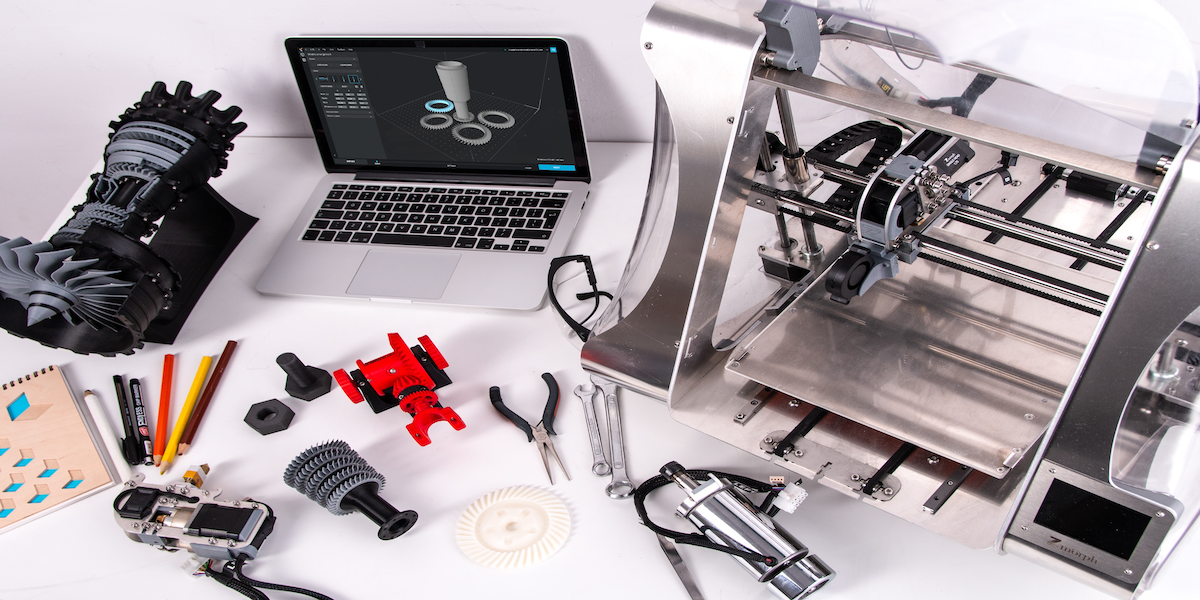
Recent technological advancements have transformed manufacturing, allowing businesses to manufacture innovative products more effectively. Among them, rapid prototyping has changed the way manufacturers create and test products, allowing them to bring creative ideas to market faster and more efficiently.

In this article, we will give you a glimpse of prototype manufacturing, its typical approach, and its benefits and importance in manufacturing.

Rapid Prototyping

Rapid prototyping is a technique that enables designers and engineers to quickly produce physical models of their concepts for product testing and refinement before going into production. It lets businesses test and validate their designs on a low-cost basis, making it easier to uncover design problems and make essential adjustments before committing to an expensive production process. Rapid prototyping ultimately leads to better products and higher customer satisfaction.

3D printing, CNC machining, vacuum casting, sheet metal fabrication, and rapid tooling are typical examples of prototyping processes. Designers can use 3D printers to build tangible product models within hours, allowing them to swiftly iterate on their designs and make essential modifications and enhancements. It also enables designers to develop complicated geometries that would be difficult or impossible to realize using conventional production methods.

CNC machining is another popular rapid prototyping way, empowering designers to create precise and accurate parts. With CNC machining, designers can make parts from a wide range of materials, including metals, plastics, and composites. It is still a mainstream prototyping method. Let’s dive into it further.

CNC Machining

CNC (Computer Numerical Control) machining is a revolutionary manufacturing process transforming modern product development. CNC machines use advanced computerized machines to create precise and complex parts from various materials, making them a game-changer for manufacturers. 

CNC machining, as opposed to traditional manufacturing processes that rely solely on manual labor, uses digital design to produce complex designs, intricate geometries, and precision-tight parts with superior accuracy and consistency, making them ideal for creating complicated parts for a variety of industries such as aerospace, medical, and automotive.

Automation and computerization, which decreases production time and costs, are two of the major advantages of CNC machining. Furthermore, producers may simply build and alter designs using software tools like AutoCAD, Solidworks, and Inventor to produce high-quality parts in a shorter lead time.

Moreover, CNC machining is adaptable enough to produce parts with various finishes, from smooth and polished to rough and textured. Apart from the wide material range, there is also no MOQ (Minimum Order Quantity) limit. A CNC milling prototype is ideal for the one-off prototype.

CNC machining is also highly customizable, allowing designers and engineers to build parts with complicated shapes and features in different shapes, sizes, and materials. As a result, producers can create one-of-a-kind products that match specific customer requirements. 

Why CNC Machining is Essential for Mechanical Engineers and Industrial Designers:

CNC machines offer several benefits that have made them an essential tool for businesses in various industries for several reasons, including:

Design Freedom

CNC machining offers unparalleled design freedom, allowing designers and engineers to create complex geometries and shapes which are previously impossible to produce. It will enable designers to push the limits of their creativity, resulting in innovative and unique designs that can set a product apart from its competitors. 

High Precision

CNC machines produce unmatched precision and accuracy, ensuring that components meet exact specifications every time. It is critical in industries such as aerospace and medicine, where the slightest deviation can have severe consequences. 

Quality Control

CNC machining allows for consistent quality control. CNC machines produce identical parts with minimal deviation, ensuring that everyone meets the required quality standards. The level of quality control ensures that the final product is of the highest quality, improving customer satisfaction and loyalty.

Cost-effective

CNC machining is highly economical, reducing labor costs and material waste. With high efficiency, companies can produce high-quality parts at a lower price, improving overall profitability. The affordability makes CNC machining an attractive investment for companies seeking to streamline manufacturing processes and remain competitive in today’s marketplace.

In summary, many new technologies have become game-changers in product development, enabling companies to bring innovative products to life more quickly and efficiently. As technology continues to advance, we can expect further innovation in manufacturing, opening up new possibilities for product designers and engineers to create even more exciting products.

The Power of Coaching: How Steve Harris Helps Refine Message, Increase Earnings, and Build Successful Businesses

Envision reaching the pinnacle of success in every aspect of life, personal and professional. While this may seem like an unattainable goal, an experienced life coach and a business strategist can provide the guidance necessary to make it a reality.


Steve Harris, known as “Mr. Ruthless Execution.” He is highly regarded for his ability to help clients bridge the gap between their potential and actual performance. With extensive experience in management consulting, Steve has led successful retreats and strategy sessions for Fortune 500 companies across different countries.


Steve’s expertise has earned him recognition from respected international organizations such as the International Coach Federation and the International Certified Consultants Association. He has also received accolades from prestigious entities such as the United Nations/YFP, where he was named a Young Ambassador for Peace. In addition, his accomplishments have been featured in various notable news media outlets, including Forbes, The Economist, and Yahoo Finance.


Through his coaching programs, including Mastering the Business of Your Talent & The Goliath Program, Steve has helped clients generate millions of dollars in recent months. In addition, he caters to individuals with valuable life experiences or knowledge to share, thought leaders, coaches, entrepreneurs, and business owners seeking marketing and brand strategies.


Steve’s coaching programs are designed to assist thought leaders and coaches in expanding their practices and create lucrative memberships. His 6-month accelerator program and special events accomplish this, where he has helped many clients refine their message, increase their prices, and achieve significant earnings.


In addition, Steve assists entrepreneurs and business owners who require marketing and branding strategies to differentiate themselves from the competition and become the preferred choice of their customers. He also mentors CEOs and business leaders who strive to accomplish what others consider impossible. His exceptional coaching programs have enabled his clients to generate significant revenue, making him an excellent role model for thought leaders, coaches, entrepreneurs, and business owners seeking to take their businesses to new heights.

Mastering the Art of Sales Negotiation: Tips and Techniques from a Spotify Sales Executive Brian Berner

Image commercially licensed from Unsplash

Sales negotiation is a critical aspect of any successful sales career. The ability to negotiate effectively with prospects and customers is what sets top-performing sales professionals apart from the rest.

No one knows this better than Brian Berner, Spotify’s Head of Sales in the Americas. Brian holds over two decades of experience as an advertising and technology executive. He has helped to take Spotify’s sales team from 40 employees to over 170 employees and is dedicated to helping them cultivate their talent to achieve incredible career growth in the advertising space.

Mastering the art of sales negotiation is not an easy feat, and it requires a lot of practice and discipline to get it right. Looking to learn some tips and techniques to help you improve your negotiation skills? Whether you are new to sales or a seasoned professional, Brian Berner believes these strategies will help you take your sales game to the next level. 

Preparation is Key

The first step in mastering the art of sales negotiation is to prepare thoroughly. Before you even meet with a prospect or customer, you need to research their business, their industry, and their needs. This will help you understand their pain points and identify the best ways to position your product or service to meet their needs.

Listen Attentively

Effective negotiation is not just about presenting your point of view; it is also about listening to your prospect or customer. You can’t adequately address their inquiries, concerns, and objections if you aren’t listening to what they’re saying during your sales call. Ask open-ended questions and actively listen to their responses. This will tell you everything you need to know about them as a potential prospect.

Know Your Value Proposition

Your value proposition is the unique value that your product or service provides to your customers. It is critical to know your value proposition inside and out so that you can effectively communicate it to your prospects and customers. Make sure you are clear on the benefits of your product or service and be prepared to explain how they will help your prospect or customer.

Be Flexible

Negotiation is a give-and-take process. You need to be flexible and willing to compromise to reach an agreement that works for both parties. Keep an open mind and look for creative solutions that meet both your needs and the needs of potential prospects.

Build Rapport

Building rapport is essential in sales negotiation. People are more likely to do business with people they like and trust. Take the time to get to know the person on the other end of the phone and find common ground that you can build upon.

Set Clear Objectives

Before you begin the negotiation process, set clear objectives for what you want to achieve. This will help you stay focused and avoid getting sidetracked. Be specific about what you want to accomplish, and set realistic goals that you can achieve.

Close the Deal

This is the moment you’ve worked for during the entire negotiation process. Once you have reached an agreement that meets both parties’ needs, it’s time to seal the deal. But closing the deal is not just about signing a contract; it’s about making sure that both parties are satisfied with the agreement and that you have a clear plan for moving forward. A successful salesperson knows how to navigate the final steps of a negotiation, including clarifying the terms of the agreement, addressing any remaining objections or concerns, and confirming the next steps. By effectively closing the deal, you not only ensure the success of the current transaction but also lay the foundation for future business opportunities and long-term relationships.

Follow up

Following up after a negotiation is just as important as the negotiation itself. It shows that you value your prospect or customer’s business and that you are committed to ensuring their satisfaction. Send a follow-up email or call them to check in on how things are going and if there are any further questions or concerns they may have. This will help you maintain a positive relationship with your prospect or customer and potentially lead to future business opportunities. Remember, building long-term relationships is the key to success in sales.

Mastering the art of sales negotiation takes time and effort, but it is a critical skill for any salesperson to have. By following these tips and techniques from Brian Berner, you can work on improving your negotiation skills and close more deals.

Empowering Change: TISE Consulting and Therapy’s Innovative Approach to DEI Consulting

Jayden Aubryn is a name that has been making waves in the world of Diversity, Equity, and Inclusion (DEI) consulting. Their company, TISE Consulting and Therapy, has been gaining recognition for its innovative approach to DEI, emphasizing trauma-informed practices and high accountability techniques. But what sets Jayden and TISE apart from other DEI consultants?

Accessibility, Empathy, and Accountability. These are the three pillars that TISE is built on, and Jayden believes they are essential to successful DEI work. Jayden understands that quality information is often inaccessible and that many people do not have the means or resources to learn about DEI. As a result, they strive to make their knowledge more accessible so that everyone has the opportunity to learn and grow.

Empathy is another crucial element in TISE’s approach. Trauma can be a significant barrier to growth and understanding, and empathy is the antidote to trauma. TISE provides a safe and supportive space for clients to share their experiences, enabling them to confront and overcome their biases and oppressive tendencies at the micro, mezzo, and macro level.

Finally, accountability. Jayden knows that it’s not enough to want to change; you have to take actionable steps to do so. Balancing responsibility with empathy can be especially challenging, but it is necessary to ensure that DEI work is meaningful and sustainable. TISE’s focus on high accountability techniques ensures that clients are held accountable for their actions and are continually working towards real change.

TISE’s services include 1:1 coaching, facilitating difficult conversations, strategic planning, training, and consultation for mental health and DEI topics. Jayden has done DEI work nationally, from forming the first Gender-Sexuality Alliance in a high school in Kentucky to being an expert panelist at a statewide conference, to their current work serving as a member of the equity cabinet of King County, Washington.

Overall, Jayden Aubryn and TISE Consulting and Therapy are leading the charge in DEI consulting. Their innovative approach, centered around trauma-informed practices and high accountability techniques, is changing the way people think about and approach DEI work. Their emphasis on accessibility, empathy, and accountability ensures that clients are continually working towards meaningful and sustainable change. For anyone interested in addressing internalized oppression and trauma, TISE Consulting and Therapy is a company that should not be missed.