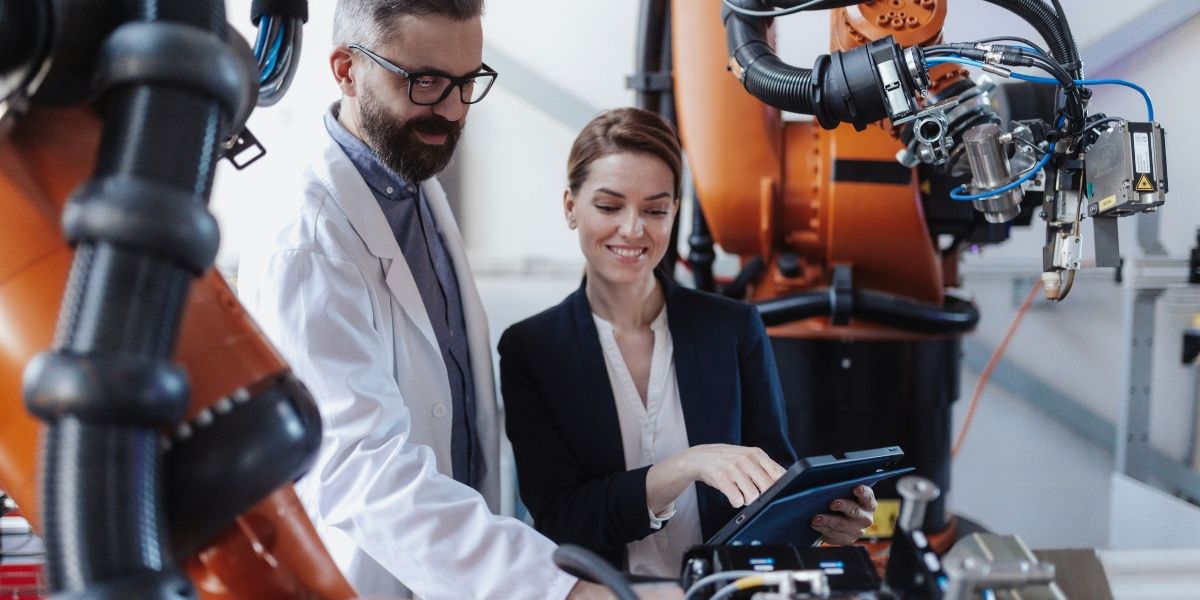

Y Combinator’s Summer 2026 Demo Day featured AI infrastructure startups developing technologies for data-center power, optical networking, specialized computing hardware and robotics. The cohort included companies pursuing floating data centers, energy-efficient networking, custom AI inference chips and systems for training or controlling robots, drawing attention from early-stage venture investors.
Key Takeaways
- Y Combinator’s Summer 2026 cohort included startups working across AI infrastructure and deep technology.
- Atomarine is developing floating data centers designed to address power, cooling and land constraints.
- Dipole Labs is developing optical networking hardware for AI data centers.
- Lamb Labs is building specialized inference chips designed to reduce memory-bandwidth demands.
- Robotics companies in the cohort include Praxis Robotics, Nori, Cosmic Robotics and Waddle Labs.
Y Combinator’s Summer 2026 Cohort Features Deep-Tech Startups
Y Combinator’s latest Demo Day featured a group of startups focused on infrastructure problems connected to artificial intelligence and robotics. The Summer 2026 cohort presented companies working on data-center infrastructure, networking hardware, computing chips, robotics data and robot-control systems.
The startups included Atomarine, Dipole Labs, Lamb Labs, Praxis Robotics, Nori, Cosmic Robotics, Parasma and Waddle Labs. Isengard Industries was also among the companies receiving attention from investors, although its work centers on defense drones rather than the AI infrastructure areas covered in the core KivoDaily focus.
The companies drew attention from early-stage venture investors surveyed around Demo Day. The startups identified by multiple investors included businesses pursuing different technical approaches to infrastructure constraints.
The breadth of the cohort also follows recent developments among AI chip startups building hardware for AI inference and deployment. Those companies are addressing infrastructure at the processor and connectivity level, while the YC startups are working across several additional layers of the computing stack.
Atomarine is developing floating data centers that could place computing infrastructure at sea. Dipole Labs is working on optical networking hardware intended to move data between computing components more efficiently.
Lamb Labs is developing custom inference chips that hardcode AI model weights into silicon. Its approach is intended to reduce the memory-bandwidth bottlenecks associated with conventional AI inference hardware.
Other companies are addressing the physical systems needed to support robotics. Praxis Robotics collects video and real-world work data for companies developing robots, while Waddle Labs is developing an application programming interface that uses artificial intelligence agents to generate robot-control code.
The cohort also includes companies pursuing consumer and industrial robotics. Nori is developing a lower-cost robot for household tasks, while Cosmic Robotics is building autonomous machines designed to perform heavy-duty work.
Atomarine Develops Floating Data Centers for AI Compute
Atomarine is developing nuclear-powered data centers designed to operate on floating platforms at sea. The startup’s approach addresses several infrastructure constraints identified in the Demo Day coverage, including limited power availability, cooling requirements and opposition from local communities to new data-center construction.
The company plans to begin with a gas-powered pilot in 2028. It plans to transition to floating nuclear power ships in 2032.
Atomarine was co-founded by an MIT graduate with degrees in computer science and naval engineering and an MIT PhD student in nuclear engineering. The technical background of the founders is directly connected to the company’s approach to computing infrastructure and marine engineering.
The startup says it has secured more than $4 billion in customer interest through letters of intent. That figure represents stated customer interest rather than reported revenue.
The company’s proposed use of seawater for cooling is another component of its infrastructure model. Traditional data centers require substantial cooling capacity, and Atomarine’s concept places computing equipment in a marine environment where seawater could provide cooling.
The company is therefore approaching AI infrastructure from the physical location of computing facilities rather than from the design of computing chips or software. Its proposed system combines data-center infrastructure with marine power and cooling systems.
Dipole Labs Targets AI Data-Center Networking Constraints
Dipole Labs is developing optical networking hardware for AI data centers. Its technology addresses the movement of data between GPUs and other components inside large computing systems.
In conventional networking systems described in the Demo Day coverage, data can be converted from light into electricity and then converted back into light. Those conversions consume power and generate heat.
Dipole Labs says its optical switch can avoid that conversion process by keeping data in optical form as it moves through the networking system. The company is targeting the amount of computing time and energy consumed by data movement between chips.
The issue becomes relevant when large numbers of GPUs operate together. GPUs can perform calculations at high speed, but their performance can be affected when they must wait for data to move between components.
Dipole Labs is therefore targeting a part of AI infrastructure that sits between computing hardware and the wider data-center network. Its approach focuses on improving the movement of information rather than increasing the processing capability of an individual GPU.
The company was among the startups receiving attention from investors during the YC Demo Day assessment. Its technology represents one of several approaches in the cohort aimed at addressing infrastructure requirements created by AI computing.
The focus on networking also connects with the broader development of AI infrastructure platforms being built for organizations that need to manage artificial intelligence workloads. While Dipole Labs is developing physical networking hardware, other startups are addressing infrastructure through software.
Specialized Chips Address AI Inference Efficiency
Lamb Labs is developing specialized inference chips that hardcode AI model weights directly into silicon. The company calls these chips Model Processing Units, or MPUs.
The startup’s approach targets the energy and memory requirements involved in AI inference. Conventional AI chips can spend substantial energy retrieving model weights from memory during inference.

Photo Credit: Unsplash.com
By placing model weights directly into the silicon, Lamb Labs aims to eliminate the memory-bandwidth bottleneck associated with repeatedly accessing those weights. The company’s technology therefore focuses on the hardware architecture used to execute AI models rather than the models themselves.
Lamb Labs was co-founded by an Imperial College London AI PhD and an Oxford theoretical physicist. The founders are applying specialized hardware design to a specific problem in AI computing.
Parasma is pursuing a different approach to computing efficiency. The company is investigating the use of human brain cells as a potential computing resource, with the stated goal of finding a more energy-efficient alternative to current AI computing hardware.
The two companies illustrate different technical approaches to computing efficiency within the same YC cohort. Lamb Labs is developing specialized silicon, while Parasma is investigating biological computing.
The hardware focus also differs from startups using AI primarily to streamline business operations. AI-driven startup formation is expanding across areas such as professional services, while these YC companies are developing underlying technologies for computing systems and machines.
Robotics Startups Expand the YC Infrastructure Focus
Several companies in the Summer 2026 cohort are applying artificial intelligence and automation to robotics. Their products cover data collection, household tasks, heavy industrial work and robot-control software.
Praxis Robotics works with businesses to collect videos and data showing humans performing real-world work. The company converts that information into training material for businesses developing robots. It says it has captured video data across more than 150 environments and works with publicly traded companies.
Nori is developing an affordable robot designed for everyday household tasks, including cleaning and folding clothes. Users can operate the robot through a laptop application. The company launched six weeks before the Demo Day coverage and reported nearly $500,000 in sales.
Nori’s robot is priced at about $1,600, compared with a roughly $20,000 price cited for Neo, another humanoid robot. The price difference places Nori’s product in a different consumer price range while targeting similar household applications.
Cosmic Robotics is developing autonomous robots capable of lifting heavy objects. The company says its technology is already being used to install solar panels across the United States and that it has $25 million in contracts through 2027.
Its founders also have a longer-term goal of building a city on Mars, with robotic heavy-duty technology positioned as an early step toward that objective. The company hopes to begin an exploratory mission by 2028.
Waddle Labs is taking a software-focused approach to robotics. Founded by Harvard graduates, the company is developing an API layer that uses large language model agents to generate code for controlling robots.
The system is designed to allow developers to connect hardware to Waddle Labs’ API and describe tasks in natural language. Its AI agents then generate executable control code, check whether the task worked and configure the robot.
Together, the robotics companies cover several parts of the technology stack. Praxis Robotics is focused on training data, Nori on consumer robots, Cosmic Robotics on autonomous heavy-duty machines and Waddle Labs on software for robot control.
Frequently Asked Questions
What are AI infrastructure startups?
AI infrastructure startups develop technologies that support the computing systems required to build or operate artificial intelligence applications. The Y Combinator cohort includes companies working on data centers, networking hardware, specialized chips and robotics systems.
Which AI infrastructure startups appeared at Y Combinator’s 2026 Demo Day?
Companies featured in the Demo Day coverage included Atomarine, Dipole Labs, Lamb Labs, Praxis Robotics, Nori, Cosmic Robotics, Parasma and Waddle Labs. Each is pursuing a different technical approach within AI, computing or robotics.
What is Atomarine building?
Atomarine is developing floating data centers designed to operate at sea. The company plans a gas-powered pilot in 2028 and plans to transition to floating nuclear power ships in 2032.
What does Dipole Labs develop for AI data centers?
Dipole Labs is developing optical networking hardware designed to keep data in optical form as it moves through AI data-center systems. Its optical switch is intended to avoid light-to-electricity-to-light conversion.
What are Lamb Labs’ Model Processing Units?
Lamb Labs’ Model Processing Units are specialized inference chips that hardcode AI model weights directly into silicon. The company says the approach can eliminate memory-bandwidth bottlenecks associated with retrieving model weights during inference.