
By: Ravi Rajapaksha
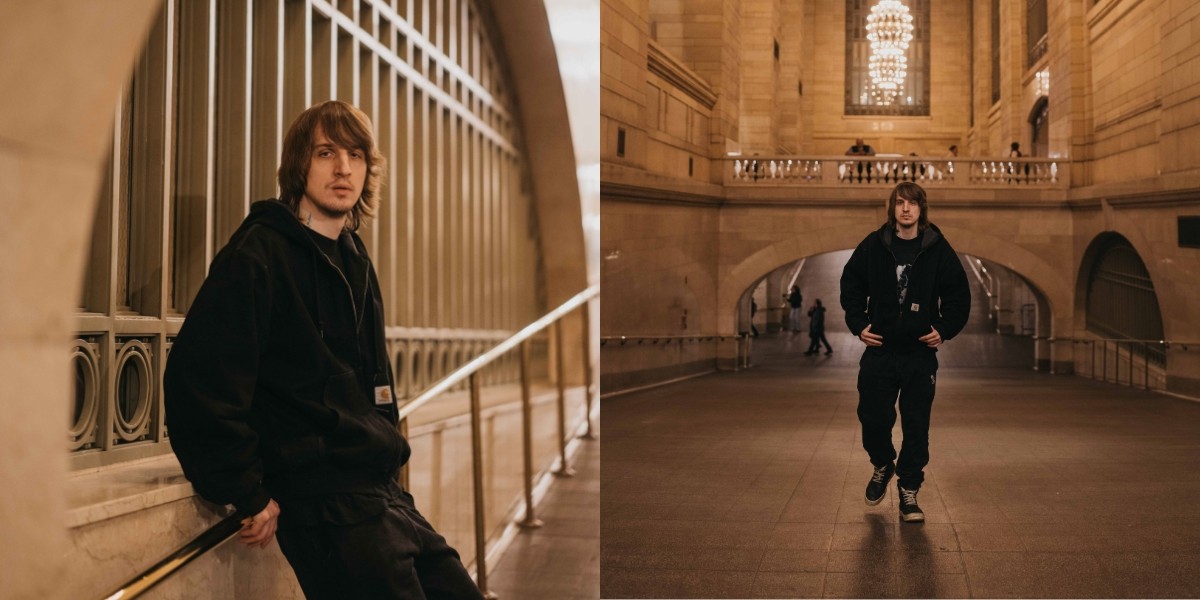
There is a particular kind of reputation that doesn’t come from marketing. It comes from people boarding flights. It comes from clients in Paris or Los Angeles or São Paulo opening a browser, finding one name, and deciding that New York is where they need to be. For Mikhail Andersson, founder of First Class Tattoos at 52 Canal Street in Manhattan, that kind of reputation took nearly two decades to build and, from the outside, looks almost inevitable now.
It wasn’t. When Andersson opened First Class Tattoos in June 2016, he was entering one of the most oversaturated creative markets in the world. Manhattan already had more tattoo shops than anyone could reasonably catalog, and differentiation required more than skill. It required a vision that could sustain itself. In the studio’s first year, Andersson reinvested every dollar of income back into its survival, absorbing personal debt to keep the lights on and the chairs filled. The gamble held. Nearly a decade on, the studio has grown quietly and deliberately while entire waves of tattoo culture have risen and dissolved around it.
Andersson began tattooing in Moscow in 2008, working then as a graphic designer, a detail that matters more than it might seem. His eye was already trained to think about composition, negative space, and the relationship between image and surface before a needle was ever involved. His parents had enrolled him in art school as a child, where he studied painting, music, and dance, and that foundational range gave his eventual tattooing a quality that resists easy categorization. He moved to Miami in 2011, worked across several studios, then relocated to New York, and after a year and a half of working in other people’s shops, he understood precisely what kind of place he wanted to build.

What Andersson does with color realism is the work that draws the most attention, but the label barely contains it. Nicknamed the “Michelangelo of the Tattoo Renaissance” by those who have written about his practice, he pulls surrealism into photorealistic foundations, references Van Gogh and arrives somewhere new, works classical motifs into abstract geometry, and produces results that feel not assembled but inevitable. “Tattooing is not the same as painting,” he has said, and the distinction is not a disclaimer but an artistic position. The skin is not a passive surface. It moves, ages, breathes, and any image placed on it must be built to coexist with that reality over time.
First Class Tattoos is not structured around one style or one artist’s ego. Andersson recruited talent from across the world to build a studio where black and grey realism, neo-traditional, Japanese traditional, fine line, watercolor, anime, surrealism, abstract, and trash polka coexist with genuine range. Piercing and laser tattoo removal are also available on-site. In September 2025, Andersson added a full-time piercer to the studio’s permanent team, the first formal service expansion since the shop opened. “I’m not looking to open more locations or chase something new for the sake of it,” he said at the time. “But adding a piercer full-time is the right move for us now.”
That restraint is part of what makes First Class Tattoos legible as a serious institution rather than a brand in expansion mode. The clients who return for touch-ups years later, the artists who traveled from other countries to work under one roof, the appointments that book out weeks or months in advance, these are not the byproducts of a marketing strategy. They are the residue of sustained attention to the actual work. On Canal Street, in a city that will always have another shop opening somewhere, that turns out to be enough.