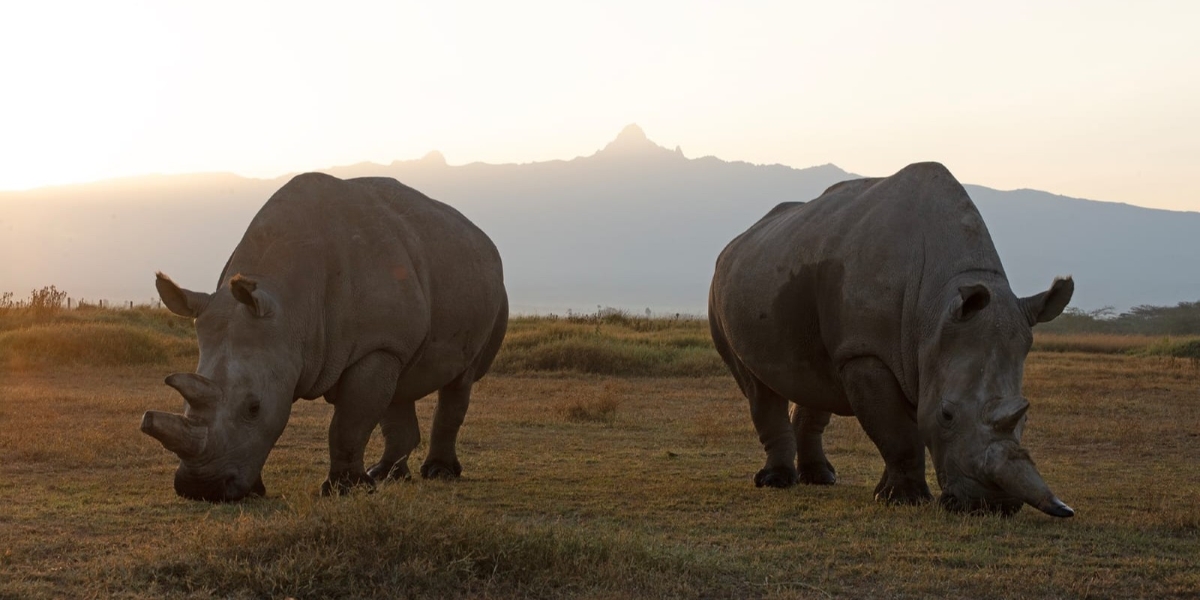

Picture a landscape in the Eastern Cape of South Africa. Rolling terrain, dry grass, enormous sky. Somewhere out there, a rhino moves through the bush. And somewhere not far away, a family wakes up, goes to work, and makes decisions that will shape whether that animal lives or dies.
That connection, between the people and the wildlife they share land with, sits at the core of everything Helping Rhinos does. Founded on March 2, 2012, in direct response to a poaching attack on a reserve the founder had visited just weeks earlier, the organization has spent over a decade building a model of conservation that refuses to separate wildlife protection from human wellbeing. The two, as Helping Rhinos sees it, are the same project.
The attack that sparked it all targeted a group of rhinos, including a female who would survive against extraordinary odds. Her name was Thandi. “Because I had such an emotional link to the Reserve where Thandi was poached, having spent 6 weeks there previously, I knew I could no longer sit back and just comment on how bad the situation was,” the founder recalled. That refusal to remain a bystander became the through-line for everything that followed.
Thandi’s Face on a Crisis Without One
Before Thandi, rhino poaching was, for most people around the world, a statistic. Numbers on a page. A tragedy too abstract to feel personal.
Thandi changed that. “Prior to her attack, for many people the issue was just statistics and numbers on a page, but Thandi has given this crisis a face, and made it personal for people,” the founder explained. Her survival, her recovery, and eventually the birth of her first calf, Thembi, gave supporters something real to hold onto. A reason, as Helping Rhinos puts it, for hope.
That shift from abstract to personal is not just an emotional strategy. It is the foundation of effective community-based conservation. When people, whether they’re donors in London or farmers in KwaZulu-Natal, feel a genuine connection to wildlife, the behavior changes that follow are more durable. Conservation education works the same way. It doesn’t start with rules. It starts with relationships.
Rhino Strongholds: Space as a Conservation Strategy
Ask anyone at Helping Rhinos what the biggest threat to rhinos is, and the answer might surprise you. It’s not only poaching. It’s space.
“Lack of space is a huge challenge not just to rhino conservation but conservation in general,” the organization has noted. “Wildlife needs space to exhibit natural behaviors and grow. If we give nature space, it is far more able to take care of itself, requiring less human intervention and management.”
This thinking drives Helping Rhinos’ flagship initiative: Rhino Strongholds. The concept involves expanding and connecting habitats across Africa by restoring degraded land, purchasing new areas, and reintroducing rhinos to regions where they haven’t roamed in years. In the Eastern Cape, effective collaboration among landowners and conservation bodies has already produced wildlife corridors connecting previously isolated protected areas. The expanded range means more rhinos can live there. And critically, this region has maintained impressively low poaching numbers.
But the Rhino Strongholds model is not just a win for wildlife. It’s a win for the people who live alongside them. Expanded protected areas create jobs. They build local economies. They give communities a direct, financial stake in the survival of the animals they share the landscape with. Conservation, Helping Rhinos insists, can only work when it works for people too.
The Risk of Playing It Safe
There’s a tempting shortcut in wildlife protection. Lock the animals up. Build fences. Control every variable. Rhinos kept in small, fortified enclosures are, in theory, safer from poachers.
But Helping Rhinos rejects that logic. “We could keep rhinos very safe by only holding them in small, fortress enclosures, but that’s not a long-term conservation solution,” the organization has said. The real goal is sustainable rhino populations thriving in natural habitat, contributing to the ecosystems they evolved to shape. The risks of open landscapes are real. But the benefits, for the species and for the biodiversity that depends on them, outweigh those risks.
Running anti-poaching units involves daily decisions about that balance. Teams on the ground face immediate threats. And yet every tactical choice connects back to the long-term vision. It’s a tension that defines conservation leadership, and one that Helping Rhinos has learned to manage not by eliminating risk, but by building the partnerships, processes, and people needed to respond when things go wrong.
What Loss Taught the Orphanage Teams
In 2018, two young rhinos at the Zululand Rhino Orphanage died within days of each other. Their names were Ntoto and Isomiso. Both had lost their mothers to poachers. Both were roughly halfway through rehabilitation, on track to be returned to the wild. Then, without warning, both fell ill from a cause that has never been fully identified.
The care team did everything they could. The vets worked around the clock. But Ntoto and Isomiso didn’t make it.
“While this tragic loss still sits with us, it not only strengthened our resolve to do all we can for our orphans, but it also enhanced our rehabilitation process and has gone on to inform future decisions around orphan welfare,” Helping Rhinos reflected. That’s the nature of conservation work. Grief and learning are not separate things. You carry the loss, and you use it.
The same pattern emerged at Ol Pejeta Conservancy in Kenya, a long-term Helping Rhinos partner and home to the last two northern white rhinos on earth. A surrogate southern white rhino became pregnant through IVF, a world first and a proof of concept critical to saving the northern white rhino from extinction. Seventy days into a 16-month pregnancy, the surrogate died, infected by Clostridia bacteria released into floodwater after extreme, climate-related rainfall. A crisis team assembled quickly, established vaccination programs, and quarantined affected areas. The adopters and supporters who follow Najin and Fatu closely were kept fully informed throughout.
The pregnancy had already worked. That was not taken away. But the incident underscored something Helping Rhinos talks about openly: as the climate crisis deepens, conservation teams must be ready for the unexpected.
Community, Connectivity, and the Long Game
Helping Rhinos’ network of conservation partnerships is built on yearly reviews, shared values, and something harder to measure: tenacity. The management teams across partner projects share a common thread. They’re not motivated by comfort. “Conservation is often under-funded, under-staffed and under-resourced,” the organization acknowledges, “so a willingness to go above and beyond is a common trait in this field.”
That willingness is mirrored in how Helping Rhinos connects with its global supporter base. In-person events, live-streamed procedures, real-time footage from the field, and a regular email newsletter all serve the same purpose: closing the distance between a supporter in Manchester or Melbourne and a rhino moving through the Eastern Cape. When people see the work directly, they act.
The milestones that matter most to Helping Rhinos tell the story of that long game in action:
• Thandi giving birth to her first calf, Thembi, years after surviving a poaching attack
• The world’s first successful rhino IVF pregnancy, achieved at Ol Pejeta despite the tragedy that followed
• Expanding connected conservation landscapes in the Eastern Cape, creating new habitat and new livelihoods
• Building wildlife corridors that allow rhinos to roam ranges large enough to support growing populations
• Developing and refining the rehabilitation process at the Zululand Rhino Orphanage after the loss of Ntoto and Isomiso
Each of these represents a decision made under pressure, with imperfect information, in a field where the stakes couldn’t be higher. And each one has shaped what comes next.
The long-term vision for Helping Rhinos extends beyond southern Africa to more countries across the continent, and eventually to the Asian rhino species as well. All of it runs through the Rhino Strongholds model: secure, expanded habitats where wildlife has room to grow, where communities have reasons to protect rather than poach, and where the distance between a thriving ecosystem and a resilient human community collapses entirely.
Because in the end, that’s what Thandi represents. Not just survival. The possibility that when people decide to act, and when the systems around them support that action, wildlife can come back from the edge. And so can hope.