
Modern watch manufacturing depends heavily on process control. In large production centers across China, Switzerland, and Japan, quality management systems often determine whether a factory can maintain stable long-term output. Industry analysts have noted that the global watch market exceeded $75 billion in value in the early 2020s, while OEM and ODM suppliers became increasingly integrated into international production networks. Within that system, factories handling private-label manufacturing faced pressure to maintain consistency across materials, movement types, waterproofing testing, and finishing processes. As a result, many manufacturers expanded their quality control procedures beyond final inspection. They introduced supervision during multiple stages of production.
Billow Time Watch Co., Ltd., based in Shenzhen, China, developed within that broader manufacturing environment. According to company material and trade platform records, the factory was founded in 2004 by four co-founders with 23 workers and eight machines. Early operations reportedly included polishing, drilling, QC, and QA functions. However, the company did not yet operate CNC machining, engineering, or international trading departments at that stage. Public company descriptions indicate that inspection procedures were in place from the beginning, even when production remained limited to relatively basic stainless-steel quartz watches.
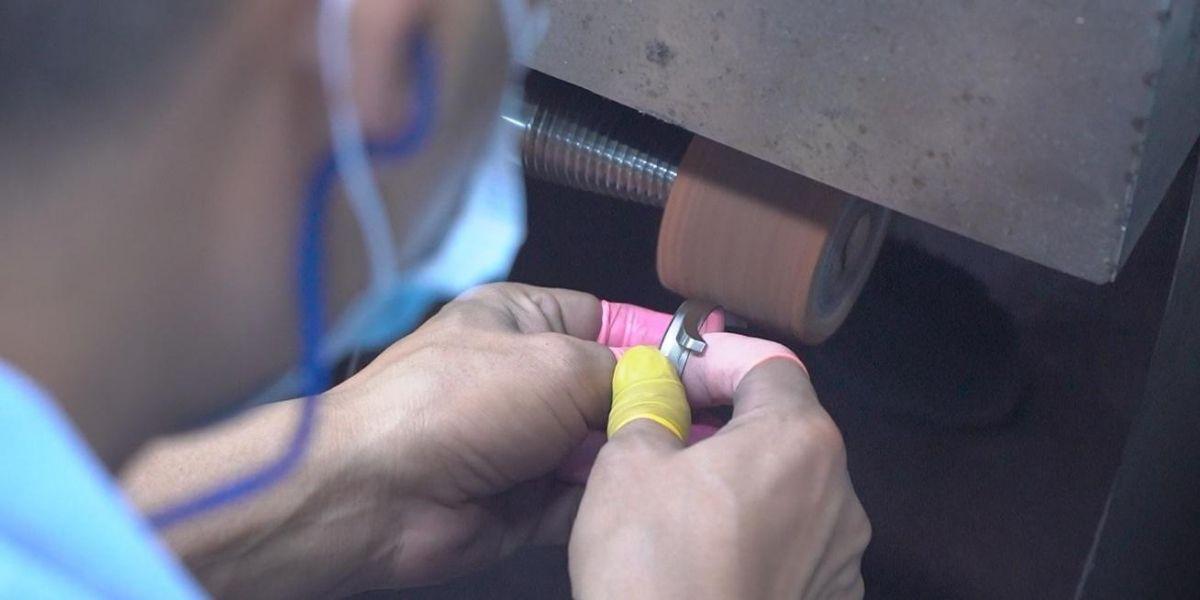
During the mid-2000s, visual inspection remained common among smaller watch factories in southern China. Watch cases, straps, crowns, and dials were often checked manually under direct lighting conditions before moving into assembly stages. This form of inspection focused largely on scratches, polishing irregularities, machining marks, and alignment defects. Billow Time’s early QC structure appears to have followed a similar operational model. Public descriptions from the company indicate that polishing and drilling departments worked alongside quality inspection units during the company’s first production period.
As the company expanded production capacity, quality control procedures became more layered. By around 2010, according to information published by the company, Billow Time began investing more heavily in machinery, overseas communication channels, and technical systems after the internet growth accelerated commercial activity in China. This operational shift reportedly coincided with broader factory development that later included CNC machining, research and development functions, assembly operations, and international trading departments. Such changes generally require additional inspection stages because component tolerances become more sensitive when production methods diversify.
The company’s expansion into materials such as titanium, Damascus steel, forged carbon fiber, bronze, and ceramic also appears to have affected inspection practices. Different materials create different production variables. Titanium machining, for example, typically requires tighter tooling supervision because of heat retention during cutting. Ceramic parts often demand careful crack inspection during finishing and handling. Damascus steel surfaces require pattern consistency checks after polishing. Industry manufacturing guides frequently note that multi-material production increases the need for stage-based verification rather than relying only on final review. Billow Time’s public product descriptions show that the company gradually incorporated these materials into OEM and ODM production over time.
By the late 2010s, company descriptions referenced a more structured manufacturing framework. Publicly available material states that the factory had established departments for CNC, R&D, customer service, assembly, and international trading while expanding to more than 300 employees after nearly two decades of development. In manufacturing environments of that scale, quality control procedures generally become divided across separate operational stages. Machining inspections monitor dimensional consistency. Assembly inspections verify movement, installation, and sealing. Final inspections often focus on finishing, waterproof performance, dial alignment, and timing stability. Billow Time’s own factory descriptions reference waterproof testing at multiple stages of production.
One area repeatedly referenced in company material is waterproof testing. Public descriptions from Billow Time state that watches are tested at various production stages and mention that waterproof testing reaches 100 ATM for certain diver watch configurations. In the wider watch industry, waterproof testing normally includes pressure chamber verification, crown sealing checks, and case back inspection before shipment. While the company does not publicly publish rejection rates or certification figures, its factory descriptions suggest that water resistance checks became integrated into regular production oversight rather than being treated solely as end-stage review.
The distinction between QC and QA also became more visible as the company structure expanded. Quality control generally refers to direct inspection of finished or semi-finished products, while quality assurance focuses more broadly on process consistency and production management. Billow Time’s published descriptions mention both QC and QA departments as part of factory operations. In practical manufacturing terms, that distinction often means inspection is no longer isolated to one department but distributed through workflow planning, machining standards, assembly sequencing, and supplier coordination.
OEM and ODM production models also influenced inspection procedures. Factories producing watches for outside brands often handle multiple specifications simultaneously, including different dial layouts, case dimensions, lume standards, and movement configurations. Public FAQ documents published by Billow Time indicate that the company accepts customized orders involving logos, colors, materials, and structural modifications. Such variation usually requires production tracking systems capable of separating specifications between client orders. Industry-wide, factories handling private label production often rely on stage-based approval systems to reduce assembly mismatches during multi-order manufacturing.
Company descriptions also reference customer confirmation procedures during design and sample production stages. According to Billow Time’s OEM and ODM documentation, technical drawings are reviewed before production begins, after which samples and mass production proceed according to approved specifications. This form of procedural control is common within contract manufacturing because approved engineering files become reference points for machining and assembly inspection later in production. Public descriptions mention the use of CAD engineering drawings and SolidWorks files as part of that workflow.
Today, Billow Time Watch Co., Ltd. presents itself publicly as an OEM and ODM manufacturer operating across machining, assembly, engineering, and customer service divisions. Available online information does not position the company as a consumer luxury brand leader, but rather as a manufacturing service provider within China’s wider watch production sector. Its documented development from early visual inspection practices to multi-stage oversight reflects broader changes that affected many Shenzhen-based factories during the expansion of globalized watch manufacturing between 2004 and the 2020s.