Finding Strength in Adversity: Why Claudia W. Salassidis’s Memoir Matters Now

By: Joyce P. Martinez

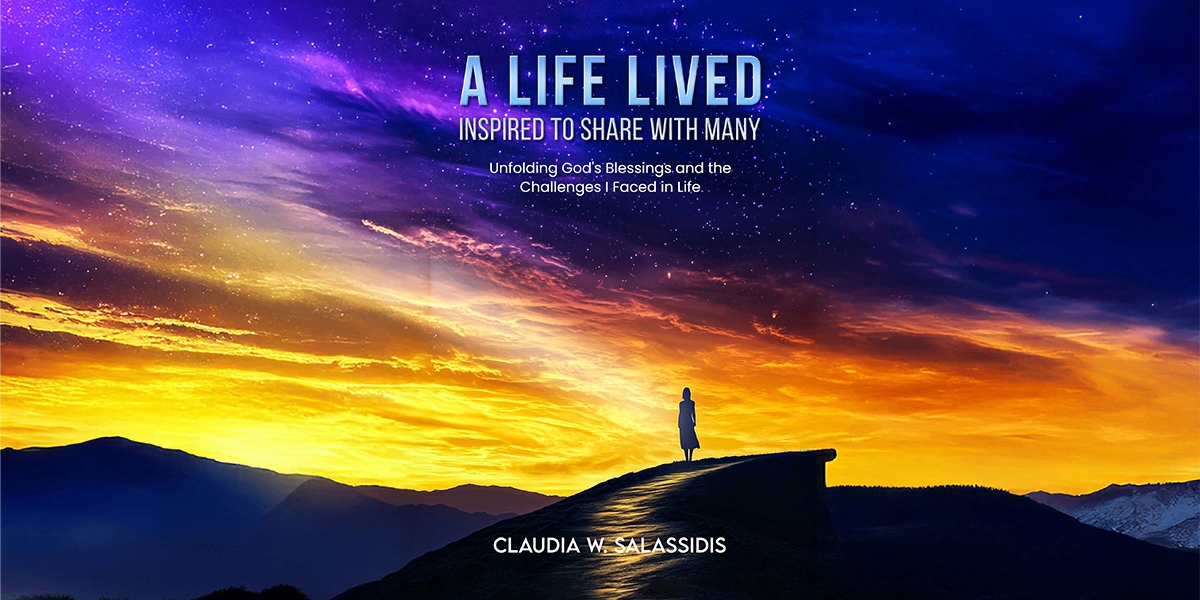
In a world where uncertainty and hardship seem ever-present, stories of resilience and hope are more relevant than ever. Claudia W. Salassidis’s new memoir, A Life Lived Inspired to Share with Many, arrives as a meaningful resource for anyone searching for purpose through life’s challenges and personal growth.

Through candid storytelling, Salassidis invites readers into her journey from her childhood in Jamaica to her experiences as an immigrant in North America, highlighting the importance of faith, family, and forgiveness in shaping a sense of identity and belonging.

What makes this memoir stand out is its openness and vulnerability. Salassidis does not shy away from the pain of betrayal, the sting of exclusion, or the depths of depression. Instead, she shares her struggles honestly, offering practical tools and spiritual reflections for navigating adversity. Her narrative goes beyond simply enduring hardship—it focuses on transforming difficult moments into sources of strength, healing, and compassion.

Salassidis’s story is deeply influenced by her faith, but its messages extend beyond religious boundaries. She illustrates how love can overcome hate, how forgiveness has the power to heal emotional wounds, and how community can provide support during our lowest points. Her insights on family, friendship, and self-worth resonate with anyone who has felt disconnected, isolated, or misunderstood.

For readers who are facing their own challenges—whether grief, mental health struggles, or the complexities of migration—A Life Lived Inspired to Share with Many offers not just comfort but also potential guidance. It encourages readers to seek help, embrace vulnerability, and recognize strength in their own narratives. The book offers a thoughtful exploration of resilience, promoting an understanding of how we can all grow from life’s trials.

Salassidis’s openness about her battles with depression and anxiety, especially following a life-altering accident, helps reduce the stigma around mental health and suggests that seeking help is a courageous step rather than a sign of weakness.

This memoir also highlights the everyday heroes in our lives: the family members, friends, and mentors who walk alongside us through our most difficult times. Salassidis’s gratitude toward those who supported her is evident throughout the book, reminding us that we are often supported more than we realize, even in moments of self-doubt.

In today’s fast-paced, often disconnected world, Claudia W. Salassidis’s memoir serves as a reminder to slow down, reflect, and reconnect with ourselves, with others, and with the values that sustain us. It is a story of faith, but also of action—a gentle reminder that, with resilience, we may rise above our challenges and inspire others in the process.

If you are looking for a book that will both move and motivate you, A Life Lived Inspired to Share with Many is worth considering. It is more than just a memoir; it can be a companion for anyone navigating the complexities of life, offering hope, wisdom, and a reminder that, even in difficult times, there is always the possibility of finding light.

Victoria Trabosh Answering the Powerful Call of Purpose

By: Deborah Monfette

Victoria Trabosh didn’t find her purpose, it found her. With more than 40 years of leadership experience across the corporate, nonprofit, and coaching worlds, she is now widely recognized as a transformational coach, international speaker, bestselling author, and the creator of the AdFARsity™ framework. But her journey to global impact began not with a business strategy but with a single word.

A Life-Changing Conversation

At a World Vision event in Portland in 2004, Victoria introduced herself to the only African woman in the room. When she told the woman, Rita, that her late mother’s name had also been Rita, the woman paused, looked her in the eye, and said, “Then I will be your mother.”

That simple but profound moment formed an unexpected bond. Rita Ngarambe was a Rwandan leader working to rebuild her country after the 1994 genocide. Her strength, compassion, and clarity of mission deeply moved Victoria.

That moment sparked a connection that would change the trajectory of her life and work. Moved by the story of post-genocide Rwanda and the strength of its people, Victoria said yes to an invitation that would forever alter her definition of leadership.

At the time, she didn’t know where Rwanda was on a map. She had no formal plan, only a willingness to listen, show up, and act. What she didn’t expect was that Rwanda would become not only a place of service, but a source of her deepest personal growth.

Building Itafari, Brick by Brick

Before I ever set foot in Rwanda, I knew I needed to do something more than just show up. I needed to act. So, I organized a fundraiser called Brick by Brick, a name inspired by both the physical rebuilding in Rwanda and the emotional rebuilding required after unimaginable trauma. That evening, each guest discovered a small brick hidden beneath their chair.

As they held the bricks in their hands, I shared what they represented: the weight of a starving child, the burden of a mother carrying her family, the color of the soil seen by women in moments of violation. But I also told them, “This brick symbolizes hope. And with it, we will help Rwanda rise, brick by brick.”

The night was powerful. Oscar-nominated screenwriter Keir Pearson, who wrote Hotel Rwanda, generously provided 200 DVDs for attendees. The stories shared and the presence of the Rwandan diaspora created a moment no one would forget. By the end of the night, we had raised $23,000.

From Inspiration to Institution

That momentum led to the creation of the Itafari Foundation. When I told my husband I was planning to go to Rwanda, his response was, “You’re not going to Rwanda.” He was worried, of course. And understandably so. But the calling was too strong to ignore. I co-founded the foundation with two other women. We didn’t hold focus groups or conduct market research, instead we simply asked a Rwandan friend for the word for “brick”. It happened to be, “itafari”, and knew immediately that was the name. It carried the weight and promise we were trying to honor.

Over the next 11 years, Itafari raised more than $1.5 million, supporting microfinance programs for women, child sponsorships, education initiatives, goat cooperatives, and artisan development. We operated with less than 6% overhead and were entirely volunteer-led.

“We didn’t follow a plan,” I often say. “We followed the purpose.”

Between 2005 and 2025, Victoria traveled to Rwanda 13 times. She cried at genocide memorials, laughed with women in cooperatives, and learned what it meant to rebuild, not just infrastructure, but identity and trust. Rwanda, she says, became her greatest teacher.

“It taught me the power of presence, resilience, and completion,” she reflects. “After seeing what the people of Rwanda had lived through and how they continued to rise, I made a vow to never whine again. Gratitude and grit are now non-negotiables in my life and work.”

Her experience in Rwanda didn’t just shift her worldview, it reshaped her coaching philosophy. The lessons of clarity, courage, dignity, and service that she witnessed firsthand became the backbone of her AdFARsity™ framework, a method she now uses to help leaders turn adversity into aligned action.

Coaching That Transforms from the Inside Out

Today, Victoria works with executives, founders, and change agents around the world. Her coaching is not about quick wins, it’s about deep alignment. Using her proprietary framework, she helps clients lead with authenticity, navigate uncertainty, and create impact from the inside out.

“I teach what I’ve lived,” she says. “Rwanda showed me what’s possible when we lead from purpose, not ego. When we serve from humility, not fear.”

She believes leadership is not about holding power, but holding space for others, for healing, and for the future.

Returning with Purpose in 2025

Now based in Lake Oswego, Oregon, Victoria continues to write, speak, and coach while preparing for her 14th trip to Rwanda in October 2025. This time, she’s bringing others with her.

She’s leading a curated leadership journey through Rwanda designed for individuals ready to deepen their purpose, expand their perspective, and experience transformational growth. The journey will include visits to cooperatives, memorials, community organizations, and even a trek to see Rwanda’s famed mountain gorillas.

“It’s not a tour,” she says. “It’s a calling. We’re going to witness, to connect, and to grow.”

A Legacy of Listening and Action

“Your words and passion lit a spark in me. When you said people reach a point where they’re ready to play a bigger game—and there’s no going back—it landed deeply. Your journey is a reminder to rise up, listen to the voice in our hearts, and act now,” said client Maura Conlon-McIvor, Ph.D., an author, speaker, coach and psychologist.

What began as a spontaneous promise to a stranger has evolved into a lifetime of impact. For Victoria Trabosh, Rwanda is not just a country she supports, it’s a place that shaped her soul.

She believes the best leaders are those who answer the call, even when they don’t yet understand the path. “You don’t need all the answers to begin,” she says. “You just need to be willing to listen and act.”

And if you ask her what leadership means to her now? She’ll tell you it’s what happens when service meets courage, and vision meets integrity.

About Victoria Trabosh

Victoria Trabosh is a transformational coach, international speaker, bestselling author, and creator of the AdFARsity™ framework. She has over 40 years of leadership experience and co-founded the Itafari Foundation, which raised $1.5 million for Rwandan-led initiatives. 

Learn more at victoriatrabosh.com | Tour details: rwanda2025.com

How RECODemand Is Giving Real Estate Agents an Edge in a Competitive Market

The real estate market isn’t what it was five years ago. Or even two. Today, agents are working harder, spending more, and facing stiffer competition. Not just from other agents, but from rising ad costs, tightening inventory, and the fatigue that comes from chasing leads that don’t convert.

RECODemand has taken notice. And rather than pushing agents to do more of what’s burning them out, they’ve built something different, something smarter.

The Real Problem Isn’t Lead Volume, It’s Lead Quality

Talk to any agent grinding through a long workweek, and they’ll tell you they have leads. The question is: what kind of leads? How many are real buyers or sellers ready to act?

A surprising number of agents spend hours following up with people who clicked on an ad out of curiosity, not intent. It’s exhausting, and it chips away at what agents actually want to be doing: Building relationships and closing deals.

RECODemand doesn’t try to fix that by flooding agents with more names. Instead, they flip the model. Their approach centers on helping agents position themselves as experts through value-driven webinars. These are not flashy, over-produced sales pitches. They’re clear, useful presentations that help buyers and sellers feel informed, and ready to talk to someone who gets it.

One Funnel, Real Conversations

When Sherrod B., an agent from Idaho, decided to try RECODemand, he started with a $200 ad budget. The results were immediate. Nearly 100 people registered for his webinar. Almost half showed up. By the end, he had booked over a dozen one-on-one appointments, many of which came in days after the event, thanks to a follow-up campaign already built into the system.

Agents aren’t building campaigns from scratch or learning complicated ad software. They’re given the tools, coaching, and structure to launch something that works and keeps working.

Trust Beats Tactics

One of the biggest shifts in this business is how trust is built. It used to happen at open houses, or through referrals. But today, more often than not, it starts online.

The problem is, most digital marketing still feels impersonal. A Facebook ad with a few photos. A canned email. A landing page that looks like everyone else’s.

Webinars change that. When someone sits through a 30- to 45-minute session where an agent is explaining the process, answering questions, and sharing insights, a kind of bond forms. By the time that viewer fills out a contact form, they already know who they’re dealing with. And more importantly, they want to deal with them.

It’s Not About Being Everywhere, It’s About Being in the Right Place

There’s a lot of pressure in this industry to do more. Be on TikTok. Run more ads. Post every day. But more content doesn’t equal more conversions.

RECODemand shows agents how to step back and focus on something more sustainable. One high-quality webinar funnel, built to deliver consistent traffic, can outperform weeks of busywork.

It doesn’t make a lot of noise, and that’s exactly the point. While agents focus on their day-to-day, the system keeps working behind the scenes, drawing in people who already feel like they’ve had a proper introduction.

Not Just for Top Producers

The system isn’t just for agents closing 50 homes a year. In fact, many who start with RECODemand are solo agents or small teams looking to regain control of their pipeline. Most agents are done rolling the dice on questionable lead lists or costly ad experiments. What they’re really after is a system they own and actually understand, something that runs without guesswork.

What they get is structure. Coaching. Tools that make sense. And a way of doing business that doesn’t leave them drained by the end of the week.

Building a Reputation That Sticks

One of the most overlooked parts of marketing is what happens after someone sees your name. Most agents never get past that first impression. They look like everyone else. The message is too generic. The offer’s too vague.

But when someone attends your webinar, the dynamic changes. You’re no longer a stranger. You’re the expert they’ve already learned from. You’re the agent who helped make sense of something complicated.

In this market, that’s a serious advantage.

Final Thoughts

RECO Demand isn’t handing out quick tricks. It’s a more thoughtful approach, designed to help agents stand out for the right reasons and build something that lasts.

For those interested in how it all works, updates and insights are shared regularly on LinkedIn and Facebook.

In a space this crowded, blending in is the fastest way to be overlooked. What sets you apart now is how, and where, you show up.


Disclaimer: The information provided in this article is for general informational purposes only and does not constitute professional advice. Results may vary and are not guaranteed. Readers should seek appropriate advice before making business decisions.

Amber Duncan On Why ‘Tough Love’ Doesn’t Work on Gen Z and Millennials in Debt

By: Life After Debt

Given the multiple recessions, stock market crashes, and economic turmoil that Millennials, and to a certain extent Gen Z, have already experienced in their lifetime, it stands to reason that they might be more cautious about ‘traditional’ financial advice. In fact, research shows that 75% of Gen Z report experiencing negative mental health effects due to money stress (Payless Power, 2025), yet common solutions remain outdated and may not fully address the challenges of today’s economic environment: skipping a trip to Starbucks, cutting back on discretionary spending, and simply waiting for things to improve.

This disconnect suggests that Life After Debt, founded by financial advocate Amber Duncan, is reevaluating the traditional approach. With millions in consumer debt resolved, Duncan’s team offers not just strategies but also emotional support; a space where debt isn’t viewed as a shameful topic, and healing is considered a part of the process.

The Legacy of Mistrust

These younger generations grew up amid financial upheavals—the 2008 housing crash, mounting student debt, stagnant wages, and most recently, a global pandemic. As they entered adulthood, they found themselves navigating an economic system that no longer rewards loyalty or hard work in the same way it once did.

For them, debt isn’t just a number. It can be a symbol of ongoing instability. Traditional advice, often designed for a different economic climate, frequently reduces financial recovery to behavior modification. However, Millennials and Gen Z may need more than discipline; they may benefit from compassion, guidance, and systems that consider the realities of their circumstances.

Rather than simply rejecting old advice, these younger generations are rethinking their relationship with money. They’re asking more nuanced questions: “How does money affect my mental health?” “Why is no one addressing the emotional burden of debt?” “Where can I find an emotional roadmap for financial recovery?” These questions reflect a deeper shift, where financial well-being is not just about numbers, but about understanding and managing emotions.

Emotionally Intelligent Financial Support

At Life After Debt, financial support begins with a 15-minute Clarity Call. Unlike traditional financial counseling, which can often feel like a lecture, this conversation creates space for vulnerability, self-advocacy, and forward momentum. Duncan has redefined the power dynamic by encouraging callers to share their reasons for wanting change. This shift helps transform the experience from one that feels intimidating into something more empowering.

It’s this philosophy of meeting people where they are, not where someone thinks they should be, that sets Duncan’s approach apart. For many younger clients, it’s the first time they’ve felt understood in a financial discussion.

From Crisis to Clarity

Amber Duncan’s credibility comes from personal experience. After facing bankruptcy during the 2008 crisis, she didn’t just recover—she reshaped her financial life. Her journey from survival to service became the foundation for Life After Debt, and her belief is straightforward: financial independence is a possibility for everyone, but it begins with letting go of shame.

Through transparent strategies like debt settlement negotiations, legal consumer protections, and customized plans that avoid one-size-fits-all budgets, Duncan’s team has helped thousands regain control. The key isn’t achieving perfection with spreadsheets, but fostering a mindset shift, and early indications suggest this approach is proving successful.

A New Era of Transparency

One of the defining traits of younger generations is their openness about money. From viral “debt confessionals” on TikTok to anonymous salary spreadsheets on Reddit, Millennials and Gen Z are making financial discussions more public than ever. They no longer hide their financial struggles; instead, they’re openly questioning the systems that have contributed to their challenges.

Life After Debt has embraced this cultural shift. Duncan’s content, whether on social platforms or in one-on-one conversations, is candid, personal, and free from unnecessary jargon. She’s not trying to impress financial experts; she’s focused on empowering individuals who feel stuck.

And this approach appears to be effective. As debt becomes a more frequent experience, younger generations aren’t hiding from it. Instead, they are seeking tools and solutions, not lectures or shame.

A Model Built on Empathy

Empathy should be considered a key component in financial discussions. It can be an essential tool to uncover the root causes of debt and create a path forward. When individuals feel like they are in a safe, non-judgmental space, they may be more motivated to understand their situation and take positive steps. This is why Duncan’s model is effective. Clients walk away from the Clarity Call with a personalized plan, concrete numbers, and the reassurance that they’re not alone in their journey.

Duncan’s approach empowers people to ask difficult questions, express fears, and take the next step forward without feeling like they’re being condescended to. Many of her most passionate supporters are women, who are often excluded from traditional financial discussions despite managing household finances at higher rates.

Financial Independence Without Shame

The old narrative about debt—one of failure, recklessness, or irresponsibility—is gradually being replaced. A new narrative is emerging, one in which people fall behind not because of a lack of discipline, but because of life’s unpredictability. In this new narrative, recovery is not only possible, it’s a journey that everyone deserves.

Duncan’s mission extends beyond the numbers. It’s about reshaping the story of money. Through transparency, dignity, and resilience, she is helping people rewrite their financial future. This type of financial content is resonating with many in 2025.

The Invitation to Begin Again

Financial independence shouldn’t be viewed as an unattainable goal; it should be a natural next step in someone’s financial journey. Life After Debt invites those burdened by shame, confusion, or fear to take a different first step. The 15-minute Clarity Call isn’t a sales pitch; it’s an opportunity to pause, reflect, and be honest about one’s situation. It’s a chance to be heard and to begin again with a plan that fits the reality of today’s world.

Because if Millennials and Gen Z are redefining the financial rulebook, it’s time for financial support systems to evolve alongside them.


Disclaimer: The content of this article is for informational purposes only and should not be construed as financial advice. Financial situations are unique to each individual, and readers are encouraged to seek personalized advice from a qualified financial professional before making any financial decisions. While the strategies discussed may be effective for some, results can vary, and no specific outcome is guaranteed. Always conduct thorough research and consider your personal circumstances before acting on any financial recommendations.

Nia Renee Empowers Survivors Through Community and Transparency

Nia Renee’s Commitment to Empowerment

Nia Renee’s journey is not just about surviving; it’s about thriving. Just as her life has been marked by turmoil, it is also defined by her resolute commitment to helping others find their footing. Through her platform, How to Love a Battered Woman, she offers a myriad of resources designed to support survivors of narcissistic abuse. Each coaching package, workbook, and community engagement initiative is thoughtfully crafted to aid individuals on their healing journeys.

The Battered Hearts Facebook group serves as a sanctuary where members can share their stories, seek advice, and find camaraderie among fellow survivors. In this space, individuals are encouraged to express their vulnerabilities. It fosters an environment where healing can flourish. Nia believes that open dialogue is vital. Her approach prioritizes transparency, ensuring that everyone involved feels seen and heard.

Nia’s expertise shines through not only in her coaching but also in her motivational speaking endeavors. She resonates with audiences by addressing the complexities of recovering from abusive relationships. Her message is empowering, reminding attendees that it’s possible to reclaim one’s self-worth and pursue fulfilling relationships beyond the shadows of past trauma.

One notable aspect of her work is the emphasis on setting healthy boundaries—essential tools for anyone seeking to navigate their lives after abuse. It’s about teaching clients to advocate for themselves while nurturing their emotional well-being. Nia’s coaching provides actionable strategies that help individuals identify their needs and assert their rights in relationships.

Nia Renee’s life and work are grounded in a powerful ethos: “My mission is to help at least one person feel less alone.” This heartfelt statement flows through everything she does. It encapsulates her desire for connection and authenticity. Her story is one of resilience, and by sharing it, she inspires countless others facing their own struggles.

To further enrich the support she provides, Nia has also ventured into the podcasting world. Through Battered Hearts Radio, she offers discussions that dive deep into the nuances of relationships and healing. The podcast also highlights essential topics like self-love and personal empowerment, inviting guests to share their own transformative journeys. These conversations not only provide insights but also cultivate a sense of community among listeners.

As Nia Renee continues to support survivors of narcissistic abuse, her vision grows. She embodies the belief that true healing comes from within, fueled by self-acceptance, love, and understanding. Her engaging approach ensures her clients aren’t alone but rather part of a collective journey toward empowerment.

In closing, Nia Renee exemplifies hope and perseverance. Her life’s work encourages countless individuals to break free from cycles of abuse and seek healthier, more fulfilling lives. It’s a testament to the belief that despite adversities, healing is always achievable.

For those looking to connect with Nia and her inspiring community, updates and resources can be found on her Instagram page, where engagement is vibrant and supportive. Nia Renee’s mission to empower remains unwavering, and anyone touched by her work knows that there is light at the end of the tunnel.

Nia Renee’s Legacy of Resilience and Community Engagement

Nia Renee’s journey is not just a personal story of transformation; it has blossomed into a movement that actively cultivates community among survivors of narcissistic abuse. The heart of her mission lies in fostering connection and understanding, where vulnerability is not viewed as a weakness but as a catalyst for growth. By sharing her experiences and insights, Nia creates a ripple effect that encourages others to step into their power.

The resilience she demonstrates serves as a guiding light for those navigating their own challenges. Understanding that healing is a multifaceted journey, Nia curates resources that align with various stages of recovery. Her coaching packages are tailored to meet individuals where they are, whether they are just starting to recognize the effects of their trauma or are seeking advanced strategies for maintaining relationships free from toxicity.

Additionally, Nia’s work addresses the often-overlooked aspect of chronic illness in recovery. Having faced her own medical trials—six brain surgeries and living with multiple rare disorders—she recognizes that these challenges can compound the difficulties of healing from emotional abuse. By being transparent about her own struggles, she opens the door for others to share their experiences, proving that no one is alone in their fight.

Through her advocacy, Nia emphasizes the importance of education in breaking the cycle of abuse. Her book, “The Road to Intentional Dating: The Intentional Dating Workbook,” is an essential tool for anyone aiming to embark on a healthier dating journey. It provides practical exercises and reflective questions, guiding individuals to identify their needs and desires while establishing firm boundaries. Nia’s approach integrates a compassionate understanding of the past with actionable steps for the future.

There is a vibrant energy within the community she has fostered. The Battered Hearts Facebook group serves as a platform not just for sharing stories but for celebrating each small victory. Nia believes that recognition of progress, no matter how minor, can empower individuals to keep moving forward. This supportive environment becomes a sanctuary where healing occurs collectively. Participants exchange tips, seek guidance, and, most importantly, uplift one another through shared understanding.

Meanwhile, Nia continues to expand her outreach through relevant public speaking engagements. She passionately shares her story with diverse audiences, helping to raise awareness about narcissistic abuse and the importance of recovery. Each talk becomes an opportunity to drive change and instill hope in those who might feel lost in their journey. Her conviction that healing is not merely possible but probable resonates deeply with all who hear her. Nia challenges the societal narrative surrounding abuse—she redefines it, creating space for reconciliation with one’s self.

In essence, Nia Renee is more than a coach or a speaker; she is a beacon of hope for many. Her work is a reminder that while scars from the past may linger, they do not have the power to dictate one’s future. Instead, her processes and insights encourage individuals to embrace their stories, learn from them, and ultimately transform them into sources of strength.

As Nia continues to make inroads in the wellness and empowerment spheres, anyone interested in her offerings or community engagement can follow her journey and updates on her Instagram page, where a supportive network thrives. It’s clear that through determination and community, Nia Renee is helping rewrite the narratives for those who have felt voiceless. Her legacy is one of empowerment, resilience, and, above all, love for oneself and others.


Disclaimer: The information provided is not intended as professional advice and should not be substituted for guidance from licensed therapists or medical professionals. Individual experiences may vary, and readers are encouraged to seek personalized support as needed.

Leading with Purpose: How Human-Centered Leaders Are Transforming Communities

Compassion, authenticity, and collaboration aren’t just values—they are vehicles of transformation when leaders choose to act with purpose. Yusef-Andre Wiley has turned these principles into a movement. 

His leadership model—rooted in lived experience and human-centered values—offers a blueprint for systemic change in communities that have long been overlooked.

Wiley’s journey is not just about personal redemption. It’s a powerful case study in how empathy-driven leadership can dismantle cycles of incarceration and poverty. After experiencing the criminal justice system firsthand, Wiley transformed his life, and it is his mission to ensure others can do the same. His work today combines deep compassion with pragmatic tools, resulting in measurable, community-wide impact.

Reimagining Leadership Through Lived Experience

What makes Wiley’s approach so effective is his commitment to authenticity. Rather than speaking from a podium of theory, he leads from a place of lived truth. His style is deeply collaborative, amplifying the voices of those most affected by injustice and providing them with the tools to lead their own transformation.

Through the Timelist model, he has institutionalized this philosophy. The program doesn’t simply provide temporary aid—it focuses on holistic support: housing, employment training, emotional wellness, and long-term mentorship. The ripple effect is clear. Communities once fractured by systemic neglect are now finding cohesion through empowerment and the building of trust.

Wiley’s partnerships reflect his belief in the power of collective impact. Collaborating with organizations like the John Maxwell Team and TEDx networks, he leverages cross-sector expertise to scale his vision. For under-resourced communities, these partnerships bring credibility, capital, and consistency—three essential ingredients often lacking in traditional intervention models.

Consulting for a New Era of Social Impact

Beyond Timelist, Wiley serves as a consultant to organizations eager to deepen their social impact. His insights, grounded in decades of hands-on experience, have become invaluable to startups and nonprofits navigating the complex intersection of justice, equity, and sustainability.

He doesn’t believe in parachuting solutions into communities. Instead, he guides organizations to listen better, build trust, and embed empathy into every operational layer. In a climate where social responsibility is often performative, Wiley’s methods challenge leaders to lead with humanity first.

What Leading with Empathy Really Means

According to Wiley, Empathy is a daily practice. It means walking alongside, not ahead.” It means designing programs that honor dignity instead of managing behavior. And most of all, it means recognizing that transformation doesn’t come from charity—it comes from equity.

Leaders across sectors can learn from this mindset. In a world of quick fixes, Wiley’s work serves as a reminder that sustainable change originates from the inside out, beginning with how leaders choose to engage and lead with intention. 

A Playbook for the Future

Yusef-Andre Wiley is not just a keynote speaker or nonprofit leader—he’s a pioneer of purpose. His human-centered approach has created tangible pathways for marginalized communities to thrive. Through empathy, authenticity, and collaboration, he’s building more than programs. He’s building futures.

And in doing so, he’s proving that leadership rooted in humanity doesn’t just change lives—it changes systems.

How Grief, Memory, and Nature Shape a Life’s Journey: A Reflection on Tom D. Welsh’s The Lighthouse

By: Richard R. Morrison

In The Lighthouse, Tom D. Welsh delivers a lyrical and evocative narrative that resonates with the constant rhythms of the sea—a force that is both unpredictable and symbolic, often guiding and unsettling. Through his careful prose, Welsh reveals how nature’s unpredictable power mirrors the complex emotional landscape of grief and the human search for meaning.

At the heart of the novel is Henry Strong, a man shaped by the tragic loss of his parents in a violent storm off the coast of Maine. His life, marked by grief and solitude, unfolds as a profound exploration of memory, healing, and the introspective power of nature. His story is one of transformation, where internal and external forces work together to forge a new understanding of self.

A Sea of Emotion

The ocean plays a pivotal role in Henry’s story—not simply as a backdrop, but as a living, breathing force. It crashes through his childhood, claims his family, and remains ever-present in his thoughts as he searches for meaning in the aftermath. In Welsh’s portrayal, the waves are more than just water—they serve as carriers of memory, reflections of fate, and echoes of unresolved sorrow.

When Henry is adrift, the sea is tumultuous. As he begins to heal, the waters become calmer. And through the storm stands a lighthouse—emitting a mysterious blue light, steadfast amidst the chaos. It symbolizes hope, clarity, and the search for peace in the face of profound loss. This light acts as both a literal and metaphorical guide through the turbulence of his life.

Memory as Compass

Henry’s inner world is steeped in memories. The roar of the ocean, the scent of salt air, and the final night with his parents recur in his mind like familiar tidal patterns. Yet among these recurring shadows, there are also moments of light—books, poetry, and quiet conversations—fragments of beauty that gradually help him reconnect with life.

Through these flickers of solace, Henry begins not just to endure, but to understand his past and imagine a future that is no longer dominated by it. Over time, the weight of grief becomes less oppressive, replaced by an acceptance that allows him to move forward.

Nature as Witness and Teacher

The natural world in The Lighthouse is not merely a setting—it emerges as a significant presence. From the rustling of sea grass to the intensity of hurricane winds, nature mirrors Henry’s transformation. The sea, the wind, and the shifting light act as instructors, encouraging both Henry and the reader to pause, reflect, and feel deeply. These elements offer the kind of wisdom that cannot be found in the written word but rather through lived experience and intimate connection with the world around us.

A Novel for the Soul

With poetic prose and deep emotional insight, Tom D. Welsh has crafted a novel that speaks to anyone who has grappled with loss, searched for meaning, or sought calm after the turbulence of grief. The Lighthouse may not offer immediate answers, but it provides a path through sorrow, leading toward connection, clarity, and eventual peace. The journey it outlines is not simple, but it is deeply rewarding for those willing to explore it.

Let the waves carry you into a story of reflection, memory, and hope. Consider picking up your copy of The Lighthouse by Tom D. Welsh today and begin your own journey.

‘A Victim of Circumstance’ by Jack Whalen: Exploring Deception, Manipulation, and Psychological Traps in Relationships

By: Lara M. Lee

Love is often seen as something built on trust, honesty, and loyalty. But what happens when love takes a darker turn, becoming a game of deception, manipulation, and betrayal?

A Victim of Circumstance offers a glimpse into the complex story of Roy and Rachael—a couple once bound by marriage and parenthood, now enmeshed in a tangle of secrets, addiction, and psychological conflict. On the surface, their relationship seemed ordinary. However, behind closed doors, Rachael employed manipulation and deceit, using her charm to control Roy, eventually creating a distorted version of reality for both of them.

Her sudden disappearance triggers a wave of panic in Roy, only to later reveal that she is alive and involved in drugs and deception, living with another man. Each return to their home brings new disturbing assurances, along with fresh betrayals. The ultimate revelation shocks Roy: Rachael stages her own death, only for Roy to later uncover the truth—she is still alive, living under a new identity.

This is more than just a story about a troubled marriage. It’s a chilling look at how destructive relationships can evolve into psychological traps, where trust is manipulated, and love becomes something far removed from its true form. Many individuals become unknowingly trapped in toxic dynamics, often unable to break free without external intervention or support. These unhealthy patterns often repeat, creating a cycle of confusion, distress, and loss. The emotional scars left by such toxic relationships can linger, making healing difficult.

The narrative draws comparisons to real-life situations:

John Darwin, the British man who faked his own death in a canoe accident with the help of his wife, collected insurance while concealing himself in plain sight.

Frank and Nancy Howard, a case in which a husband led his wife to believe he was a CIA agent, manipulating her into parting with money and years of her life under the guise of national security.

These unsettling real-life cases resonate with the story of A Victim of Circumstance, highlighting the extremes some individuals may go to in order to maintain control, evade responsibility, and deceive those closest to them.

Through Roy’s perspective, readers witness the emotional turmoil, heartbreak, and disillusionment of being trapped in a relationship founded on lies. The aftermath is starkly real: the self-doubt, the guilt, and the internal questioning of what was once believed to be true. How does one recover when the person they trusted most creates a world built on deceit?

This poignant psychological drama explores a side of love that is rarely discussed, though, sadly, it’s not all that uncommon. Emotional manipulation, lies, and psychological traps can affect anyone, even those who seem to have it all.

If you’re drawn to narratives that involve dark secrets, emotional manipulation, and startling revelations, A Victim of Circumstance presents a compelling read. Step into a world where trust may become a trap, and love may just turn out to be a dangerous illusion.

Exploring Generative Engine Optimization (GEO) as a Competitive Advantage with Robin Emiliani

By: AK Infinite

In today’s AI-powered search environment, ranking first in traditional search isn’t always enough—you need visibility across multiple answer engines, ensuring your brand surfaces in new, evolving channels driven by AI responses. That’s why a growing number of brands are exploring a shift in media dollars and strategic resources toward a new edge in search: Generative Engine Optimization (GEO).

Rather than replacing SEO, GEO acts as a complementary layer, quickly emerging as a valuable lever for competitive brands aiming to stay ahead of rivals, particularly as buyer journeys increasingly begin with AI-driven answers rather than traditional search results.

“The brands that succeed in this next wave won’t just be searchable—they’ll be cited,” says Robin Emiliani, founder and CEO of Catalyst Marketing. “GEO helps modern marketers regain narrative control. It’s about pursuing intelligent visibility as a core strategy.”

GEO: What It Is and Why It Matters

GEO focuses on optimizing content to be cited, surfaced, and prioritized by AI-driven platforms like ChatGPT, Perplexity, Microsoft Copilot, and Google’s AI Overviews. As users shift toward asking complex, conversational questions—receiving summarized answers instead of links—the brands featured in those responses often gain more than visibility: they build credibility.

This shift isn’t just speculative. It’s already influencing digital strategies for forward-thinking marketers.

As Christina Adame, a digital marketing analyst and contributor to Search Engine Land, notes, “GEO encourages content that’s high-quality, contextually relevant, and easy for AI to process—improving the likelihood of inclusion in AI-generated responses.” And that placement is emerging as a critical battleground for attention.

Gartner predicts organic search traffic could drop by up to 25% by 2026, and research suggests 70% of users tend to rely on generative AI responses. The opportunity stems from the fact that most brands are still adapting to AI integration. Many haven’t fully explored a GEO-driven organic strategy—at least not yet.

Competitor Conquesting, Reimagined

Traditional conquesting strategies—like bidding on competitor keywords or launching comparative ads—remain relevant. But GEO introduces a new dimension: securing authoritative placement in spaces competitors may have overlooked.

“What we’re seeing at Catalyst is that GEO goes beyond visibility—it’s also about intelligence,” Emiliani explains. “It helps identify what competitors address, what they miss, and where the gaps are. Then, we create content that doesn’t just fill those gaps but aims to outrank, out-answer, and outlast.”

Leading brands are using AI tools to monitor generative visibility—tracking mentions, citations, and response patterns across platforms like ChatGPT and Perplexity. They analyze where competitors appear, where they fall short, and where there’s room to intervene.

Then, they take action. They craft content answering questions that competitors skip. They target use cases and verticals that others underestimate. They cite sources, include stats, and prioritize clarity—tactics shown in GEO research to potentially boost AI visibility by 30–40%.*

A More Strategic Approach to Competitive Intelligence

GEO doesn’t just enhance visibility—it provides actionable insights. AI engines are increasingly the first stop for market research, making them a valuable tool for brands.

Marketers can use generative search to audit brand perception, identify messaging gaps, and understand how AI platforms prioritize expertise. What appears (or doesn’t) in these responses can highlight where competitors may be vulnerable.

With the right media strategy, brands can act quickly, meeting buyer intent while redefining what “authority” means in their industry.

Exploring Generative Engine Optimization (GEO) as a Competitive Advantage with Robin Emiliani

Photo Courtesy: Catalyst Marketing

Final Thoughts

SEO remains essential, but GEO represents the next phase of competitive advantage.

It’s how modern marketers expand visibility, analyze competitors, and establish a presence where others aren’t yet focused. For Catalyst and its clients, this isn’t just a future possibility—it’s a present-day priority.

“GEO offers our clients a playbook to lead, not just keep up,” Emiliani says. “The most proactive brands aren’t waiting to be discovered. They’re ensuring the machines recognize them.”

Dog Walking Tips for Keeping Pups Safe During the Summer Months From GreenPaws Chicago

Summertime in Chicago is one of the most beautiful times of the year, but there can also be days when the temperatures rise to uncomfortable levels. Whether you’re walking down to Navy Pier or around the block, dog walking in Chicago can become challenging when the sun’s beating down on your pups.

With loose clothing, a visor, and sunglasses, you might manage the heat, but your dogs could struggle in this environment. Use these tips from GreenPaws Chicago to help keep your dogs safe while walking in the summer heat, and remember that we’re here to assist if you’d like your pups to get outside more often.

How to Tell If It’s Too Hot Outside

When checking the temperature outside, there are a few things to keep in mind. First, remember that, unlike you, your dogs (typically) don’t wear shoes. If the ground feels too hot for your bare feet, it’s likely too hot for theirs as well.

Second, consider checking the WetBulb index, which is used by sports teams, school districts, and government offices to assess how heat and humidity might feel together. This tool takes into account temperature, humidity, wind speed, and direct sunlight, offering a more comprehensive way to evaluate the day’s weather and its impact on pets.

Finally, pay attention to how your dogs respond to the heat. Their reactions can provide helpful clues about how they’re feeling. While dogs sometimes hide injuries, signs like panting and labored walking often reveal discomfort in oppressive heat and humidity.

Hydration Matters

Your dogs should ideally have cool water available at home at all times. Even if your home is comfortable temperature-wise, keeping your pets well-hydrated before a walk can make a difference.

Once your dogs are on the move, it’s a good idea to bring a water bottle and a collapsible silicone water bowl to offer them water along the way. Taking frequent water breaks in shady spots can play a key role in keeping your pup hydrated and comfortable during summertime strolls.

A helpful guideline is that dogs generally need about one ounce of water per pound of body weight. Refill your water bottle at public drinking fountains, and if you run out of water mid-walk, consider heading back home.

Choose Dog Walking Times Wisely

Whether you’ve hired a Chicago dog walker or searched for a “dog walker near me” to help with your pets, or you simply walk your dogs once or twice a day, try to schedule outings during cooler times.

Opt for early mornings or later evenings to avoid peak heat, and look for routes with plenty of shade in the afternoon. You could even keep a household calendar where your pet care specialist notes walk times to help track your dogs’ outdoor activity.

Dog Boots for Protection

While dogs don’t usually wear shoes, dog boots can be a practical solution if cool grass or shaded sidewalks aren’t available. A well-made pair of dog booties can be useful in both winter and summer. You might even store them with your own outdoor gear for easy access.

Hire a Dog Walker to Help With Your Furry Babies Today

You might hire a dog walker in Chicago because you want your pets to get more outdoor time, or because the heat makes walks difficult for you. This is a common choice, but it’s helpful to communicate with your pet care specialist about your dogs’ walk frequency and how they’re handling the heat.

With these tips, walking your dogs in the Chicago heat can be a safer and more enjoyable experience for you and your pup.