

Thursday, August 6
Business · Technology · Leadership

Starbucks Matcha Tops $1 Billion as U.S. Sales Rise 7.7%

Starbucks matcha has exceeded $1 billion as a company-defined product platform, according to executives discussing the coffee chain’s latest results. U.S. comparable sales rose 7.7% in the fiscal fourth quarter. The figures put customized drinks and afternoon orders in focus, although Starbucks has not disclosed matcha’s separate quarterly revenue.

Key Takeaways

  • Starbucks described matcha as a product platform worth more than $1 billion during its October 29, 2026, earnings call
  • U.S. comparable coffeehouse sales rose 7.7%, with transactions up 2.4% and average spending per transaction up 5.2%
  • Executives linked afternoon demand to iced beverages, cold foam customization and additional food purchases
  • Consolidated quarterly revenue fell approximately 4% to $9.1 billion, primarily reflecting a change in the reporting of China operations

Starbucks Matcha Passes $1 Billion as Cold Drinks Gain Ground

Starbucks Chief Financial Officer Cathy Smith disclosed the matcha milestone during the company’s earnings call, describing a beverage category that has expanded beyond its original green tea latte.

“Our matcha business is now over a billion-dollar platform,” Smith told analysts. She described substantial year-over-year growth and said customers frequently add cold foam to matcha orders, particularly in the afternoon.

The company did not provide a specific reporting period for the $1 billion characterization, disclose separate matcha revenue or quantify how many drinks were sold. The figure therefore cannot be treated as matcha sales in the fourth quarter or as a verified contribution to the company’s overall sales increase.

Starbucks introduced its Green Tea Latte in 2006. In February 2026, the company said its year-round matcha lineup had tripled from four offerings in 2023. It also pointed to the introduction of unsweetened matcha powder in January 2025, which gives customers additional control over sweetness when ordering.

The current lineup includes flavored iced drinks and protein-based options, although Starbucks has not broken down sales by variation.

Afternoon Orders Shape Starbucks’ Beverage Strategy

Starbucks Chief Executive Officer Brian Niccol said the company is trying to build afternoon demand alongside morning traffic. He identified iced drinks, larger servings and optional toppings as part of that effort.

Niccol identified cold foam customization across matcha, cold brew, iced coffee and iced Americanos. Smith specifically described matcha as more frequently sought in the afternoon. Neither executive provided figures showing what percentage of afternoon orders involve the drink or how much cold foam adds to the average bill.

Starbucks also reported increased afternoon food purchases after improvements to pastry and food displays. Niccol said caffeine-free Refreshers were contributing to the later part of the day, while energy versions were more commonly purchased in the morning. Starbucks did not quantify matcha’s role in those shifts or provide separate financial results for its afternoon strategy.

Smaller coffee businesses pursue different sales channels. San Francisco-based Poorboy Coffee, for example, expanded from cold-brew pop-ups into event services through a coffee cart catering model. The two businesses operate at substantially different scales.

U.S. Sales Rise as Global Revenue and Store Counts Shift

Starbucks’ U.S. comparable coffeehouse sales rose 7.7% during the 13-week quarter ended September 27, 2026. The increase consisted of 2.4% growth in transactions and a 5.2% rise in average spending per transaction, according to the company’s October 29 earnings release. Comparable sales measure established company-operated coffeehouses, rather than growth caused by new locations.

Global comparable sales rose 7.2%, and North American comparable sales climbed 7.9%. The company cited a mixture of customer visits, pricing, product choices, food purchases and delivery activity. Starbucks did not isolate matcha’s contribution.
Starbucks Matcha Tops $1 Billion as U.S. Sales Rise 7.7%

Photo Credit: Unsplash.com

Consolidated quarterly revenue declined approximately 4% to $9.1 billion, largely because Starbucks changed the financial reporting of its retail business in China after moving to a licensed joint venture structure. International comparable sales rose 0.9%, while international comparable transactions fell 2.8%. For the full fiscal year, consolidated revenue increased approximately 2% to $37.9 billion.

Store changes also formed part of the quarter’s results. Starbucks closed approximately 250 company-operated North American locations in September following a review of coffeehouses that did not meet its experience or financial targets. Of those closures, 212 were in the United States. It ended the fiscal year with 16,781 U.S. coffeehouses.

Niccol said Starbucks had completed more than 1,700 coffeehouse improvements across North America by fiscal year-end, including changes to seating and store interiors. Starbucks also reported a record 36 million U.S. Rewards members active in the preceding 90 days.

Customer retention is also a focus for smaller food businesses using restaurant marketing automation systems to manage promotions and loyalty communications. Starbucks disclosed its Rewards membership count, but did not provide a separate measure linking loyalty activity to matcha purchases.

For fiscal 2027, Starbucks forecast approximately 4% comparable-sales growth in North America and a roughly 1% decline in consolidated revenue, with the latter primarily reflecting the China reporting change. It offered no separate matcha sales forecast.

Frequently Asked Questions

How much is Starbucks matcha worth?

Starbucks describes matcha as a product platform exceeding $1 billion. The company did not specify the reporting period or release separate quarterly matcha sales figures.

How much did Starbucks’ U.S. sales increase?

U.S. comparable coffeehouse sales increased 7.7% in the fiscal fourth quarter ended September 27, 2026. Transactions increased 2.4%, while average spending per transaction rose 5.2%.

Why is Starbucks emphasizing afternoon drinks?

Executives said iced drinks, customized beverages and food purchases are supporting the company’s effort to develop afternoon demand. Matcha was identified as one of the beverages more commonly sought later in the day, although Starbucks did not disclose its share of afternoon sales.

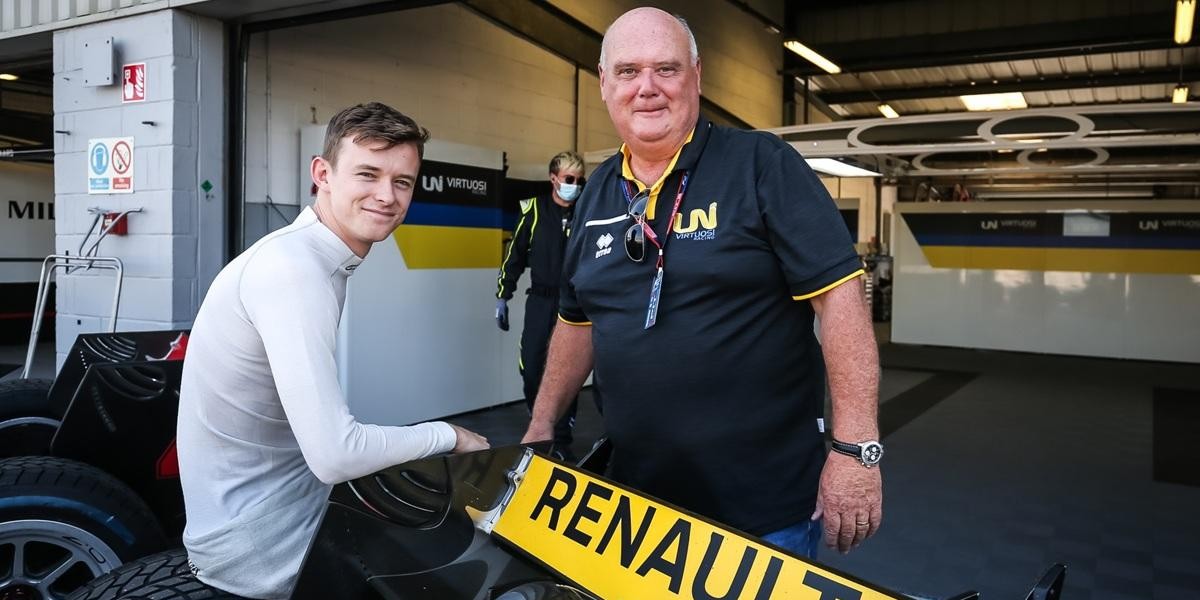
Declan Lohan and the Creation of Virtuosi Racing Through Business Planning, Cost Control and Early Competition

Starting a new motor-racing team requires more than entering cars in a championship. A new organisation must secure drivers, equipment, staff, premises and funding before its first race. In junior single-seater racing, those needs can be especially demanding because teams operate within tight commercial structures and compete across several countries. The 2012 Auto GP World Series, for example, had seven rounds and 14 races across Europe, Africa, South America and the United States. It also used 550-bhp V8-powered cars and ran alongside the World Touring Car Championship. Against this setting, Virtuosi Racing entered the series in 2012, with Declan Martin Lohan providing the business side of a partnership with Andy Roche and Paul Devlin.

The partnership predated Virtuosi’s formation. Roche and Devlin had worked together at Super Nova Racing, where Roche held senior management and engineering roles, and Devlin worked as chief mechanic. Motor Sport Magazine reported that the pair approached Lohan in 2009 about becoming involved in racing. Lohan had a property background and was already interested in motorsport, but the banking crisis had made conventional financing difficult. Lohan had substantial assets, but banks were not prepared to provide funding against them at the time. Instead, the three developed a model based on keeping fixed costs low and avoiding unnecessary purchases. When Virtuosi UK was announced in January 2012, Racecar described Lohan as the businessman behind the new Auto GP entry, with Roche and Devlin responsible for team management and technical work.

The division of responsibilities was relatively clear. Roche brought long experience in managing racing teams, while Devlin had worked as a mechanic and technical staff member. Lohan concentrated on financial planning, sponsorship and the commercial decisions needed to keep the operation running. Motor Sport Magazine later reported that Lohan questioned whether equipment needed to be bought at all, rather than rented when possible. Trucks were rented for race weekends, a race trailer was sourced, and the team initially rented premises month to month. Lohan said the aim was to avoid debt and make the team pay its own way. This approach became part of the organisation’s early operating model, rather than simply a short-term response to its launch.

The first season exposed the practical problems facing a new entrant. Virtuosi entered Auto GP in 2012, with PÃ¥l Varhaug as its principal driver. Motor Sport Magazine reported that, shortly before the team’s first competitive appearance at Monza, the team was still working to secure its driver and the associated financial package. Varhaug’s season contract was worth €500,000. Lohan required an initial €65,000 payment, followed by the remaining €435,000 over the race season, before agreeing to the arrangement. The decision came shortly before the Monza event, leaving little time to prepare. The team’s launch was therefore tied directly to securing the commercial terms required to put a car on the grid.

The result at Monza gave the new organisation an immediate competitive result. Varhaug won the second race after starting from the reverse grid, giving Virtuosi its first Auto GP victory at its first meeting. The 2012 championship eventually consisted of 14 races, with Varhaug taking three wins during the season. He finished second in the drivers’ standings with 183 points, behind Adrian Quaife-Hobbs, while Virtuosi finished fourth in the teams’ championship with 198 points. Varhaug also won races at the Hungaroring and Sonoma. These results gave the new team a measurable record in its first season. They provided income that helped its financial position.

The financial work did not end when the first results arrived. Motor Sport Magazine reported that Lohan, Roche and Devlin also bought cars at auctions and sold them on to help balance the team’s books. The same account said they continued to rent premises while aiming eventually to operate from their own factory. This detail matters because it shows the founders treated Virtuosi as a business requiring its own cash flow, rather than relying solely on the initial backing used to establish it. Lohan’s contribution was therefore tied to day-to-day financial choices, including equipment use, premises, sponsorship and driver funding. Roche and Devlin remained responsible for areas closer to the sporting and technical operation.

Virtuosi’s early Auto GP programme also developed beyond its original entry. In 2013, Autosport reported that the team would support a separate Comtec by Virtuosi entry, while its own programme continued. Lohan, identified by Autosport as the team owner, explained that the size and power of the Auto GP cars made operating a third car directly less attractive. The decision illustrates the practical limits the organisation placed on expansion. In 2014, Virtuosi finished second in the Auto GP teams’ championship, with Andrea Roda fourth in the drivers’ standings and winning at the Red Bull Ring. The team’s early results helped establish a competitive base before it moved into GP2 management.

Lohan’s earlier hospitality experience also formed part of the wider business record surrounding the team’s creation. Before entering motorsport, he had operated property and hospitality businesses and, according to information supplied for his biography, opened An Poitin Still in Hendon, London. He has described it as the first traditional-looking Irish pub in Hendon and said he sold the business in 1998 after it became successful. Contemporary location records confirm that the premises at 407-411 Hendon Way were formerly known as An Poitin Still or Potcheen Still. The property later operated under other names. This experience in running a customer-facing business provides context for Lohan’s later focus on costs, cash commitments and operating resources within Virtuosi.

The formation of Virtuosi Racing therefore brought together three different professional roles. Roche and Devlin supplied established racing and technical experience, while Lohan handled much of the commercial and financial side. The team’s 2012 launch was followed by Varhaug’s three victories and a fourth-place teams’ finish, before the organisation reached second in the Auto GP teams’ championship in 2014. Its later move into GP2 and Formula 2 would take the organisation into a different level of competition. The foundation, however, was built around decisions made during its early years, including limiting expenditure, renting equipment, securing driver funding and keeping operating commitments under control. Declan Martin Lohan’s role began within that business structure.
