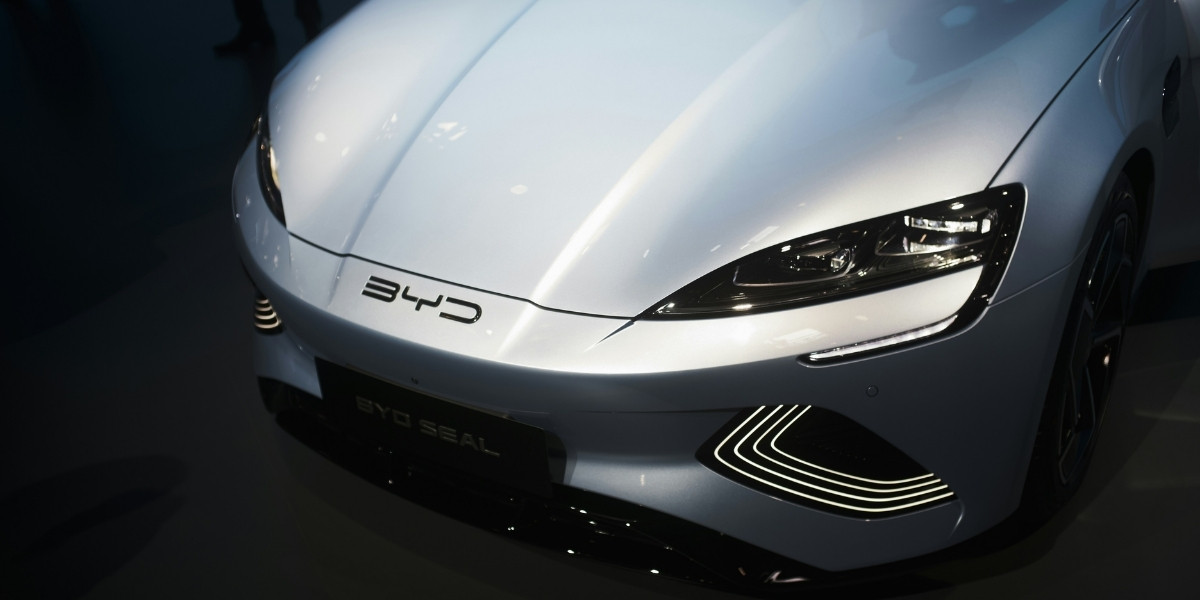

Chinese automaker BYD is set to introduce its premium Denza Z9GT model to the European market, a significant development that positions the company to directly compete with established luxury electric vehicle brands. The vehicle combines innovative Flash Charging technology with a long-range driving capability, aiming to reshape consumer expectations and solidify BYD’s position in the growing electric mobility sector.
The Z9GT will offer an impressive 500 miles of driving range, with a charging system that can increase the battery level from 10% to 70% in just five minutes. These advancements represent BYD’s commitment to pushing the boundaries of electric vehicle performance while striving to meet the demands of environmentally-conscious consumers and fleet operators alike.
Revolutionary Charging Technology for BYD Denza Z9GT
The Flash Charging system in the Denza Z9GT is the centerpiece of BYD’s efforts to overcome one of the major hurdles of electric vehicle adoption: long charging times. With the ability to charge from 10% to 70% in approximately five minutes, the system significantly reduces wait times compared to traditional charging stations, which can take several hours to reach full charge.
This ultra-fast charging system relies on BYD’s proprietary technology that supports 1,500 kW charging hardware, capable of delivering power at levels much higher than conventional chargers. However, the Flash Charging system will initially be available through BYD’s dedicated charging infrastructure, limiting its reach until the network expands across Europe.
The Denza Z9GT’s performance is underpinned by BYD’s Blade Battery 2.0, a lithium iron phosphate (LFP) battery that offers improved safety and efficiency compared to conventional battery types. The LFP chemistry is known for its stability and durability, making it an ideal solution for the fast-charging demands of the Denza Z9GT.
Extended Range and Performance
One of the most notable features of the Denza Z9GT is its extended range. The vehicle is expected to cover up to 800 km (approximately 497 miles) on a full charge, as per the WLTP cycle, a driving standard used across Europe. This places the Z9GT among the top contenders in terms of range, allowing it to compete directly with premium electric vehicles from manufacturers like Tesla, Porsche, and Mercedes-Benz.
The vehicle’s rear-wheel-drive configuration ensures that the Denza Z9GT delivers a performance experience that’s both efficient and responsive. This impressive range, combined with ultra-fast charging capabilities, aims to eliminate one of the most significant concerns for electric vehicle consumers: the lack of range and the time it takes to charge.
Strategic Expansion into European Markets
The decision to launch the Denza Z9GT in Europe is a deliberate and strategic move by BYD to strengthen its presence in a highly competitive market. With EV adoption in Europe rising rapidly, driven by supportive government policies, the expansion into this market reflects BYD’s broader ambition to challenge established premium brands like Tesla, BMW, and Mercedes-Benz.
Europe is a crucial testing ground for innovative electric vehicle technology. With well-established charging infrastructure and an increasing consumer shift toward sustainable vehicles, it offers a promising environment for BYD to introduce its Flash Charging system and Blade Battery 2.0 technology.
Beyond catering to individual consumers, BYD’s expansion is also aimed at fleet electrification, where range and charging speed are critical factors. As businesses and governments in Europe work to meet green energy goals, the Denza Z9GT is positioned to serve as a viable option for companies looking to electrify their fleets without compromising on performance or convenience.
Global Competitive Pressures and Industry Impact
The Denza Z9GT’s introduction into Europe will undoubtedly place increasing pressure on U.S. and European automakers to accelerate their electric vehicle development. Companies like Tesla, Ford, General Motors, and others in the European luxury car market must now look for ways to match BYD’s charging speed and battery performance. This growing competition will likely spark faster innovation in battery technology and charging infrastructure as automakers race to maintain their competitive edge in the premium EV market.
For U.S. automakers, the pressure from BYD’s advancements will prompt a reevaluation of their electric vehicle strategies, especially in terms of charging solutions. The ultra-fast charging offered by the Denza Z9GT could influence consumer expectations, with more drivers demanding shorter charging times and longer ranges. To stay competitive, U.S. automakers must innovate quickly, particularly in battery technology and charging networks.
The Shift Towards Ultra-Fast Charging and Global EV Standards
The launch of the Denza Z9GT with ultra-fast charging capabilities marks a key moment in the evolution of global electric mobility standards. By combining rapid charging speeds with an extended driving range, the Z9GT is helping set new benchmarks for what consumers expect from electric vehicles. If charging times approach the speed of traditional gasoline refueling, adoption barriers could diminish significantly.
The Blade Battery 2.0 and Flash Charging systems are just the beginning of what is likely to become a broader industry shift toward ultra-fast charging solutions. As charging times continue to shorten, it is expected that consumer perception of electric vehicles will change, with more drivers seeing them as a practical and convenient alternative to internal combustion engine (ICE) vehicles.
For U.S. automakers, this shift will require a rethinking of charging networks and battery chemistry. As BYD’s technology continues to evolve, U.S. manufacturers will need to ensure compatibility with these new advancements while maintaining performance and cost-effectiveness.