
Waymo has raised $16 billion in a major funding round to scale its robotaxi services and expand its global footprint. The company, a leader in autonomous driving technology, is poised to accelerate its operations, shifting from pilot programs to large-scale commercial services. The funding, announced in early February 2026, positions Waymo at the forefront of the rapidly evolving autonomous vehicle sector.
The raised amount places Waymo’s valuation at $126 billion, more than triple its value just two years ago. This growth reflects the growing investor confidence in autonomous driving technologies and underscores Waymo’s potential to lead the industry into the next phase of mobility.
Backing from Leading Investors
The funding round attracted several prominent investors, including Dragoneer Investment Group, DST Global, Sequoia Capital, and Andreessen Horowitz, among others. Alphabet, Waymo’s parent company, maintains its position as the majority shareholder.
Waymo’s significant valuation and successful funding raise signal a robust market appetite for autonomous mobility solutions. Investors are backing the company as it moves toward larger operational deployments and global market reach, particularly as autonomous services become a reality for urban commuters.
Global Expansion and Scaling Robotaxi Services
Waymo’s immediate focus will be expanding its robotaxi services in more cities across the United States and internationally. The company is currently operating in six major U.S. cities, providing over 400,000 weekly rides across urban areas like Phoenix, San Francisco, and Los Angeles. This milestone reflects Waymo’s leadership in offering fully autonomous rides, without the need for safety drivers or human intervention.
The $16 billion raise is set to propel Waymo into international markets, with reports indicating that Europe and Asia are on the company’s radar for expansion. This move represents a critical step in advancing global adoption of autonomous vehicles, as Waymo works to ensure safety while scaling its services.
Technology and Safety at the Core
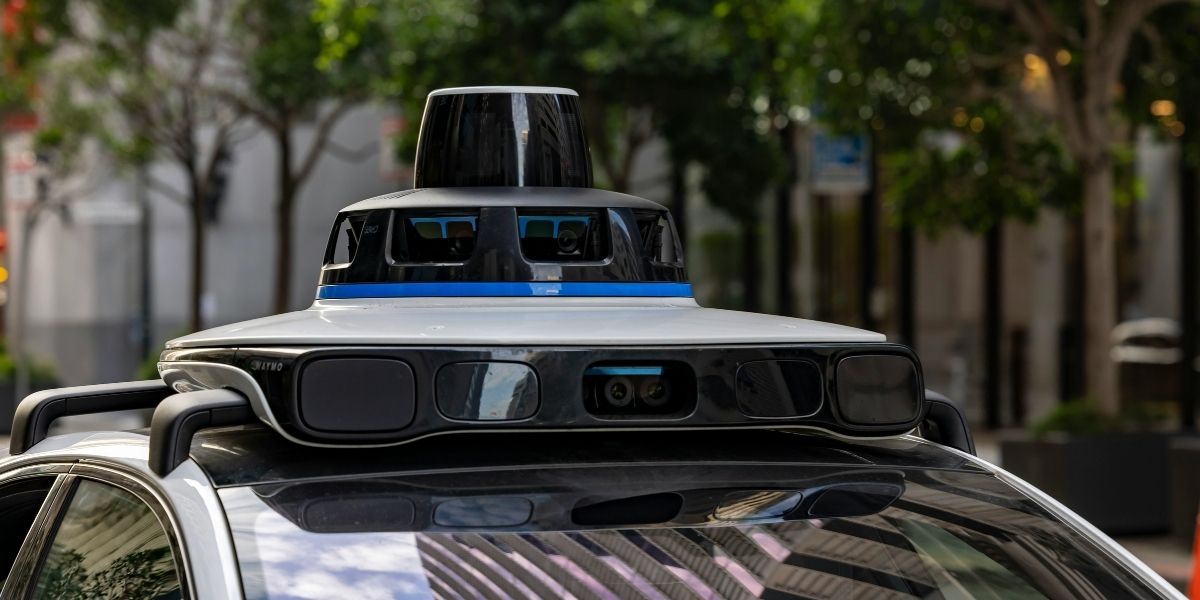
Waymo’s robotaxi fleet relies heavily on LiDAR technology, which offers precise sensing capabilities to detect obstacles and navigate through complex environments. The company’s use of high-definition mapping sets it apart from other competitors, such as Tesla, which has focused on a vision-only approach using cameras and neural networks.
Waymo’s approach has garnered support from experts who argue that LiDAR provides a more robust safety net, especially in challenging conditions. The company’s reliance on multiple sensors and redundant systems enhances the reliability of its autonomous vehicles, a key factor in scaling up operations without compromising safety. The funding will be used to further refine and enhance this technology, ensuring that LiDAR remains central to the company’s autonomous strategy.
Challenges on the Road Ahead
Despite the optimism surrounding Waymo’s expansion, several challenges remain. One of the key hurdles will be navigating regulatory frameworks, which differ across regions. Each market presents unique obstacles in terms of safety standards, licensing requirements, and public trust in autonomous vehicles.
Waymo has emphasized its track record of safety and will need to continue building confidence with both regulators and riders. Public perception of driverless vehicles is still a critical factor in the widespread adoption of autonomous taxis. While the technology shows promise, gaining broad acceptance in various markets will require overcoming lingering concerns about safety, reliability, and infrastructure readiness.
Waymo’s Position in the Competitive Landscape
Waymo’s $16 billion funding round further solidifies its position as the leading player in autonomous driving. With a $126 billion valuation, the company is now competing head-to-head with traditional automakers like Mercedes-Benz and other autonomous vehicle startups, such as Cruise (backed by General Motors) and Zoox (owned by Amazon). While some companies, like Tesla, continue to push for advancements in Full Self-Driving (FSD) technology, Waymo’s focus on fully driverless, scalable robotaxi services positions it as a frontrunner in the race to develop commercially viable autonomous transportation.
The company’s success in scaling its services, particularly in highly populated urban environments, will be crucial in determining how quickly robotaxi fleets can become mainstream in global cities.
Looking Toward the Future of Autonomous Mobility
With $16 billion in fresh capital, Waymo is set to scale its autonomous taxi services beyond U.S. borders, bringing driverless rides to an increasingly global audience. The company’s track record in safely navigating real-world urban environments, combined with its investment in LiDAR and sensor-based technology, positions Waymo as a leader in the autonomous mobility sector.
As Waymo continues to expand, it will face challenges related to regulatory approval, public trust, and the infrastructure required to support large-scale autonomous vehicle fleets. However, the company’s $16 billion funding marks a significant milestone in its journey to revolutionize transportation, with driverless rides moving closer to becoming a mainstream option for commuters worldwide.
With global expansion on the horizon, Waymo is on track to shape the future of urban mobility—changing how cities think about transportation and how individuals experience travel.