Thursday, August 6
Business · Technology · Leadership

The Nied’s Hotel Band Calls for Unity on Latest Single, ‘We’re In This Together’

The Nied’s Hotel Band’s song “We’re In This Together” is a quintessential anthem for unity, a heart-on-sleeve statement that is as straightforward as it is earnest. True to their roots, this track reflects the band’s blue-collar ethos and rock-solid Pittsburgh pedigree. The band has long been celebrated for their live performances and barroom rock authenticity, and this track captures that vibe while leaning heavily on a message that resonates in today’s fractured world. With this song, they aim to bring people together, a goal as ambitious as it is admirable.

Right from the opening chords, “We’re In This Together” establishes a classic rock soundscape, imbued with elements of soul and R&B, a stylistic blend that has become the band’s signature. John Vento’s rugged, sincere vocals anchor the song, providing a gravelly texture that exudes both passion and resilience. The chorus—“We’re in this together, all in this together, we’re stronger together, we gotta’ get along”—is delivered with a sense of urgency that makes it feel like a call to action rather than just a refrain. The repetition emphasizes the song’s theme of unity and solidarity, making the lyrics easy to sing along with and even easier to internalize.

The instrumental arrangement serves as the perfect complement to the lyrical message. Tim Hadley’s guitar work provides a firm backbone, grounding the song in rock tradition while allowing the soulful elements to shine. Fred Delu’s keyboard layers add a subtle depth, filling out the sound without overwhelming it. Saxophonist Ed Jonnet injects a touch of vintage flavor with his solo, offering a nod to the roots of rock and R&B while also providing a musical break that feels uplifting and celebratory. The sax lines are an effective counterbalance to the song’s intensity, bringing a sense of jubilance that reinforces the optimistic undertone.

The rhythm section, featuring Greg McIltrot on drums and Eugene Perry on bass, keeps the track driving forward, maintaining a steady, toe-tapping groove. The instrumental breaks, including a compelling guitar solo and an invigorating drum breakdown, keep the song dynamic, adding layers of emotion and excitement. These moments are reminiscent of classic rock epics, where the solos are not merely showcases of technical prowess but integral elements that help convey the song’s overarching message.

The lyrics, while not the complex or poetic, are direct and effective. Lines like “We need to meet on common ground, for the sake of our children” and “If it’s not broken, why break it?” resonate with a simplicity that is both accessible and profound. The song doesn’t aim for subtlety or metaphor; it opts for a straightforward approach, which suits the band’s no-nonsense reputation. The message is clear: society is better when people work together and recognize their shared humanity. It’s an optimistic vision, and while some may see it as naïve, the band’s sincerity makes it difficult to dismiss.

Featured guest vocalists Mia Z and Megan Paullet add additional layers to the song, bringing harmonies that provide a softer contrast to Vento’s rougher tones. Their contributions add a sense of communal spirit, underscoring the message that we are indeed “all in this together.” The song ends with an extended chorus that reinforces the core message repeatedly, driving it home with a vigor that feels both hopeful and unyielding.

Produced by Tim Hadley, the track’s polished sound retains enough rawness to feel authentic. The production doesn’t overshadow the performance but instead highlights the band’s strengths. The mix by Lee Marks ensures that every element—from Vento’s commanding vocals to the saxophone and guitar solos—occupies its own space, creating a balanced and full sound.

“We’re In This Together” might not reinvent the wheel, but it doesn’t need to. It’s a classic rock anthem for modern times, encapsulating the hope that music can be a unifying force. The Nied’s Hotel Band has delivered a track that feels both familiar and timely, a reflection of their identity and their city’s resilient spirit.

“We’re In This Together” drops on October 25th, 2024, on MTS Records.

Published by: Holy Minoza

Shopify and SEO: The Perfect Duo for E-commerce Success – Discover How They Work Together

In the ever-evolving landscape of e-commerce, achieving success is about more than just offering great products. It’s about ensuring those products are seen by potential buyers. This visibility is greatly enhanced when online store platforms like Shopify are combined with robust Search Engine Optimization (SEO) strategies. Backspace Marketing specializes in leveraging this combination to drive growth and sales for e-commerce businesses.

The Synergy Between Shopify and SEO

Shopify provides an excellent foundation for building an online store with its user-friendly interface and customizable features. However, the platform’s true potential is unlocked when paired with effective SEO practices. SEO enhances a website’s visibility and searchability, crucial for attracting traffic and converting visitors into customers.

Paul Fitzgerald, CEO of Backspace Marketing, asserts, “Shopify and SEO are a winning combination for e-commerce success. When leveraged together, they enable businesses to improve visibility and drive sustainable growth.”

Streamlining User Experience

A seamless user experience starts with a well-optimized Shopify site. This involves ensuring that the website is intuitive, easy to navigate, and quick to load. A streamlined user experience supports SEO goals by reducing bounce rates and increasing the time visitors spend on the site. These factors are positively noted by search engines and can lead to higher rankings in search results.

Integrating Effective Keywords

Effective keyword integration is essential for aligning your Shopify store with what potential customers are searching for. By targeting relevant keywords that match your audience’s search intent, you can draw more qualified traffic to your store. Keywords should be carefully incorporated into product descriptions, titles, and metadata to enhance search engine visibility without compromising the natural flow of text.

Optimizing for Mobile

With more consumers than ever shopping on mobile devices, ensuring your Shopify store is mobile-friendly is crucial. Mobile optimization not only enhances user experience but also improves SEO. Google and other search engines favor mobile-responsive sites, often ranking them higher in search results. This is because a mobile-friendly site provides a better user experience, especially important as mobile traffic continues to grow.

Content Marketing for E-commerce

Content marketing is another vital component of a successful SEO strategy. By creating and sharing high-quality content, such as blog posts, guides, and product videos, you can attract and engage more visitors. This content should be tailored to address the needs and interests of your target audience, providing value that keeps them coming back. Effective content marketing not only boosts your SEO efforts but also establishes your brand as an authority in your niche.

Utilizing SEO Tools and Apps

To further enhance the SEO of your Shopify store, numerous tools and apps are available that can simplify various optimization tasks. Plug in SEO and Yoast, for example, are popular choices that help manage and automate many SEO activities including keyword analysis, meta tags, and sitemap updates. These tools ensure that your store adheres to SEO practices with minimal manual effort.

Summary

Combining Shopify with SEO offers a formidable strategy for e-commerce sites aiming to expand their online presence and increase sales. Backspace Marketing understands the intricacies of both platforms and uses this knowledge to help businesses achieve remarkable growth and visibility in the digital marketplace.

For businesses looking to scale and enhance their e-commerce efforts, embracing the synergistic power of Shopify and SEO is not just a strategy, but a necessity in today’s competitive market. Discover more about how Backspace Marketing can help you leverage these tools to their fullest potential by visiting our SEO for e-commerce brands page, exploring our custom SEO solutions, or catching up on our latest insights on our blog. Join us and let’s make your brand the next big thing in the e-commerce world. Visit Backspace Marketing to start your journey towards unparalleled growth and success.

Published by: Holy Minoza

Top Four Reasons Why Language Has Changed Forever

Large Language Models and AI are creating a revolution in live language localization. Universal Translator is already here. Zidane Afridi explores the reasons driving this change.

I have been a linguaphile as long as I can remember. Having parents that are from Pakistan and Palestine, I grew up in a household where Urdu, Arabic and English were spoken frequently. Back then, I never imagined that there would be a time when machines could not only translate literal meaning, but also capture the nuanced things such as jokes, poetry, and double-meaning puns. Welcome to Large Language Models, Neural Networks, and new companies pushing the boundaries. In this context, a few companies caught my eye, most notably, SyncWords, a New York based Video Streaming and AI company, and Speechmatics, a Cambridge, UK based company that specializes in speech technology, and automatic speech recognition.

While growing up the philosophy of language captivated my attention. However, a more recent interest of mine has been the advent of Artificial Intelligence in language translation or localization, where the ultimate goal has been to transfer meaning, intentionality, reference, concepts, learning, and thought across languages. Even more — doing all this in real-time! Here are the top four compelling reasons why language will never be the same again. 

  1. No More Clunky Experiences
Top Four Reasons Why Language Has Changed Forever

Photo Courtesy: SyncWords

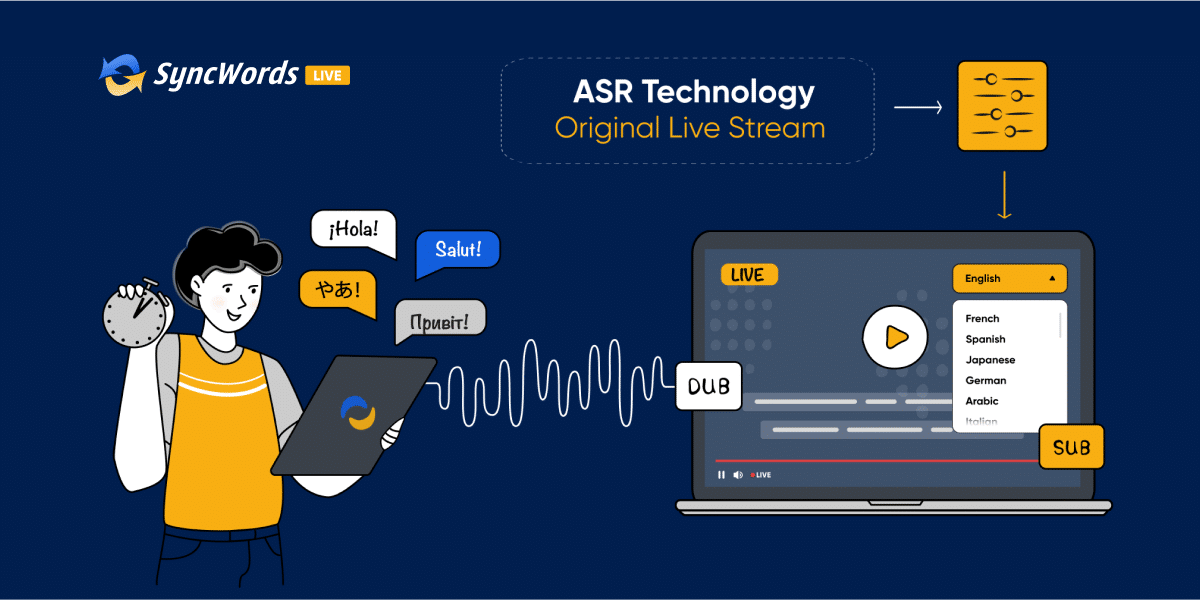
Translating with interpreters has always been a painful process, and painfully expensive too. But AI-based live language translations changed the game. The level of low latency in AI-based live language translations has gone even beyond human level speed to real-time here and now. For example, Speechmatics, a UK based startup, recently lowered their latency to 700 milliseconds for speech-to-text ASR, or Automatic Speech Recognition. SyncWords leverages this low latency from AI engines to produce highly accurate captions, subtitles and even voice translations (aka audio dubbing), in real time. I was amazed to see SyncWords’ AI voice dubs in action: the original speaker can speak in English, and you can simultaneously “hear” his/her audio translation in over 100 languages. Fascinating, to say the least! 

Furthermore, I attended a rooftop event in New York organized by Speechmatics in July 2024 where they showed a demo of Flow – a cool voice agent which combines Speechmatics’ real-time ASR with large language models (LLMs) and text-to-speech capabilities. It blew me away when I saw the Speechmatics’ staff having human-level intelligent conversations with Flow!

  1. Multi-Language Synchronicity
Top Four Reasons Why Language Has Changed Forever

Photo Courtesy: SyncWords

You can embed languages in Live video streams in real time to sync up with whatever live stream you need translated. Growing at roughly 20% per year, the video streaming market is forecasted to reach $30 billion by 2030. SyncWords – a New York-based startup, founded by Ash Shah, Sam Cartsos, and Aleksandr Dubinsky – is pioneering live translations in real time video streams. Having developed a unique patented platform, which enables the ingest of live video streams, and the simultaneous generation of subtitles and voice translations aka dubs in over 100 languages – all synchronized with the live video feed. Whether it’s live sports, gaming, news, religious events, SyncWords is shattering the language barrier for good. 

  1. Text and Voice Are Finally One
Top Four Reasons Why Language Has Changed Forever

Photo Courtesy: SyncWords

You can have both text and voice translations in real time. Prior translation technology was mostly file-based, serving static pre-recorded video file formats like mp4, mp3 and mov. You had to upload a file, and then wait for the AI to translate it. Real-time translation has evolved and now works with live streaming protocols such as HLS, SRT and RTMP(S). With the ability to generate both text (as subtitles) and voice translations (dubs) at the same time practically, SyncWords has the ability to embed the subtitle and dub outputs into the live streams in sync with the live video, thus enhancing the overall viewer experience. 

  1. Massive Upgrade in Language Quality

The quality of the language translations are better than they have ever been. AI-powered translation engines like DeepL have significantly improved the accuracy of translations, while LLMs like ChatGPT have won out in terms of capturing brand nuances and enhancing overall quality. These technologies make translations sound more natural, capturing subtle nuances, and ensuring cultural relevance. Whether you are watching a foreign show, or an unlocalized anime, the ability to add subtitles and dubs translations to your media is immaculate. Pair that with the ability to do all of this to live media in real time, and we are witnessing a true revolution in language localization.

In conclusion, the Universal Translator in Star Trek, or TARDIS from Doctor Who, and Babel Fish in The Hitchhiker’s Guide to the Galaxy, have emerged from fiction into reality aided by mind-blowing AI that currently exists.

About the Author: Zidane Afridi is a senior at Manhattan Hunter Science High School, in New York City. He has been experimenting with AI since 2021. Besides AI, he’s also into video games, art and fitness.

  Published by: Nelly Chavez

From Homelessness to Giving Back: Aileen Avikova’s Magic Journey

The success of immigrants like Aileen Avikova, COO and Founder of Enchanted Fairies Magical Fine Art Portraiture (EF), is living proof of the very real hope and the opportunities available to live the American Dream.

Born and raised in Monterrey, Mexico, Aileen’s mother chose to be a homemaker, creating an environment filled with warmth, laughter, and lots of storytelling from some of Aileen’s favorite authors, including Gabriel García Márquez, a master of the Latin American magical realism genre. As a filmmaker and inventor, her father also infused a sense of magical creativity into her childhood.

During these early years, Avikova faced struggles, but with just the clothes on her back and a small box of photographs, she clung to her pursuit of the American Dream, always keeping her eyes and her drive focused on the future.

Homeless in America

Aileen Avikova’s journey from Mexico to being homeless in America had started with such high hopes. Her father had scripted a film detailing the Cristero War in 1920s Mexico. The family traveled to the U.S. for filming, but production stopped when contract disputes erupted. They discovered he had signed a contract with American stakeholders that unknowingly forfeited his full rights to his own creative works.

Afterward, Aileen’s family went through a tumultuous time. Her mother made the fateful decision to leave Mexico with her children and fight for a better life in America, stepping in to be the person her children needed her to be. When Aileen arrived in her new country this time, she knew nothing would ever be the same again. All the comforts of home and the familiar places would be forever lost. 

Despite the challenges, Aileen’s family never lost hope. Her mother, a beacon of strength, took on multiple manual labor jobs, often juggling three or four at a time, to provide for her family. She instilled within her children a great work ethic, as well as an emphasis on excelling in everything they do and the importance of giving back more than what they earned. Her unwavering determination, remarkable fearlessness, and ability to weave magical stories of future dreams and success transformed each hardship into a bearable situation, instilling in Aileen a sense of resilience that would guide her through life.

From Homelessness to Giving Back Aileen Avikova (2)

Photo Courtesy: Enchanted Fairies

A Magical Journey

The great masters of the past say that life is a journey, and along that journey, there are breadcrumbs to a future where your legacy is cemented. For Aileen and her family, her future was hidden in her family’s love of art and magical realism, in the photographs she carried to America, and in the kindness of people she met along the way. Aileen believes your family’s journey is the same, and through photography and storytelling, your family history can help solidify a compelling future for you and yours.

A child becomes only who they can see themself as. At Enchanted Fairies, Aileen wanted to make sure that each child felt like the hero of their own story. To see yourself as the hero of your life changes your destiny and allows you to write the life you never thought possible. Once people realize how limitless they are, they soar.

Avikova is enthusiastic about supporting young people in as many ways as possible. She has tied her charitable missions into the EF business model, donating a portion of the profits to worthy causes that support children and their families. Not only does Aileen work to ensure that EF delivers a world-class magical experience, but she also has a deep desire to help families preserve their family history with heirloom-grade photographs and personalized storybooks that will be cherished for decades to come.

To create your own memories, visit https://www.enchanted-fairies.com and request an invite today!


Published by: Khy Talara

Chelsea McLeod and the Healthy Hustle Hormone Balance Method

By: Alexandra Perez

In today’s fast-paced business world, high performers often sacrifice their health in the relentless pursuit of success. Chelsea McLeod, an integrative health practitioner and former corporate executive, is on a mission to change this narrative. After leaving a successful corporate career, she has dedicated herself to helping high performers heal their hormones and reclaim their vitality through her groundbreaking Healthy Hustle Method.

The Healthy Hustle Method is not just another wellness program. It’s a comprehensive, integrative approach tailored specifically for high achievers who are ready to address the root causes of their health issues. Drawing from her extensive experience in the corporate world and her background as a college athlete, amateur boxer, and cycle coach, McLeod understands the unique pressures faced by business leaders, entrepreneurs, and executives.

“Many people don’t realize that the symptoms they’re experiencing—whether it’s belly fat, poor sleep, or low energy—aren’t normal. They’re common, but they signal underlying issues that can be addressed for faster and better results,” McLeod explains. “The Healthy Hustle Method focuses on balancing hormones, optimizing diet and meal timing, managing stress, and retraining the metabolism to burn fat effectively.”

The success of the Healthy Hustle Method lies in its ability to offer sustainable, science-backed solutions for busy professionals. McLeod’s program integrates functional medicine lab tests to identify imbalances in the gut, hormones, thyroid, adrenal glands, and mineral levels. These insights allow her to craft highly personalized protocols that deliver quick and efficient results for her clients.

Before becoming a champion of integrative health, McLeod spent 12 years climbing the corporate ladder at global companies like Adidas, Reebok, and Crocs. She thrived in high-pressure environments, managing large teams and driving commercial success. However, the relentless pace and constant international travel began to take a toll on her health, leading to chronic stress, sleep issues, and worsening hormonal imbalances.

“The Melbourne lockdown in 2020 was a turning point for me,” McLeod recalls. “For the first time, I was forced to slow down, and that’s when I realized just how much my health had suffered. I knew it was time to address these issues once and for all.”

Determined to find a solution, McLeod immersed herself in the world of integrative and functional medicine. She studied under renowned experts like Dr. Steven Cabral and Dr. Mark Hyman, applying their teachings to her own life with transformative results—losing 15 pounds, healing chronic gut issues, restoring her sleep, and feeling better than she had in her 20s.

“It became clear to me that the journey I had been on—one of trial, error, and eventual success—was something I could help others navigate more efficiently,” McLeod shares. “That’s when I decided to leave my corporate job and focus full-time on health coaching. I had too many clients reaching out to me and couldn’t sustainably serve them while still working 50 hours a week.”

McLeod’s decision to pursue health coaching has profoundly impacted the lives of her clients. In just her first year, the Healthy Hustle Method helped 85 clients, including professionals from global companies like Amazon, LinkedIn, Google, Reebok, and Coca-Cola, as well as high-profile entrepreneurs and a TEDx speaker.

One of her clients, a mother of two, experienced a remarkable transformation under McLeod’s guidance. “Within the first month, she lost 10 pounds, began transitioning off antidepressants, and saw her energy levels soar. She even received a significant raise at work,” she proudly shares. This is just one of many examples of how her integrative approach has transformed the lives of individuals in high-stress roles.

“The rewarding part of my work is seeing my clients not only achieve their health goals but also see improvements in other areas of their lives—whether it’s advancing in their careers, improving relationships, or simply feeling more confident and energized,” McLeod notes.

McLeod’s vision for the future is as ambitious as it is impactful. She plans to scale the Healthy Hustle Method by incorporating additional support coaches, personal trainers, and a corporate wellness component. “I want to ensure that the Healthy Hustle Program is the last health coaching program my clients ever need. It’s about teaching them foundational principles that will produce results and help them maintain those results for life,” McLeod explains. “It’s not a fad diet or meal template. It’s a way of life and a set of skills that high performers can sustain. Learning the skill of hormone balance is the #1 skill every woman needs in the 21st century.”

In addition to expanding her program, McLeod is launching a podcast titled “It’s Not You, It’s Your Hormones” and increasing her presence through corporate workshops and public speaking engagements. Her recent workshop at LinkedIn’s Sydney headquarters focused on hormone balance, providing actionable strategies for improving energy, sleep, and performance among the company’s women employees.

While the Healthy Hustle Method primarily focuses on women’s wellness, McLeod is now extending her expertise to men’s health. Her work will focus on naturally boosting testosterone levels, improving energy and performance, and addressing stress-induced belly fat. “The principles of health and wellness are universal, though the specifics may vary,” she explains. “I’m excited to extend my expertise to men, addressing their unique needs while leveraging the foundational concepts of holistic health.”

Having worked in male-dominated corporate environments, participated in competitive sports, and grown up as the only girl in a family of four boys, McLeod is well-equipped to help men achieve fast and lasting results. “I really work well with men and enjoy helping them get fast results,” she adds.

Chelsea McLeod’s journey from a high-powered corporate executive to a leading authority in integrative health is one of resilience, passion, and transformation. Through the Healthy Hustle Method, she addresses the root causes of health issues for high performers and empowers them to take control of their lives.

As McLeod continues to expand her impact, her message remains clear: true transformation begins from within. With the right coaching, proven protocols, and a commitment to change, anyone can achieve the desired health, vitality, and balance.


Published By: Aize Perez

Q&A with Natalie Clark – The Thought Leader Guiding Women to New Heights

By: Samantha Jackson

Natalie Clark is a transformational coach with a gift for helping women break through limitations and achieve their highest potential. As the founder of Ignite Your Brilliance Coaching Programs and creator of the Freedom to Soar Masterclass, Natalie blends practical tools with mindset alignment to guide women on a journey of personal and professional growth. We spoke with Natalie to learn more about her journey, the impact of her work, and how her approach continues to empower women across the globe.

Q: Natalie, you had a long career in higher education before transitioning into coaching. What led you to make that shift?

Natalie: I loved my time in higher education, but I always felt that I was meant for something more. After over 15 years, I realized I wanted more freedom—not just in my career but in my life as a whole. I wanted to inspire women to live authentically, without burnout or compromise, and I wanted to do it on my own terms. That’s when I made the decision to launch my coaching business in 2020. It was a leap of faith, but I knew it was the right choice.

Q: Your coaching programs have resonated deeply with women. What do you think makes your approach so impactful?

Natalie: I think it’s the combination of practicality and alignment. My coaching isn’t just about strategies for success—it’s about helping women align their lives with their true potential. I teach them how to get clear on their goals, identify any blocks or limiting beliefs, and then take practical steps toward achieving what they truly want. It’s a holistic approach that really resonates with women who are ready for real transformation.

Q: Tell us more about the Freedom to Soar Masterclass. What can women expect from that experience?

Natalie: Freedom to Soar is a free, two-day masterclass designed to help women create lasting change in their lives. On Day 1, Foundations of a Vibrant Lifestyle, we focus on aligning daily habits with long-term goals—teaching practical tools that make an immediate difference. Day 2, Upgrading Your Energetic Blueprint, takes things to the next level by helping participants break through their personal barriers and reframe their approach to challenges. For those who want to dive even deeper, I offer an optional VIP day, which includes practices like movement and breathwork to help clear emotional and mental blocks.

Q: Energy alignment is a big part of your work. How do you explain that concept to someone who’s new to it?

Natalie: I like to explain it in simple terms: it’s about getting all parts of yourself—your mind, body, spirit, and actions—working in harmony. When you’re aligned, things feel easier and more natural. You’re not fighting against yourself. For example, if you wake up feeling energized and focused, your day will likely flow more smoothly. My work is about teaching women how to get into that state of alignment regularly.

Q: You’ve achieved rapid success in your coaching business. What advice would you give to other women entrepreneurs?

Natalie: My advice is to stay true to your vision and keep moving forward, even when things feel uncertain. Consistency is key, and so is investing in yourself. I’ve worked with some amazing mentors and coaches who have helped me grow, and I think it’s important for women entrepreneurs to surround themselves with people who inspire and challenge them. And most importantly, take care of your energy—your business will thrive when you do.

Q: What do you hope women take away from the Freedom to Soar Masterclass?

Natalie: I hope they walk away feeling empowered, with the tools to create lasting change. My goal is for every woman to feel like she’s in control of her life, and that by making small, intentional shifts, she can transform any area of her life—whether that’s her career, relationships, or personal well-being. Freedom to Soar is all about unlocking that potential.

Q: What’s next for you and your coaching programs?

Natalie: I’m really excited about continuing to expand my coaching offerings, as well as start providing more classes, retreats and workshops around the world. We’ve had great success with international retreats, and I plan to host more in the coming year. My goal is to keep building a community of women who are ready to live authentically and align their lives with their highest potential. It’s an exciting journey, and I’m ready for the next chapter of my own evolution.

For more information about the Freedom to Soar Masterclass and other programs by Natalie Clark, visit natalie-clark.com.


Published By: Aize Perez

Emma Tredgett on Self-Marketing in Modeling

By: PR Fueled

Breaking into the modeling world is no easy feat, but Emma Tredgett has managed to do just that—and she’s done it on her own terms. Since 2017, Emma has been a force in the fashion industry, transitioning into lingerie and art nude modeling while building a career as a successful freelance model. But it’s not just her look that has gotten her this far—Emma’s approach to her career is all about smart business decisions and savvy self-marketing.

Taking Control of Her Career

For Emma, going freelance was a decision that changed everything. “I wanted the freedom to choose my own jobs and explore the types of modeling I love,” she explains. And it wasn’t just about creative control. Becoming her own boss meant managing every aspect of her career, from bookings to negotiating fees. It’s a huge responsibility, but Emma saw it as an opportunity to take control.

“Freelancing isn’t easy, but it’s incredibly rewarding. It gave me the ability to be picky about my work and build relationships with photographers that share my vision.”

Expanding Her Reach

Emma’s success didn’t happen overnight. A big part of her growth has been her ability to market herself across multiple platforms. From social media to dedicated modeling websites, Emma put herself out there to attract clients and build a portfolio that got noticed.

“I’m on a bunch of different sites that help me connect with photographers. That’s been crucial for me—just being visible in the right places,” she says.

And it’s worked. Emma’s online presence helped her land features in several magazines, a milestone that’s catapulted her brand as a model. Each feature has added credibility and visibility to her work, bringing in more opportunities.

Flexibility and Hard Work

One thing that stands out about Emma is her willingness to try new things. “I’ve always loved modeling different styles,” she says. Whether it’s fashion, lingerie, or artistic work, she’s open to it all. That versatility has not only expanded her portfolio but also kept her career exciting and ever-evolving.

Her adaptability and genuine love for the craft have made her a favorite among photographers. Emma is known for bringing enthusiasm and a strong work ethic to every shoot, whether she’s working with someone new or a seasoned pro.

“Every photographer brings something different to the table, and I love learning from each one,” she says. “That’s a huge part of my growth.”

Turning Freelance Challenges into Strengths

Freelancing can be unpredictable. The constant hustle to secure new gigs and market yourself can be exhausting. But Emma has turned these challenges into strengths. She’s sharpened her marketing skills, built strong connections, and developed a reputation for being dependable and hard-working.

“I’ve had to learn how to stay organized and keep up with everything myself. It’s definitely a grind, but it’s taught me so much about the business side of things.”

Looking Ahead

With her career continuing to grow, Emma is excited about what the future holds. She’s eager to take on more diverse projects and keep pushing the boundaries of her modeling work.


Published By: Aize Perez

Niche E-commerce: The Future of Specialized Online Markets

As the e-commerce landscape continues to evolve, niche markets are emerging as the future of online retail. Unlike traditional e-commerce giants that cater to a broad range of products, niche e-commerce businesses focus on highly specific markets, offering tailored products and services that cater to particular customer needs. With consumers seeking more personalized shopping experiences and unique offerings, niche e-commerce has proven to be a powerful strategy for standing out in an increasingly competitive market.

The Rise of Niche E-commerce

Niche e-commerce has gained traction as consumers shift away from generic, mass-produced goods in favor of more specialized, high-quality products. These businesses typically serve a distinct audience with unique preferences, focusing on products or services that are often overlooked by larger, mainstream retailers. Whether it’s eco-friendly beauty products, handmade crafts, or specialized fitness gear, niche e-commerce allows entrepreneurs to tap into specific consumer demands, creating a loyal customer base.

The rise of niche e-commerce can be attributed to several factors. First, the proliferation of digital tools and platforms has made it easier than ever for entrepreneurs to launch their own online stores. Platforms like Shopify, Etsy, and Amazon’s Marketplace have empowered small businesses to reach global audiences without the need for significant upfront investments. Additionally, the COVID-19 pandemic accelerated the shift to online shopping, further highlighting the value of digital-first businesses.

Advantages of Niche E-commerce

One of the key advantages of niche e-commerce is the ability to establish a more personal connection with customers. By focusing on a specific market segment, niche businesses can tailor their marketing and messaging to resonate with their target audience, fostering a sense of community and loyalty. Unlike larger e-commerce platforms that aim to appeal to the masses, niche stores are often seen as more authentic and relatable, offering products that align closely with their customers’ values and interests.

Another benefit of niche e-commerce is reduced competition. While larger markets may be saturated with competitors, niche markets offer more room for differentiation and innovation. This allows businesses to carve out their own space and build brand authority without the need to compete directly with e-commerce giants. Moreover, niche businesses often enjoy higher profit margins as consumers are willing to pay a premium for specialized products that cater to their specific needs.

Personalization and Customer Loyalty

Niche e-commerce businesses thrive on the ability to deliver personalized shopping experiences. With a deeper understanding of their customer base, these businesses can tailor their offerings to meet specific needs and preferences, creating a more engaging and satisfying shopping experience. Personalized product recommendations, curated content, and targeted marketing campaigns help build strong connections between brands and their customers.

This personalized approach fosters customer loyalty. Niche e-commerce businesses often see repeat customers who appreciate the unique value proposition they offer. As these businesses cater to very specific audiences, they can create stronger relationships with customers, who are more likely to return for future purchases and recommend the brand to others within their community.

Opportunities in Niche E-commerce

Niche e-commerce presents a wealth of opportunities for entrepreneurs looking to enter the online retail space. Some of the most promising niche markets include eco-friendly and sustainable products, specialized health and wellness items, artisanal goods, and products targeting specific lifestyle trends such as veganism, minimalism, or outdoor adventure.

For example, the growing demand for sustainable products has created opportunities for businesses focused on eco-friendly fashion, beauty, and household items. Similarly, the rise of fitness and wellness trends has spurred the growth of niche markets for organic supplements, specialized workout equipment, and mental health tools.

Another opportunity lies in hyper-localized niche markets. Entrepreneurs can create e-commerce businesses that cater to the needs of a specific geographic region or community, offering locally sourced products or regionally focused services. These hyper-local businesses not only support the local economy but also build strong ties with their community, creating a loyal customer base.

Challenges in Niche E-commerce

While niche e-commerce offers many advantages, it also comes with challenges. One of the biggest hurdles is market size. Since niche markets cater to specific audiences, the potential customer base is smaller than that of more general e-commerce stores. This requires businesses to be highly strategic in their marketing efforts, focusing on targeting and reaching their ideal customers effectively.

Additionally, niche businesses must constantly innovate to stay relevant. As consumer preferences evolve, it’s important for niche brands to adapt their product offerings and stay ahead of emerging trends. Failure to keep up with changing market demands can result in a loss of relevance and customer interest.

The Future of Niche E-commerce

The future of e-commerce is undoubtedly moving toward specialization. As consumers continue to seek out products and services that align with their unique interests and values, niche markets will play an increasingly important role in the online retail space. Businesses that focus on creating personalized, high-quality experiences for their customers will thrive in this evolving landscape.

Moreover, advancements in technology, such as AI-powered recommendations and data-driven personalization, will further enable niche e-commerce businesses to deliver customized shopping experiences that resonate with their target audiences. These innovations will help niche brands strengthen customer relationships, increase retention, and stand out in a crowded market.

For more insights on niche e-commerce and its future opportunities, read the full article influencergazette.com

Published by: Holy Minoza

The Future of Smart Home Assistants: Trends and Innovations

The realm of smart home assistants is rapidly evolving, marked by innovations in artificial intelligence (AI) and machine learning (ML). As these technologies become increasingly advanced, home assistants are shifting from basic voice command interfaces to more intuitive, predictive systems capable of learning from user behaviors and preferences. This article explores the latest trends, from enhanced natural language processing to integrated emotional recognition, shaping the future of smart home interoperability and user engagement.

Enhanced Natural Language Processing

One of the most significant advancements in smart home assistants is the enhancement of natural language processing (NLP). Traditional voice assistants often struggle with understanding complex commands or contextual nuances. However, modern NLP technologies are overcoming these limitations, enabling more natural interactions.

Improvements in Contextual Understanding

Recent breakthroughs in NLP allow smart home assistants to better grasp the context of conversations. For instance, if you tell your assistant, “Turn off the lights in the bedroom,” and then follow up with, “And the living room,” it can understand that you want to turn off the lights in the living room as well without needing to restate the original command.

Multilingual and Multimodal Capabilities

Another area of advancement is the ability to support multiple languages and comprehend mixed language commands. This development is particularly beneficial in multicultural households. Moreover, multimodal capabilities, which combine voice with visual inputs (such as facial recognition or gesture control), are making interactions even smoother.

Predictive and Adaptive Learning

Smart home assistants are becoming more personalized through predictive and adaptive learning, which allows them to recommend actions and make decisions proactively.

Behavioral Pattern Recognition

By analyzing user habits and preferences, smart home assistants can anticipate needs. For instance, if you frequently lower the thermostat in the evening, your assistant can automatically do so without being prompted. This feature not only enhances convenience but also improves energy efficiency.

Seamless Integration with Daily Routines

Predictive learning also integrates with daily routines. Your assistant can suggest a playlist for your morning workout, remind you of your appointments, and even order groceries based on your typical purchasing patterns. This level of integration fosters a more seamless and connected living experience.

Emotional Recognition and Response

A groundbreaking trend in smart home assistants is the integration of emotional recognition. By analyzing vocal tones, facial expressions, and other biometric data, these assistants can gauge user emotions and respond accordingly.

Stress and Mood Detection

For example, if the assistant detects stress or frustration in your voice, it might offer to play calming music or adjust the lighting to create a more relaxing environment. Similarly, recognizing happy emotions might prompt it to share positive news or jokes.

Adaptive Emotional Responses

This technology extends to adaptive emotional responses, where the assistant can tailor its tone and interaction style based on detected emotions. This capability makes the assistant appear more empathetic and human-like, thereby enhancing user satisfaction and engagement.

Advanced Security Features

The future of smart home assistants includes advancements in security, ensuring that these systems remain reliable and protected from unauthorized access.

Biometric Authentication

Features such as biometric authentication are becoming standard. These utilize fingerprint, voice, or facial recognition to verify users. This ensures that only authorized individuals can interact with and control the home’s smart systems.

End-to-End Encryption

Improved encryption protocols are also being implemented to safeguard data. End-to-end encryption protects the information exchanged between devices, ensuring that personal data remains confidential and secure from potential exploits.

Enhanced Interoperability

Smart home assistants are increasingly capable of seamless integration with a broader range of devices and platforms, promoting a more unified smart home ecosystem.

Cross-Platform Compatibility

Developers are prioritizing cross-platform compatibility, enabling smart assistants to work harmoniously with various third-party devices. Whether it’s integrating a new smart lock system, connecting with health monitoring devices, or syncing with entertainment systems, the goal is to create a cohesive experience regardless of the brands involved.

Customization and Scalability

Another key trend is the ability to customize and scale smart home systems according to individual needs. Users can now tailor device interactions and create automated routines that cater specifically to their lifestyle, from morning wake-up sequences to bedtime routines.

The future of smart home assistants is undoubtedly exciting, with numerous trends and innovations enhancing their capabilities and usability. From more sophisticated natural language processing and predictive learning to emotional recognition and improved security measures, these advancements are transforming smart home assistants into indispensable components of modern living. As technology evolves, we can expect even more intuitive, responsive, and intelligent assistants that seamlessly blend into our daily lives, enhancing convenience, efficiency, and overall quality of life.

Published by: Josh Tatunay

The Rise of the Bed-in-a-Box Industry: From Niche to Mainstream

In the last decade, the “bed-in-a-box” industry has revolutionized how consumers shop for and purchase mattresses. What started as a niche concept with a handful of online-only retailers has now become a booming segment in the mattress market.

The change has reshaped customer expectations and challenged traditional brick-and-mortar stores. With the promise of convenience, quality, and affordability, bed-in-a-box companies have disrupted the sleep industry. But how did this phenomenon come to be, and where does it stand today?

The Origins: How the Bed-in-a-Box Became a Game Changer

The idea of a mattress arriving at your doorstep in a compact box was almost unthinkable just over a decade ago. Traditional mattress shopping involved visiting a showroom, trying out various beds in person, and often dealing with pushy salespeople and complicated delivery logistics. This cumbersome process was ripe for innovation.

In 2014, Casper, a New York-based startup, brought the first real breakthrough to the market. By utilizing technology to compress mattresses into smaller, more manageable packages, Casper could ship its mattresses directly to customers at a fraction of the cost. 

The company’s clever marketing strategy, which featured high-quality social media content and a direct-to-consumer (DTC) sales model, garnered attention and made buying a mattress online seem easy and even exciting. Soon after, other companies like Purple, Tuft & Needle, and Keetsa followed suit, solidifying the bed-in-a-box as a legitimate alternative to traditional mattress shopping.

Why the Bed-in-a-Box Model Took Off

The explosive growth of the bed-in-a-box industry can be attributed to several factors:

Convenience and Cost Efficiency

One of the biggest selling points of bed-in-a-box companies is convenience. By offering free shipping and a straightforward delivery process, these companies eliminate the need for consumers to transport bulky mattresses. 

Additionally, many of these companies offer generous trial periods, allowing customers to sleep on their mattress for up to 100 nights (or more) before deciding whether to keep it. This model removed much of the risk and uncertainty associated with online mattress shopping.

The direct-to-consumer approach also means that bed-in-a-box companies cut out the middleman, reducing costs and allowing for competitive pricing compared to traditional mattress retailers.

Technology and Innovation

Advances in foam technology, particularly memory foam, made it possible to compress and roll up mattresses without sacrificing support or comfort. These technological innovations allowed bed-in-a-box companies to offer a product that could rival traditional spring and coil mattresses in terms of comfort and durability.

Social Media and Influencer Marketing

Bed-in-a-box companies were early adopters of social media and influencer marketing. They created viral content, partnered with influencers, and encouraged satisfied customers to share their experiences. The relatable, often humorous approach of their marketing campaigns resonated with a younger audience who was accustomed to shopping online.

The Pandemic and Shifting Consumer Behavior

During the COVID-19 pandemic, online shopping surged, and the bed-in-a-box model benefited immensely from this shift. As more people invested in home improvements and looked for ways to optimize their living spaces, demand for mattresses soared. Many traditional mattress stores were closed, and consumers turned to the convenience of ordering a mattress online, contributing to an even larger spike in sales.

The Current State of the Bed-in-a-Box Market

The Rise of the Bed-in-a-Box Industry From Niche to Mainstream (2)

Photo: Unsplash.com

Today, the bed-in-a-box industry has matured and expanded, encompassing a wide range of brands, price points, and mattress types. While the initial wave of companies focused on a few core products—usually all-foam mattresses—newer entrants have diversified their offerings to include hybrids, latex, and even smart mattresses equipped with advanced features like cooling technology or adjustable firmness.

The competition is fierce, with new brands entering the market almost every year. This has led to more aggressive marketing tactics and a proliferation of promotions, discounts, and giveaways as companies vie for consumer attention. 

While many bed-in-a-box brands remain exclusively online, some have expanded into physical retail locations, blending the online and offline shopping experience.

Published by: Josh Tatunay