Remember Your MACH, A Good Hack to Choose Which Seafood is Best

Seafood has long been celebrated as a healthy protein source, but not all fish are created equal. According to Dr. Pompa, a leading advocate of cellular health and detoxification, the quality of seafood you consume can significantly impact your well-being. His recent Instagram Reel sheds light on which seafood is the cleanest and safest for consumption—and which ones you should avoid.

Crabs and lobsters may be a delicacy for many, but they serve a crucial role in the marine ecosystem. These bottom dwellers act as the ocean’s filters, absorbing toxins and waste from their surroundings. While they may be delicious, their diet makes them more prone to accumulating harmful substances, which could pose health risks when consumed in large quantities.

Shrimp, unlike bottom feeders, are mid-swimmers, meaning they don’t scavenge on the ocean floor. This makes them a cleaner option compared to crabs and lobsters. However, their quality still depends on whether they are farmed or wild-caught. Opting for wild shrimp ensures you avoid potential contaminants from farmed environments.

For the highest quality seafood, Dr. Pompa highlights the importance of choosing MACH fish—Mackerel, Anchovy, Sardine, and Herring—especially those from cold waters. These fish are packed with essential omega-3 fatty acids, low in mercury, and among the cleanest sources of protein available.

Large fish like tuna and swordfish tend to accumulate more toxins, including mercury, due to their longer lifespan and higher position in the food chain. Instead of opting for massive seafood, experts recommend sticking to smaller, wild-caught fish like sardines, anchovies, and smaller varieties of tuna such as yellowtail.

Wild-caught salmon is another excellent choice. Unlike farmed salmon, which often contains artificial coloring and lower nutrient density, wild salmon is richer in omega-3s and free from harmful farming practices.

If you want to enjoy seafood while minimizing toxins, follow Dr. Pompa’s golden rule: Keep it small, keep it wild. Avoid bottom dwellers, choose mid-swimming wild-caught shrimp, and prioritize MACH fish for the cleanest, healthiest seafood options.

By making informed choices, you can enjoy the benefits of seafood without the hidden health risks.

To learn more about Dr. Pompa and the Pompa Program, check out the website

Disclaimer: Dr. Daniel Pompa is an expert health coach, author, speaker, trainer, and family man on a mission to bring answers to a hurting world.

Information provided is for general purposes and not intended to provide medical advice, diagnosis, or treatment. Please seek the advice of a healthcare professional for your specific health concerns. Individual results may vary. Statements are not intended to diagnose, prevent, treat, or cure any disease.

Exploring Fitness Solutions: How EMS Training Offers a New Approach to Exercise

By: Pierre Zarokian

You may have heard of a new trend among celebrities such as Tom Holland or the Kardashians, who are reportedly zapping their bodies into shape. The appeal, however, is not only for aesthetic purposes. Beyond the shiny lights of Hollywood and its fitness trends, there are many more benefits to uncover from this innovative technology making headlines lately.

Many of us find the notion of exercising regularly a little intimidating. From hectic schedules to that old nagging injury and the mental battle of getting started, motivating your body to move often can feel like pulling teeth.

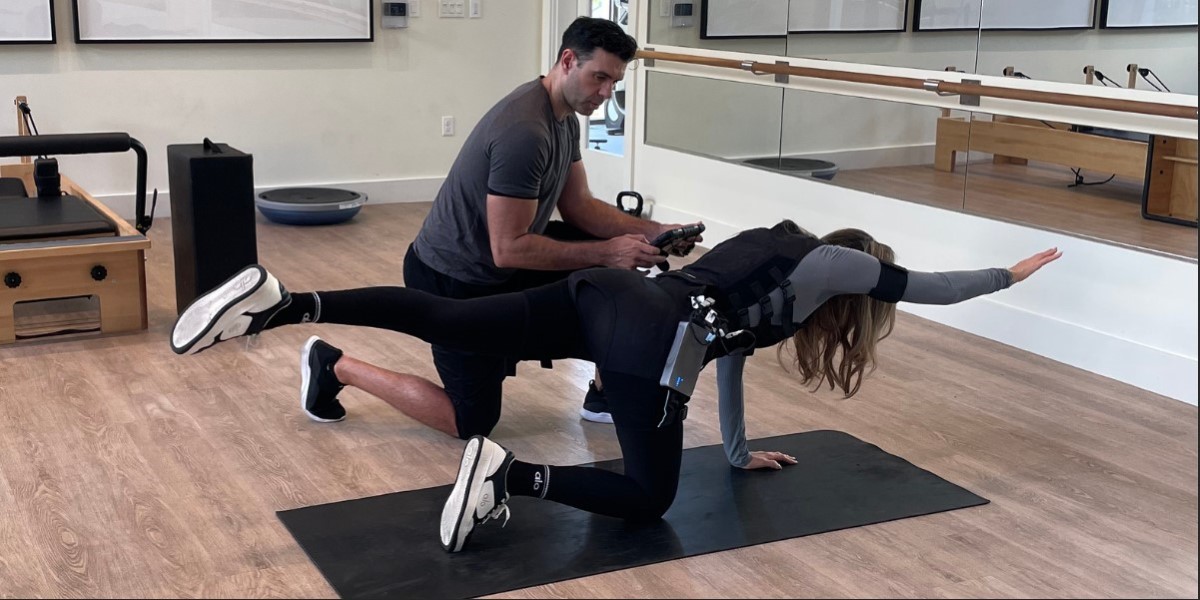
Introducing Whole-Body Electrical Muscle Stimulation (WB-EMS), an emerging technology that is changing the way people approach fitness.

“Many times, traditional exercise comes with many roadblocks,” stated Conrad Sanchez, a respected Los Angeles-based EMS trainer with over 16 years of experience in the fitness industry. Sanchez holds a Master’s in Kinesiology and has certifications from all the major EMS training bodies. “People struggle all the time with being too busy, getting hurt, and struggling to maintain motivation,” he said.

This is where WB-EMS can offer a solution. Sanchez explains, “EMS sessions are huge time-savers—they usually do not last more than 20 minutes.” This makes it easier to accommodate strength training into even the busiest schedules. The reason why EMS workouts are so efficient lies in the technology itself. EMS uses electrical impulses to directly cause muscles to contract, similar to voluntary muscle contractions. This 1-2x a week, high-intensity yet low-impact full-body workout can be done in a fraction of the time it would take to complete similar exercises with traditional resistance training.

In addition, WB-EMS is particularly beneficial for those with injuries or chronic conditions. “Somebody with lower back pain can strengthen their core muscles without overloading the spine, for instance,” says Sanchez. This is because EMS can activate very selective muscles. With targeted use and placement of the electrical impulses, trainers can train muscle groups without causing injury to other areas from improper mechanical stress. Because of its specificity, EMS is a valuable tool for injury rehab and pain management. “People can get stronger while recovering from an injury,” adds Sanchez.

EMS also addresses one of the biggest mental barriers people have when it comes to working out, on top of physical limitations. “One of my clients had a knee injury and was not exercising at all,” remembers Sanchez. “He was able to walk around pain-free after a few sessions, focusing on glutes, quads, and hamstrings. We then slowly incorporated more full-body exercises to the point that he was able to resume his normal activities. That kind of transformation is incredibly rewarding to see.”

The advantages of EMS go beyond just recovering from injuries and saving time. Some research indicates that EMS training can help enhance muscle strength and endurance, improve core stability and posture, and potentially boost athletic performance. By activating a large number of muscle fibers at once, EMS may result in quicker increases in muscle mass and strength, comparable to what one might achieve through extensive traditional weight training, according to this study.

Additionally, EMS may contribute to overall health and well-being. By increasing muscle mass and metabolic rate, it can aid in weight management and enhance body composition. It also has the potential to improve cardiovascular health, increase bone density, and even elevate mood while reducing stress levels.

While EMS has many benefits, it is crucial that it is conducted by qualified and certified trainers. “Safety and effectiveness are paramount,” says Sanchez. “Collaborating with a certified EMS trainer ensures that the intensity and duration of the sessions are tailored to individual needs and fitness levels.”

EMS training is not merely about overcoming challenges; it’s about achieving tangible results. “All my clients report positive changes in body composition, including enhanced strength and muscle endurance,” Sanchez points out. “Whether it’s assisting a busy professional in fitting a workout into their lunch break or helping seniors regain their mobility, EMS offers a customized and effective route to a healthier lifestyle.”

As the fitness landscape continues to change, WB-EMS stands out as an appealing choice for those looking for a more efficient, effective, and accessible way to reach their health and wellness objectives.

Disclaimer: The information provided in this article is for general informational purposes only and is not intended to substitute for professional medical or fitness advice. Before beginning any new exercise regimen, including Whole-Body Electrical Muscle Stimulation (WB-EMS), it is important to consult with a healthcare provider or a certified EMS trainer to ensure it is safe and appropriate for your specific health needs. EMS training may not be suitable for individuals with certain health conditions, and results may vary. Always seek professional guidance to tailor the training to your individual fitness level and goals.

Published by Stephanie M.

The 3E System of Dr. Sas: Empower, Express, and Elevate Your Brand

By: Strategy Achievers LLC

Building a brand today feels like standing out in a sea of voices. Everyone is shouting, “Look at me!” But Dr. Sasitorn Sukkasem, or “Dr. Sas” to her friends, teaches something radically different. Her 3E System—Empower, Express, Elevate—starts from the inside out. It’s not about shouting louder; it’s about finding your voice, owning your story, and sharing it in a way that matters.

For Dr. Sas, empowerment isn’t a buzzword; it’s a process. “You can’t build something real if you don’t believe in yourself,” she often says. Take one of her clients—a woman who ran a boutique skincare line but struggled with crippling self-doubt. This wasn’t just stage fright; the fear convinced you you were not enough. But Dr. Sas asked her one question: Why did you start? That small question opened a floodgate. The woman shared how her battle with sensitive skin inspired her products. She realized that her story wasn’t a liability—it was her brand’s heartbeat. With that mindset shift, she began showing up online—hesitant at first but committed. Over time, she built meaningful connections with her audience.

Expression is the second part of Dr. Sas’s system, and it’s all about honesty. She likes to remind her clients, “People don’t buy perfection. They buy connection.” One of her most unforgettable success stories involved a fitness coach. This woman had built a business around weight loss, yet she was terrified to admit she’d struggled with her own. “What if it makes me look weak?” she worried. But Dr. Sas encouraged her to lean into that vulnerability. The coach began sharing her ups and downs—how she cried when she hit her first milestone and almost quit after a setback. To her surprise, her audience didn’t judge her. They showed their support. Her social media interactions increased, and new clients reached out, sharing their experiences, “You get it. You’ve been where I am.”

The final phase of the 3E System is elevation, and this is where the magic happens. When her clients get here, they’re ready to step into leadership—not just in their industry but their communities. One example that stands out is a tech entrepreneur developing sustainable energy solutions. She had all the credentials but struggled to communicate her vision. Investors weren’t biting, and she felt invisible. After working with Dr. Sas, she refined her approach, learning to connect her passion for clean energy to her personal experiences growing up in a pollution-heavy city. This shift helped her present her ideas more engagingly, making her message more relatable. Over time, her company gained recognition in the sustainable tech space.

What makes the 3E System different is how personal it is. Dr. Sas doesn’t hand out cookie-cutter advice or quick-fix solutions. She listens to people’s fears, dreams, and doubts. “Every story has value,” she says, “but sometimes you need someone to hold up a mirror and show you what’s already there.” That mirror has changed lives. Her clients often say they walk away not just with stronger brands but with a stronger sense of self.

This work is deeply personal for Dr. Sas. Her journey hasn’t been easy. She’s faced culture shock, financial struggles, and devastating personal losses. But she channels all of that into her teaching. When she says, “Your story is your superpower,” you know she’s speaking from experience. And that’s what makes her system so helpful. It’s not about pretending to be something you’re not. It’s about embracing everything you are—the mess, the magic, and the moments between.

If you’ve ever felt like your voice doesn’t matter or your story isn’t “special enough,” the 3E System might be precisely what you need. It’s not just a framework for branding; it’s a blueprint for transformation. And if you ask Dr. Sas, she’ll tell you that the world doesn’t need another ideal brand. It needs you.

Disclaimer: The insights and experiences shared in this article are based on Dr. Sasitorn Sukkasem’s professional methodology and client testimonials. Individual results may vary, and the 3E System is not a guarantee of success. This article is for informational purposes only and does not constitute professional, business, or legal advice. Readers should assess their own circumstances and seek appropriate guidance when necessary.


Published by Zane L.

How Minimally Invasive Techniques are Enhancing Neurosurgery: A Look at Dr. Henry Aryan’s Work

An acclaimed neurosurgeon from California, Dr. Henry Aryan is a board-certified physician who completed a fellowship in neurospinal oncology and complex spinal disorder treatment at UC San Francisco. As a founding member of the Society for Minimally Invasive Spine Surgery, Dr. Henry Aryan is at the forefront of integrating minimally invasive neurosurgery techniques into his practice to treat a variety of patients.

Dr. Aryan specializes in complex spine surgery, surgery in the elderly, revision spine surgery, surgery for spinal tumors, minimally invasive spine surgery, spine artificial disc placement, spinal radiosurgery, as well as robotic-guided spine surgery. He also provides care for degenerative spine disease, spinal deformities, scoliosis, spine trauma, and metastatic disease.

Changing the Face of Neurosurgery

In recent years, there have been significant advancements in neurosurgery, with Dr. Aryan incorporating these evolving techniques into his approach to treating complex spinal and other neurosurgical conditions. These minimally invasive techniques have played an important role in improving patient outcomes and enhancing the precision of surgical procedures.

Minimally invasive neurosurgery typically involves the use of small incisions or natural openings in the body to access the surgical area, utilizing specialized instruments and advanced imaging technologies. Unlike traditional open surgery, which requires larger incisions, minimally invasive procedures generally result in less disruption to the surrounding tissues, leading to potentially quicker recovery, reduced pain, and fewer complications.

Dr. Aryan’s Innovative Approach to Surgery with Robotic-Assisted Techniques

Robotic-assisted neurosurgery is a key element of Dr. Aryan’s approach to complex surgeries, offering a level of precision and control that can be difficult to achieve with the human hand alone. The robotic systems used in his practice are equipped with high-definition 3D cameras and robotic arms, which are capable of highly detailed and delicate movements. This advanced technology allows Dr. Aryan to achieve a magnified view of the surgical site, enabling more accurate targeting of the affected area. Moreover, the robotic arms can perform operations through small incisions, minimizing injury to surrounding tissues. This often results in a reduction of post-operative pain and can contribute to a faster recovery process for patients.

Furthermore, robotic systems help filter out hand tremors, providing Dr. Aryan with enhanced control, which can be particularly valuable in delicate, complicated surgeries where precision is critical to patient safety.

Incorporating robotics into his practice has enabled Dr. Aryan’s patients to experience shorter hospital stays and quicker returns to their daily activities when compared to those undergoing traditional open surgery. While outcomes vary based on individual cases, many patients report benefits such as a reduction in recovery time and a more comfortable post-operative experience.

Endoscopic Technique for Spine Surgery

Endoscopic neurosurgery involves the use of a narrow, flexible tube (an endoscope) equipped with a camera and a light source. Through small incisions or natural openings, surgeons can access the surgery site, offering a minimally invasive approach that causes less disruption to surrounding tissues. This technique allows Dr. Aryan to treat conditions such as herniated discs, spinal stenosis, and spinal tumors by removing damaged tissue or tumors with minimal impact on the surrounding structures.

With endoscopic surgery, patients often experience minimal scarring, reduced risk of infection due to shorter surgery times, and less pain and blood loss. These factors contribute to faster recovery when compared to more traditional surgical methods, although individual results can vary.

Technology Continues to Advance

Minimally invasive techniques in neurosurgery continue to evolve as technology advances, and Dr. Henry Aryan actively embraces these innovations to further improve patient outcomes. Among the promising new technologies are Augmented Reality (AR) and Virtual Reality (VR), which create 3D models of a patient’s anatomy. These tools allow surgeons to plan and rehearse complex procedures ahead of time, increasing the likelihood of a successful surgery. Additionally, next-generation robotic systems have the potential to enable remote neurosurgery, which could be especially valuable for patients in underserved or remote locations.

Other advanced imaging techniques, such as intraoperative MRI and fluorescence-guided surgery, provide surgeons with real-time feedback during surgery. These innovations help ensure that targeted tissue is removed effectively, which may reduce the likelihood of recurrence and improve patient outcomes, though results can depend on a range of factors.

About Dr. Aryan

Dr. Aryan is a dedicated innovator and expert in robotic spine surgery. His ongoing efforts to improve the treatment of neurospinal disorders, combined with his contributions as a pioneer in surgical technology, have earned him recognition from numerous prestigious academic journals and media outlets, both in the United States and internationally. Dr. Aryan provides care at Sierra Pacific Orthopedics in Fresno, California, and serves as an associate clinical professor of neurosurgery at the University of California, San Francisco.

Disclaimer: This content is for informational purposes only and is not intended as medical advice, nor does it replace professional medical expertise or treatment. If you have any concerns or questions about your health, always consult with a physician or other healthcare professional.

Published by Tom W.

Transforming SMEs: Sapiens’ Strategic Growth Solutions

Small and medium-sized enterprises (SMEs) are often the backbone of local economies, yet they frequently face many challenges in their journey to growth and success. 

For businesses like Cheeez, a fast-growing local brand, these challenges have been met head-on through the transformative solutions provided by Sapiens, a growth consulting firm founded in 2021. Sapiens focuses on ethical, sustainable, and innovative business strategies, supporting SMEs in navigating competitive markets.

At the helm of Sapiens is Pamika Horsaengchai, a visionary leader with over eight years of experience scaling and optimizing businesses across diverse sectors, including fashion, hospitality, and non-profits. Her unique approach is rooted in customized care for each client, fostering growth by understanding their needs. Sapiens operates as a performance-driven consulting firm, combining precision with the creativity of a leading agency. Its international team of consultants, strategists, designers, and specialists collaborates to deliver impactful solutions tailored to drive measurable results.

CHEEEZ Studio: A Journey to Local Stardom

When CHEEEZ Studio moved to Central London, it faced the formidable challenge of standing out in a competitive market. The studio’s relocation demanded a reinvigorated presence that could attract loyal patrons and a new audience. That’s where Sapiens stepped in.

With a data-driven strategy, Sapiens transformed CHEEEZ Studio’s online visibility. The process began with extensive research, from analyzing competitors to mapping the customer journey. This research became the foundation for a comprehensive campaign matching SEO excellence with creative marketing tactics.

Key elements of the strategy included:

  • SEO Optimization: Through careful keyword research and content restructuring, Sapiens helped enhance CHEEEZ Studio’s online presence. In just three months, the studio saw significant improvements in search rankings, including strong visibility for targeted terms like “things to do in London.” Many of its keywords ranked highly, with a substantial portion appearing in the top five.
  • Engaging Content and Design: Sapiens reimagined CHEEEZ Studio’s digital experience, prioritizing user-friendly layouts and visually captivating elements tailored to their Gen Z audience. The studio’s brand became as appealing online as in person by crafting compelling narratives and dynamic visuals.
  • Multi-Channel Media Strategy: Understanding that CHEEEZ Studio’s target audience was highly active on social platforms, Sapiens launched a media campaign focused on prospecting and retargeting. This approach contributed to increased engagement and broader visibility across various touchpoints.
  • A/B Testing and Optimization: Sapiens refined every element of the campaign through rigorous testing. Each component was optimized based on performance metrics to maximize impact, from website layouts to ad creatives.

Within three months, CHEEEZ Studio experienced growth in organic traffic, media attention, and increased interest from its clientele. By combining technical expertise with creativity, Sapiens supported CHEEEZ Studio’s reopening efforts.

Driving Sustainable Success for SMEs

CHEEEZ Studio’s digital transformation is a testament to Sapiens’ ability to address the unique challenges of SMEs. With diverse consultants, strategists, and designers, Sapiens creates bespoke solutions that empower businesses to thrive in rapidly evolving markets. From optimizing digital footprints to fostering customer loyalty, the firm’s approach delivers enduring results.

Sapiens’ broader impact is equally noteworthy. By championing strategies that marry profitability with sustainability, the firm helps SMEs achieve success without compromising their values. This commitment resonates with businesses prioritizing purpose and profit, making a more equitable and ethical future for all.

CHEEEZ Studio’s journey is just one example of the transformative power of Sapiens’ approach. For SMEs looking to scale with purpose and precision, Sapiens offers more than just a strategy—it provides a partnership dedicated to unlocking their fullest potential.

Disclaimer: The information provided in this article is for informational purposes only and does not constitute financial, business, or legal advice. While efforts have been made to ensure accuracy, neither the author nor Sapiens guarantees specific results for any business. Readers are encouraged to conduct independent research or consult a professional before making business decisions. Any references to third-party companies, such as CHEEEZ Studio, are for illustrative purposes and do not imply endorsement or affiliation beyond the scope mentioned.

Published by Stephanie M.

Brian O’Kane Shares Optimizing Resource Allocation Through Cost Accounting Insights

Effective resource allocation is the backbone of a thriving business. Brian O’Kane understands that every dollar spent contributes to growth, efficiency, and long-term sustainability. Cost accounting is critical in this process, offering detailed insights that drive informed decision-making. Businesses may optimize performance and maintain a competitive edge by understanding cost structures, identifying inefficiencies, and strategically distributing resources.

Cost accounting is more than just a financial tracking system; it provides the analytical framework needed to assess the actual cost of operations. Unlike general accounting, which focuses on external reporting, cost accounting dives into the granular details of expenses associated with production, services, and processes. This method allows businesses to allocate funds where they are most needed and cut unnecessary expenditures that do not contribute to revenue generation or business objectives.

A primary advantage of cost accounting is its ability to break down costs into fixed, variable, and semi-variable categories. This classification enables businesses to distinguish between constant expenses regardless of output and those that fluctuate with production levels. Companies can implement cost-control measures that prevent overspending and enhance profitability by understanding these dynamics.

Activity-based costing (ABC) offers a detailed perspective on how resources are used across different operations. Unlike traditional broad cost allocation methods, ABC assigns costs based on resource usage. This approach can help organizations analyze cost drivers, identify inefficiencies, and make informed decisions about resource distribution. It is instrumental in complex environments where indirect costs play a significant role.

Budgeting and forecasting also play an essential role in resource optimization; cost accounting provides the foundation for these financial planning activities. By analyzing historical data and trends, businesses may create realistic budgets that reflect actual cost structures. Accurate forecasting helps companies allocate sufficient resources to critical areas while avoiding overspending in less impactful sectors. This proactive approach reduces financial uncertainty and allows companies to respond swiftly to market changes and economic fluctuations.

Brian O’Kane notes that cost variance analysis is another vital cost accounting function supporting resource optimization. This process involves comparing actual costs to budgeted costs and examining any differences. Analyzing these variances can provide insight into factors such as operational changes or pricing fluctuations. Addressing these differences as they arise allows for adjustments that support efficiency and financial planning.

Incorporating cost accounting insights into decision-making enhances strategic resource distribution across departments. For instance, manufacturing companies may allocate materials efficiently by analyzing production costs and determining optimal inventory levels. Service-based businesses can assess labor costs and adjust workforce allocation to maximize productivity without unnecessary expenditures. Regardless of the industry, leveraging cost accounting may allow for precise resource allocation that aligns with business objectives and market demands.

Technology has introduced new tools that enhance data analysis and reporting in cost accounting. Cloud-based systems and AI-driven analytics assist in processing financial information more efficiently. These tools can help reduce manual errors and improve access to economic data, supporting more informed decision-making and resource management.

Practical cost accounting fosters a culture of financial discipline within organizations. When employees and managers understand the cost implications of their decisions, they become more conscious of resource utilization. Encouraging cost awareness across all levels of the organization leads to a more efficient operational structure, where waste is minimized and value creation is maximized.


Integrating cost accounting into financial strategies helps businesses monitor spending and allocate resources effectively. A structured approach to cost analysis can provide a clearer financial picture, supporting informed decision-making and operational planning.

Brian O’Kane suggests that businesses can maintain optimal resource allocation and profitability by continuously monitoring costs, refining budgeting strategies, and adapting to changing market conditions. The strategic application of cost accounting strengthens financial health and provides a framework for innovation, growth, and resilience in an increasingly competitive marketplace.

Disclaimer: The information provided in this article is for general informational purposes only and does not constitute financial, accounting, or business advice. Readers should consult with a qualified professional before making any financial or strategic decisions based on cost accounting principles. The views expressed are those of the author and do not necessarily reflect the opinions of any specific organization or entity.

Published by Stephanie M.

From Dawson County to Blossoms of Joy: A Conversation with Suzanne Stowers Barrett

By: Travis Hutton

Suzanne Stowers Barrett, a native of Dawson County, Georgia, is the co-founder of Stowers’ Flowers, a floral business that blends creativity with community impact. Suzanne’s life has been shaped by her family’s deep roots in education and service. Her father, Keith Stowers, served as Dawson County’s School Superintendent, inspiring Suzanne’s commitment to growth, resilience, and community connection. Before founding her floral business in December 2024 with her nephew, Suzanne spent over a decade excelling in the die-making and die-cutting industry, where she gained invaluable experience in operations, sales, and customer service. Today, Suzanne channels her professional expertise into creating stunning floral arrangements that bring joy to clients while supporting causes like PurpleStride, which raises funds for pancreatic cancer research. Her story is one of reinvention, passion, and an unwavering dedication to cultivating beauty and connection.

What drew you to flowers as a way to express your creativity and purpose?

Flowers have always had a special place in my heart. They’re more than just beautiful—they have the power to express emotions that words sometimes can’t. Whether it’s a bouquet celebrating a joyous occasion or one offering comfort during a difficult time, flowers connect us in profound ways. I’ve always loved gardening and creating small arrangements for friends and family, so when the opportunity arose to turn that passion into a business, it felt like a natural fit. Flowers give me a way to blend creativity with my professional skills while also spreading joy to others.

How did your experience in the die-making and die-cutting industry prepare you for launching Stowers’ Flowers?

My time in die-making taught me so much about organization, precision, and the importance of relationships. Managing operations and sales for over a decade gave me a deep understanding of logistics, customer service, and how to keep things running smoothly. Those skills have been invaluable in building Stowers’ Flowers from the ground up. Running a floral business might seem completely different, but the principles are the same—putting the customer first, staying organized, and always striving for excellence. I also learned how to adapt to challenges, which has been crucial in navigating the ups and downs of entrepreneurship.

What role has your family and upbringing in Dawson County played in shaping your journey?

My family and my roots in Dawson County have been foundational to everything I’ve done. My father, Keith Stowers, was a school superintendent, and his dedication to education and service left a lasting impression on me. My mother, Sandra, was equally supportive and instilled in me the importance of resilience and kindness. Losing my sister, Beth, was a painful experience, but her memory continues to inspire me to live with purpose and compassion. Growing up in a close-knit community taught me the value of giving back, and that’s something I strive to carry forward in my work and personal life.

What has been the most rewarding part of running Stowers’ Flowers?

Without a doubt, it’s seeing the joy our arrangements bring to people. There’s something magical about delivering a bouquet and witnessing the genuine happiness it brings. Flowers have a way of brightening even the darkest days, and knowing that we can be a part of someone’s story—whether it’s a wedding, a birthday, or a moment of healing—is incredibly fulfilling. Another rewarding aspect is working with my nephew. Building this business together has been a meaningful experience, and it’s brought our family even closer.

How do you balance creativity with running the business side of Stowers’ Flowers?

It’s definitely a balancing act, but I’ve learned to integrate the two. The creative side is what fuels my passion—designing arrangements, selecting the perfect flowers, and making sure each bouquet tells a story. On the business side, my background in operations and sales gives me the tools to keep things running efficiently. I approach it as a partnership; the business side supports the creative side and vice versa. Having my nephew as a co-founder also helps because we can share responsibilities and play to our individual strengths.

What role does giving back to the community play in your work?

Giving back is at the core of everything I do. Growing up in Dawson County, I saw how much impact a supportive community can have on a person’s life. That’s why we’ve made community involvement a priority at Stowers’ Flowers. Whether it’s donating arrangements for local events or supporting causes like PurpleStride, we want our business to be a force for good. It’s not just about selling flowers; it’s about creating connections and making a difference in people’s lives.

What advice would you give to someone looking to reinvent their career or start a new venture?

First, don’t let fear hold you back. Change is always intimidating, but it’s also where growth happens. Trust in your skills and the lessons you’ve learned along the way—they’ll serve you in ways you might not expect. Second, be prepared to work hard and embrace challenges. Entrepreneurship is rewarding, but it’s not without its hurdles. Finally, make sure your venture aligns with your passions and values. When you’re doing something you love and believe in, it doesn’t feel like work—it feels like purpose.

What does a typical day look like for you, and how do you find balance in your busy life?

Every day is different, which is part of what I love about this journey. Some days, I’m meeting with clients to discuss their vision for an event, while other days, I’m in the workshop designing arrangements or managing the business side of things. I always make time to unwind, though, whether it’s spending time in my garden, reading, or listening to music. Balance is important to me—it keeps me grounded and allows me to show up fully for my clients, my family, and myself.

What’s next for you and Stowers’ Flowers?

We’re focused on growing the business while staying true to our mission of spreading joy and giving back to the community. I’d love to explore new ways to reach more people, whether that’s through expanding our services or collaborating with other local businesses. Personally, I want to continue finding joy in what I do and building meaningful connections with the people we serve. For me, the journey is just as important as the destination, and I’m excited to see where it leads next.

For Suzanne Stowers Barrett, success is more than achieving professional milestones—it’s about bringing joy, building connections, and making a positive impact on the community she holds dear. Through Stowers’ Flowers, she continues to inspire with her passion, resilience, and commitment to creating beauty in every aspect of her life.

Published by Drake M.

25 Years of Service: How Sean Gentile, MBA, Empowers Families to Navigate Through Life’s Emotional Challenges

By: Travis Hutton

For 25 years, Sean Gentile, MBA, has been a steady guide for families facing some emotional challenges through divorce. From helping parents manage child support to assisting couples through divorce, Sean has built a career rooted in service, compassion, and professionalism. Her journey is one of dedication to the public and a belief that knowledge is a powerful tool for change.

“Serving the public has always been my priority,” Sean says. “As a Florida Supreme Court Family Mediator, the knowledge we give is educational and not legal advice. The name of the business is Non-Attorney Divorce. The goal is to ensure our clients find clarity, validation, and success through their family court process.”

A Career Built on Helping Others

Sean’s career began with a focus on child support over two and a half decades ago. She helped parents navigate the child support bureaucracy and explained the intricacies of interacting with staff and the plethora of procedures. Sean made it her mission to provide validation and support, empowering her clients with the information and strength they needed to move forward.

Over time, her work expanded to include divorce mediation and family court documents services, notary services, process serving, and detailed help on co-parenting strategies for a win/win. Through it all, her goal has remained the same: to serve the public with care and professionalism every step of the way.

“One of the most profound things I’ve learned is how strong people are.”  Sean reflects. “Sometimes, they just need a reminder to tap into that strength.”

What Makes Sean Different

Sean’s approach is grounded in key qualities that have defined her work over the years.

  1. Availability
    Sean is known for being available to her clients seven days a week. She believes that accessibility is crucial, especially when people are dealing with urgent or emotional situations. “I genuinely enjoy what I do,” Sean explains. “It is what I have dedicated my life to.”
  2. The Importance of Questions
    Sean teaches her clients to question everything. She helps people ask the right questions, whether about mediation processes, what to expect from staff, or clear answers for co-parenting with one’s ex. “Questioning is a skill,” she says. “It’s about asking the right things in the right way so you get the answers you need.” For example, if you engage an attorney’s service, you may want to ask yourself, “What is a callback turnaround time? What do you charge for texting a response?” Even though it may be in an agreement, you can still ask questions to highlight information. 
  3. Focusing on Strength
    Sean believes in reminding her clients of their inner strength. She has seen time and time again how resilient people can be.
    “Everyone is stronger than they realize,” Sean says. “Sometimes, they just need someone to remind them of that.”
  4. Attention to Detail
    In Sean’s line of work, details matter. Whether typing court documents or drafting parenting plans, she approaches every task carefully.
    “Accuracy isn’t just important—it’s essential,” she says. 
  5. Professionalism Under Pressure
    Divorce and family disputes can be emotionally charged. Sean prides herself on staying calm and professional, even in tense situations. “Emotions can run high, and that’s okay,” she says. “Part of my job is to validate those feelings while ensuring the process moves forward smoothly. It is ok to be angry.”

Lessons Learned from 25 Years of Service

After two and a half decades, Sean has seen it all. But one lesson stands out above the rest: the power of empathy. “People just want to feel heard and understood,” she says. “When you approach every case with empathy, you create a space where real progress can happen.”

She has also learned the importance of providing actionable information. Whether teaching clients how to recognize red flags in a relationship or helping them draft a detailed parenting plan, Sean ensures that her clients leave with tools they can use.

“I always tell my clients that knowledge is power,” Sean says. “The more informed you are, the better decisions you can make.”

Looking Ahead

As she celebrates 25 years of serving the public, Sean is grateful for her clients’ trust in her. She plans to continue her work with the same dedication and care that has defined her career.

“Every case teaches me something new,” she says. “And I’m always looking for ways to improve and grow.”

For Sean, serving the public isn’t just a job—it’s a calling. Her work has impacted countless families, and she shows no signs of slowing down.

“In the end, it’s all about helping people,” she says. “That’s what keeps me going.”

Sean Gentile’s story is a testament to the power of service, empathy, and professionalism. Her 25 years of experience have given her unique insights into the challenges families face, and her dedication has helped countless people find strength, clarity, and success.

Disclaimer: This article is for informational purposes only and does not constitute legal, financial, or professional advice. While Sean Gentile, MBA, provides family mediation and document services, she does not offer legal representation or legal counsel. Individuals facing legal matters should consult a qualified attorney for advice specific to their situation. The outcomes of mediation and court processes may vary based on individual circumstances.

Published by Tom W.

Boosting Agency Impact with AI Tools

As artificial intelligence continues to reshape industries, digital agencies are embracing profound transformations to stay relevant and competitive. AI-driven solutions now permeate core services such as SEO, content marketing, personalization, and website design. To thrive in this AI-powered landscape, agencies must evolve their services, adopt new tools, and rethink traditional strategies. Here’s how digital agencies are adapting to deliver unparalleled AI value.

The Shift in SEO and Content Marketing

The explosion of AI-generated content is revolutionizing SEO and content marketing. Traditional approaches—focused on keyword density and link building—are giving way to AI-powered tools that prioritize context, user intent, and semantic analysis. Agencies are now leveraging AI tools to analyze search trends, identify emerging topics, and create content tailored to particular audience segments.

AI models like GPT-4 enable agencies to generate long-form articles, product descriptions, and ad copy at scale. However, the real value lies in integrating these outputs with human expertise to ensure quality and authenticity. Forward-thinking agencies are also employing AI to audit and optimize content in real-time, making adjustments to improve search rankings and user engagement.

Hyper-Personalization Beyond Platforms

AI’s capacity for deep data analysis offers opportunities for hyper-personalization that surpasses traditional tools like HubSpot. Digital agencies are utilizing AI to create granular customer profiles by analyzing behavioral data, purchase history, and real-time interactions. This level of insight enables agencies to design campaigns that resonate on a deeply personal level.

For example, agencies can now develop bespoke marketing strategies that adapt dynamically to a user’s preferences. AI-driven personalization not only enhances customer experience but also boosts conversion rates. As clients demand more tailored solutions, agencies that master hyper-personalization stand to gain a competitive edge.

Prompt-Based Website and Imagery Creation

The advent of prompt-based tools like ChatGPT and DALL-E has ushered in a new era for website and imagery creation. These tools enable agencies to produce high-quality websites, graphics, and branding materials quickly. While this technological shift streamlines creative processes, it challenges agencies to redefine their value propositions.

Agentic Site Support — To Adopt or Not?

AI-powered chatbots and automated assistants are becoming ubiquitous, offering 24/7 support and improving user interactions. However, digital agencies face a strategic decision: Should they encourage their clients to universally adopt agentic AI-powered site support or take a more selective approach?

Ubiquitous adoption makes sense for some industries, as it reduces costs and enhances scalability. For others, selective implementation allows for maintaining a human touch where empathy and complex problem-solving are required. Agencies must carefully evaluate clients’ needs and design solutions that balance efficiency with personalization.

Contextual: Redefining AI Orchestration for Agencies

One company enabling this transformation is Contextual.io, a fully managed AI Agent orchestration and workflow automation platform. Contextual empowers digital agencies to implement AI solutions across critical enterprise functions with ease. Its platform supports data transformation, AI model management, workflow coordination, and scale operations.

Contextual’s highly visual, low-code data and logic functions, combined with its catalog of pre-built solutions, allow agencies to design, develop, and deploy AI solutions rapidly. For instance, agencies can use Contextual’s single-click deployment tools to streamline operations such as go-to-market strategies, service delivery, data transformation, and IoT integration. By reducing the complexity and cost of implementing AI, Contextual helps agencies focus on delivering measurable value to their clients.

As AI evolves, digital agencies must embrace its transformative potential to remain competitive. By integrating AI into SEO strategies, leveraging hyper-personalization, redefining creative processes, and strategically implementing agentic site support, agencies can deliver unmatched value to their clients.

Platforms like Contextual.io are instrumental in this journey, providing the tools and infrastructure needed to unlock AI’s full potential. The future of digital agencies depends on their ability to innovate, adapt, and integrate AI into their services, helping them stay relevant in an evolving digital landscape.

Published by Stephanie M.

Why Certifications Build Resilient Job Candidates

As industries evolve and economic landscapes shift, professionals often face an important question: how can they remain relevant in a world where job security is constantly changing? One way to strengthen career prospects is through certifications. These specialized credentials have become an effective tool for enhancing resilience and improving employability in an unpredictable job market. Whether you’re looking to pivot careers, expand your expertise, or gain a competitive edge, certifications offer a structured approach to skill-building and career development.

For individuals seeking to enhance their professional stability, certifications like the Project Management Professional (PMP) can play a crucial role. Backed by the expertise of training organizations like Cheetah Learning, certifications help validate skills and may lead to new career opportunities. Let’s explore how these credentials support professionals in navigating uncertainty.

Navigating Job Market Volatility

Today’s employment landscape can be unpredictable. Layoffs, automation, and industry disruptions often create uncertainty for even the experienced professionals. Employers increasingly seek candidates with demonstrated practical skills, rather than just theoretical knowledge. Certifications can provide this assurance, potentially making candidates more appealing in a fluctuating hiring environment.

Certifications: A Strategic Career Investment

Certifications are more than just credentials; they represent a commitment to professional development. They signal to employers that an individual has acquired industry-relevant expertise and is dedicated to ongoing learning. Programs like the PMP certification, for example, hold global recognition and indicate a candidate’s ability to manage complex projects effectively.

Unlike traditional degrees, certifications emphasize hands-on, job-ready skills designed to meet current industry needs. This targeted learning approach can enhance a professional’s ability to compete in the job market and differentiate themselves from other applicants.

Building Employer Confidence

Employers often value certifications because they serve as independent verification of expertise. Credentials such as the PMP can provide hiring managers with greater confidence in a candidate’s ability to take on demanding roles. Certified professionals are frequently considered strong contenders for positions that require precision and reliability, such as managing high-budget projects or working under tight deadlines.

Supporting Career Transitions

Certifications can be particularly beneficial during career transitions. For professionals shifting industries or seeking advancement, they offer a structured way to build credibility. Consider someone moving from operations to project management—earning a PMP certification can help bridge that gap, demonstrating competency and commitment to potential employers.

Enhancing Career Longevity

While predicting future career trends is challenging, certifications can contribute to long-term professional resilience. They may lead to increased earning potential, broaden career options, and provide an advantage during challenging economic periods. More than just a short-term credential, certifications can support career growth and adaptability as industries continue to change.

The Value of Cheetah Learning

Why Certifications Build Resilient Job Candidates

Photo Courtesy: Cheetah Learning

When pursuing certifications, the quality of training can significantly impact success. Cheetah Learning has been a recognized leader in certification training for over two decades, assisting thousands of professionals in earning their PMP credentials through an accelerated learning process.

Their Cheetah PMP Sprint program is designed to streamline the certification path, equipping participants with the knowledge and resources needed for success. With a high pass rate and a structured learning approach, Cheetah Learning provides a supportive environment for individuals seeking to achieve certification efficiently.

Certifications: A Smart Career Move

For professionals navigating a rapidly changing job market, certifications offer more than just a credential—they can be a valuable tool for career progression. They enhance credibility with employers, increase access to new opportunities, and support long-term professional development. Cheetah Learning’s expertise in training makes certifications like the PMP both attainable and impactful. Contact them here.

Whether you’re aiming to stand out in a competitive field or transition into a new role, earning a certification can be a strategic career move. In uncertain times, staying proactive about professional growth is one of the ways to build a resilient career.

Published by Stephanie M.