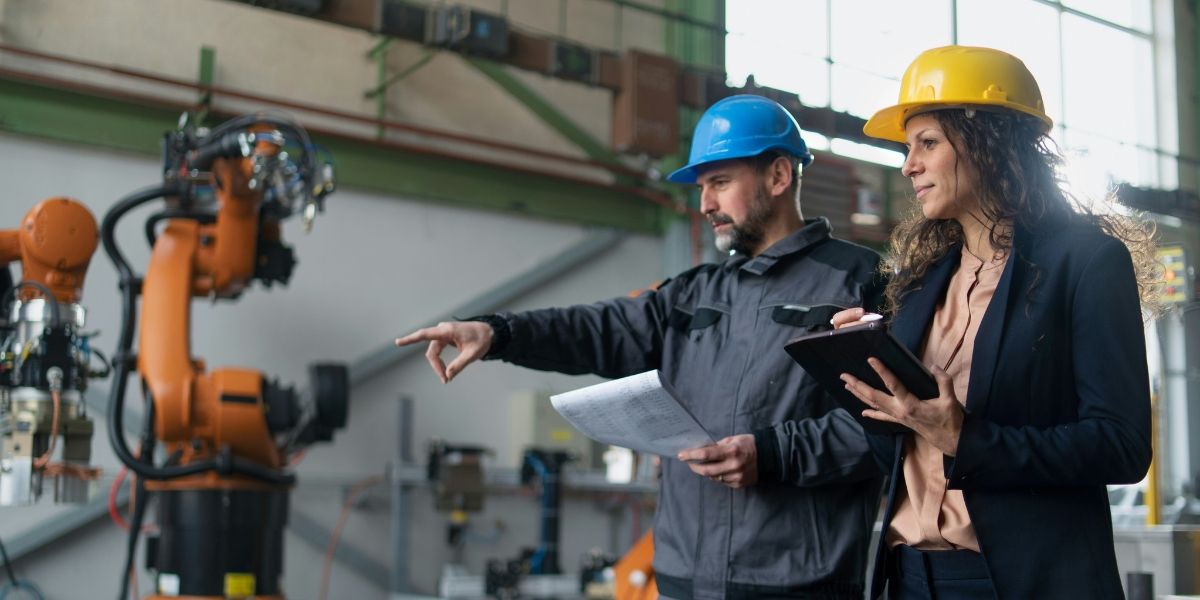

Standard Bots, a Long Island-based robotics company led by co-founder and CEO Evan Beard, is expanding its domestic manufacturing operations while developing AI-enabled industrial robotic arms. Headquartered in Glen Cove, New York, the company is increasing production capacity and developing technology intended to simplify robot programming and deployment. Its expansion includes a target of producing 4,000 robots annually by the end of 2027, reflecting its plans to serve manufacturers seeking industrial automation equipment.
Key Takeaways
- Standard Bots is expanding its industrial robotics manufacturing operations in Glen Cove, Long Island
- Co-founder and CEO Evan Beard is leading the company’s domestic manufacturing and product development strategy
- The company develops AI-enabled robotic arms designed to simplify programming and support industrial automation
- Standard Bots serves customers including Amazon, Lockheed Martin and NASA, alongside smaller manufacturers
- The company aims to reach an annual production rate of 4,000 robots by the end of 2027
Standard Bots Expands Its Industrial Robotics Manufacturing Operations
Standard Bots is increasing its manufacturing capacity on Long Island as it develops robotic equipment for industrial and commercial applications. The expansion is intended to support higher production volumes while strengthening the company’s ability to manufacture robotic systems in the United States.
The company’s robotic arms are designed for tasks such as welding, assembly, machine tending and other repetitive industrial processes. These applications require equipment that can perform controlled movements while meeting the operational requirements of different production environments.
Standard Bots is developing systems that can be adapted to different tasks rather than requiring customers to rely exclusively on dedicated equipment for individual processes. This flexibility is part of its approach to serving manufacturers with varying production needs.
Adaptability is also a focus elsewhere in the robotics sector. Feather Robotics, for example, is developing a modular humanoid robotics platform for commercial applications, including restaurant cooking and laboratory cleaning. Although the companies develop different types of robotic systems, both are working on equipment that can be configured for specific tasks.
Standard Bots serves organizations with different operational requirements. Its identified customers include Amazon, Lockheed Martin and NASA, as well as smaller businesses seeking to introduce automation into their facilities.
For manufacturers without dedicated robotics engineering teams, equipment configuration and technical support can influence adoption decisions. Standard Bots is developing its products with these considerations in mind, focusing on the programming and deployment requirements associated with industrial automation.
The company’s expansion connects its manufacturing capacity with its commercial plans. Increasing production will require coordination across component sourcing, equipment assembly, quality control and customer support.
Evan Beard Leads the Company’s American Robotics Strategy
Co-founder and CEO Evan Beard is directing Standard Bots’ efforts to expand domestic robotics manufacturing while developing industrial equipment intended for businesses of different sizes.
Beard previously founded technology startups before entering the robotics industry. His experience in building businesses has informed Standard Bots’ approach to product development, manufacturing operations and commercial expansion.
Industrial robotics presents requirements that differ from those of software businesses. Manufacturers must manage hardware engineering, component procurement, production facilities and equipment testing. Increasing output also requires coordination among suppliers and production teams.
Standard Bots is addressing these requirements while developing robotic equipment for customers ranging from small manufacturers to organizations with established industrial operations.
The company’s customer relationships extend across industries with different automation needs. Smaller manufacturers may prioritize equipment that can be configured without extensive technical resources, while larger organizations often require robotic systems that integrate with existing production environments.
Beard has also participated in discussions with U.S. policymakers about strengthening domestic robotics manufacturing. His proposals have included greater support for American production capacity, industrial automation adoption and workforce development.
These efforts reflect the relationship between the company’s commercial plans and the availability of domestic manufacturing resources. Expanding production depends not only on customer demand but also on access to components, skilled workers and manufacturing infrastructure.
Standard Bots’ operations in Glen Cove provide a domestic manufacturing base as the company pursues higher production volumes and continues developing its robotics technology.
AI Technology Supports Industrial Robot Training and Deployment
Artificial intelligence is an important part of Standard Bots’ product development strategy, particularly its efforts to simplify the programming and operation of industrial robotic arms.
Traditional industrial robots often require specialized programming to configure movements, establish operating parameters and prepare equipment for production tasks. These requirements can increase deployment costs and create technical challenges for businesses without experienced robotics engineers.
Standard Bots is developing AI-enabled capabilities intended to reduce some of that complexity. Its approach includes allowing robots to learn tasks through demonstrations rather than relying entirely on conventional programming methods.
The objective is to make it easier for operators to configure robotic equipment for different industrial applications. However, actual deployment requirements still depend on the task, production environment, safety measures and level of integration involved.
Industrial robots used for welding, assembly and material handling must operate within defined parameters. Their performance depends on appropriate programming, tooling, safety systems and the conditions of the manufacturing environment.
AI-assisted training may help simplify portions of the setup process, but it does not eliminate the need for equipment testing, operator training or technical oversight.
For smaller manufacturers, these considerations can influence whether automation is practical. Businesses must evaluate equipment costs alongside installation, programming, maintenance and ongoing support requirements.
Standard Bots is focusing on these aspects of industrial automation as it develops its robotic systems. Its approach combines physical equipment with software intended to make robot configuration more manageable for customers.
Manufacturing Capacity and Domestic Supply Chains Remain Key Challenges
Expanding industrial robot production requires reliable access to mechanical components, electronics, control systems and other specialized equipment. Manufacturers must coordinate these supplies while maintaining product quality and production schedules.
Standard Bots faces these requirements as it increases its domestic manufacturing capacity. Although the company designs much of its equipment in the United States, its supply chain continues to depend partly on overseas suppliers.
Approximately 40% of the company’s components are sourced domestically by value, based on figures shared by Beard. This means a substantial portion of its component sourcing remains international.
Domestic component availability is an important consideration for the expansion. Robotics manufacturers require parts such as motors, precision gearing, sensors and electronic control equipment, and the availability and cost of these components can influence production decisions.
Other businesses are developing services intended to support hardware companies with supplier identification and manufacturing coordination. Detroit-based Bloom, for example, operates a manufacturing partner marketplace connecting hardware businesses with manufacturers, engineers and logistics providers.
For Standard Bots, increasing domestic production will involve managing supplier relationships alongside its internal engineering and assembly operations.
The company also operates in a competitive industrial robotics market that includes established manufacturers with extensive production experience and customer service infrastructure.
Product reliability, pricing, technical support and ease of deployment are important considerations for industrial customers. Standard Bots’ focus on AI-enabled operation is one part of its strategy for addressing these requirements.
Beard’s engagement with policymakers also reflects the company’s interest in domestic manufacturing support. However, broader policy initiatives and potential financing arrangements remain separate from the company’s existing production operations.
Its manufacturing expansion will ultimately depend on the coordination of component sourcing, production capacity, product development and customer requirements.
Standard Bots Targets Higher Annual Robot Production by 2027
Standard Bots aims to reach an annual production rate of 4,000 robots by the end of 2027. The target establishes a timeline for the company’s manufacturing expansion, although it does not represent its current annual output.
Achieving this objective would require greater production capacity and a consistent supply of components needed to manufacture its robotic systems.
The company’s Long Island operations are central to these plans. Expanding domestic manufacturing would provide additional capacity for assembling equipment and supporting customers across different industries.
Production growth is also connected to the company’s technology development. Standard Bots is working on AI-enabled robotic systems intended to support multiple industrial applications while reducing the technical requirements associated with programming and deployment.
The range of customers creates different operational considerations. Smaller manufacturers may need straightforward configuration and support, while larger organizations may require integration with established production processes and technical systems.
Meeting these requirements will involve more than increasing the number of robots manufactured. Product performance, installation support, maintenance and manufacturing consistency will remain important as production scales.
Supply-chain coordination is another factor. The company’s reliance on international components means that domestic manufacturing growth will continue to involve decisions about sourcing, supplier capacity and production costs.
The 2027 target provides a measurable objective for Standard Bots’ expansion. Its progress will depend on whether the company can increase output while maintaining the engineering, supply-chain and customer support capabilities required for industrial robotics manufacturing.
Frequently Asked Questions
What Is Standard Bots and What Does the Company Manufacture?
Standard Bots is a U.S.-based robotics company headquartered in Glen Cove, Long Island, New York. It develops industrial robotic arms designed for manufacturing applications such as welding, assembly, machine tending and other automated production tasks.
Who Founded Standard Bots?
Evan Beard co-founded Standard Bots and serves as its CEO. He previously founded technology startups before entering the industrial robotics sector.
Where Is Standard Bots Headquartered?
Standard Bots is headquartered in Glen Cove, Long Island, New York, where it also operates its domestic robotics manufacturing activities.
How Does Standard Bots Use Artificial Intelligence?
Standard Bots is developing AI-enabled technology intended to simplify robot programming and training. Its approach includes teaching robotic systems through demonstrations to reduce reliance on conventional programming for certain tasks.
How Many Robots Does Standard Bots Plan to Produce by 2027?
Standard Bots has established a target of producing 4,000 robots annually by the end of 2027. The target is part of its domestic manufacturing expansion plans and remains subject to production capacity, component availability and operational requirements.