By Jordan Jerome
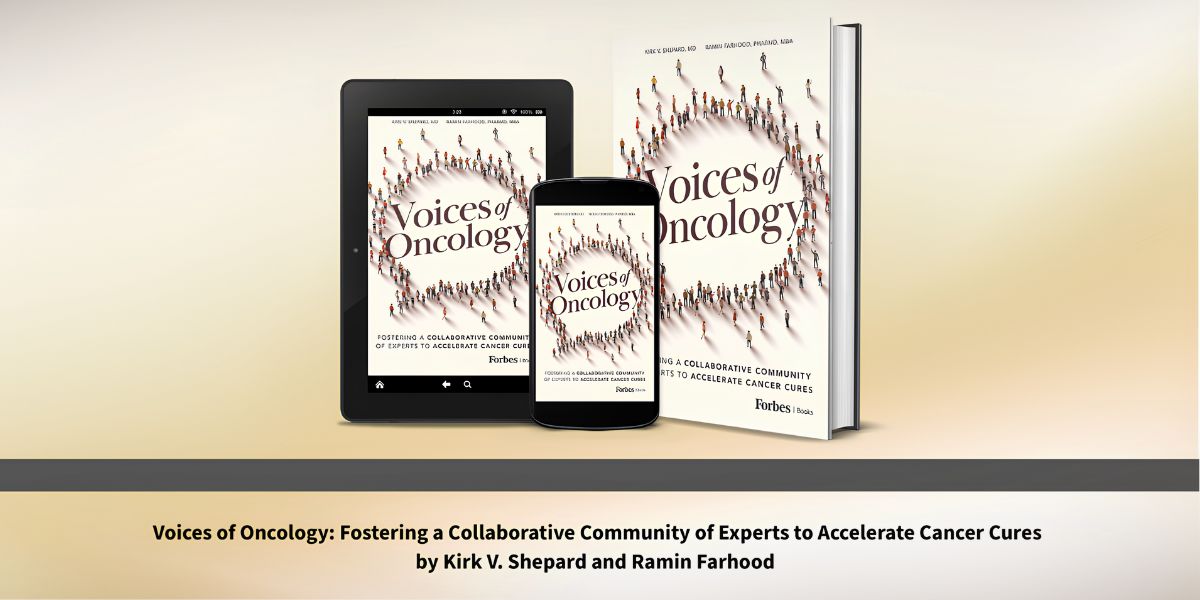
Cancer does not care about organizational charts or departmental budgets or the professional boundaries that separate pharmaceutical executives from academic researchers from patient advocates from healthcare innovators. It has been exploiting those boundaries for decades, thriving in the gaps between the people who should be working together and too often aren’t. Kirk V. Shepard and Ramin Farhood built their entire careers understanding that dynamic, and Voices of Oncology is their most concentrated and most publicly accessible articulation of what it looks like when the right people finally decide to work differently.
Why Thirty-Three Perspectives Strengthen the Picture of Cancer Care
The book is structured around exclusive interviews with thirty-three contributors from across oncology, and that structural choice is itself an argument. By giving distinct chapters to distinct voices rather than folding everything into a single authoritative narrative, Shepard and Farhood demonstrate the very principle they advocate. The picture of cancer treatment becomes more complete and more actionable when more perspectives are genuinely included rather than filtered through one editorial lens. The accumulation of those perspectives builds as the book progresses, each chapter adding texture to a challenge no single expert could map alone.
The range of that accumulation is what makes the reading experience engaging. The contributors Shepard and Farhood assembled bring scientific expertise alongside patient advocacy, cultural competency, work on diversity and inclusion, pharmaceutical leadership, and the kind of lived experience clinical data can never fully capture. The book states plainly that oncology is being reshaped by scientific advancement and, just as much, by societal and cultural forces that redefine what it takes to bring new therapies to patients. That attention to the human and social dimensions of cancer care gives the book a fullness that purely technical treatments of the subject tend to lack.
The Experience Kirk Shepard and Ramin Farhood Bring to Oncology
Shepard brings thirty years of pharmaceutical work to the project, including roles at Boehringer Ingelheim, Takeda, and Eisai, along with the institutional perspective of someone who cofounded and led the Medical Affairs Professional Society. Farhood adds more than twenty-five years of experience in patient-centric medical strategy and the credibility of helping bring the first gene therapy for spinal muscular atrophy to patients. Together, they shape a conversation that reflects both what the field knows and an honest accounting of where it still needs to go.
Who Should Read Voices of Oncology
This is a book for everyone in oncology who has ever felt the frustration of progress slowed by fragmentation, and for everyone outside it who wants to understand why the cure for cancer is taking as long as it is and what would need to change for that to be different. Shepard and Farhood have made that understanding both accessible and urgent, and in doing so, they have created something that matters beyond the considerable achievement of the book itself.
If you are ready to understand why cancer progress has been slower than the science alone would suggest and what the most credible minds in oncology believe needs to change, Voices of Oncology by Kirk V. Shepard and Ramin Farhood is waiting for you on Amazon. Pick up your copy and step inside the most important conversation happening in cancer care right now.