
By: Caesar Montague
After years on tour, former professional player Andrea Jaeger chimes in on the debate about best-of-five-set matches.
Andrea Jaeger remembers the exact moment she reflected on how women could benefit from being equal to the men in professional Grand Slam tennis by playing best-of-five-set matches. Andrea was playing Chris Evert in the semifinals of the French Open. The match was very one-sided to the point that Andrea started trying new shots she normally only left on the practice court. When those even went her way, match point approached.
Chris Evert was considered a clay court queen, and she was looking to get to another one of her Grand Slam Open finals. In her way was Andrea, not even out of her teenage years, and a player who seemed to find joy in running down tennis balls and rarely appeared to get tired or nervous in a match.
Jaeger led the match decisively. With ease and appearing to barely break a sweat, she reached match point. It was then she thought, “Why aren’t the women playing best-of-five set matches? Then I could get at least one more set of practice.” After the match, Andrea headed to the practice courts, looking forward to the day the women would play 3 out of 5 set matches.
After reaching two Grand Slam finals as a teenager and spending years competing at the highest level of women’s tennis, Andrea Jaeger is now convinced that the five-set debate isn’t really about capability, but rather about several practical considerations.
She Knows Women Can Handle Five Sets
Let’s dispose of the often-cited argument first: women are generally considered capable of playing best-of-five-set matches at the highest level. Anyone who’s watched modern women’s tennis, the power, the speed, the relentless baseline warfare, knows this is far from the genteel game of generations past.
Jaeger has been in three-set matches that lasted three hours, filled with 20-stroke rallies in oppressive heat. She’s trained diligently with a peaceful iron will that included 6am runs outdoors during Chicago winters and training during humid summers. Andrea knew her capabilities well and tuned them in a way that others often may have found difficult to replicate. She never experienced cramps, dehydration, or the kind of physical exhaustion that makes your legs feel like concrete, but she knew many players who had. Would the extra sets of play cause more injuries? Possibly, but they would likely occur regardless of match format in some cases.
But here’s what the “women should play five sets” crowd often misses: capability and wisdom are two different things.
The Reality of the Tour Calendar
When Jaeger was playing, the off-season was essentially non-existent. A few weeks if you were lucky and didn’t make the year-end championships. The rest of the year was busy with airports, hotels, sponsor events, practice courts, and matches. And for Andrea, she did most of that while attending public High School, given that she turned pro at the age of 14 and became the #2-ranked player in the world at the age of 16. The grind existed equally for everyone, physical and otherwise. Andrea, however, never had to worry about longer matches or schedules while on court. A tennis court represented a game to Andrea. A chance to play, hone skills, and see how those skills would evolve, discovering how and when others would lose their grip on a match due to missed steps in their own training.
Grand Slams represent the most prestigious of tournaments. Each of the four Grand Slam events spans two weeks of the tennis calendar and takes place in a different country. Seven matches in fourteen days, each one against increasingly elite competition. Bodies manage peak performance alongside cumulative off-court fatigue, for example, long travel days and time changes, minor injuries that haven’t had time to heal, and the mental pressure of knowing it is showtime over two weeks, where one bad day can lead to elimination from the draw.
Now add the reality of five-set matches. That’s potentially a significant increase in court time over the course of a tournament. More time absorbing impact on hard courts. More opportunities for a hamstring to give out in the fifth set of a fourth-round match, which could potentially affect not only that tournament but also upcoming events.
Jaeger watched friends and competitors have their careers shortened by injury, and experienced it herself, retiring due to a shoulder injury. The players who made it into their 30s were often those who learned to manage their bodies carefully. Adding five sets to Grand Slams would be asking players to further extend their physical limits within an already demanding schedule.
The Scheduling Reality Nobody Talks About
Here’s what happens when you’re scheduled for a night session that starts at 7 PM: you spend the entire day preparing, staying loose, managing your energy. If your match goes five sets and ends at 1 AM, you’re not falling asleep until 3 or 4 in the morning, since adrenaline may take time to subside. Then you’re expected to recover, practice, and potentially play again in 36-48 hours.
Jaeger lived that schedule under the current three-set format. It’s manageable, yet far from ideal. Five sets would likely extend those late finishes even further into the night, further compress recovery windows, and make the difference between winning and losing sometimes depend on scheduling circumstances rather than performance alone. Plus, what about the fans? Matches ending at 2 am, fans may still need to get up and go to work that same morning.
Grand Slam tournament directors already manage complex scheduling demands. The scheduling challenges that five-set women’s matches would create may present additional logistical considerations, especially given the current format and infrastructure.
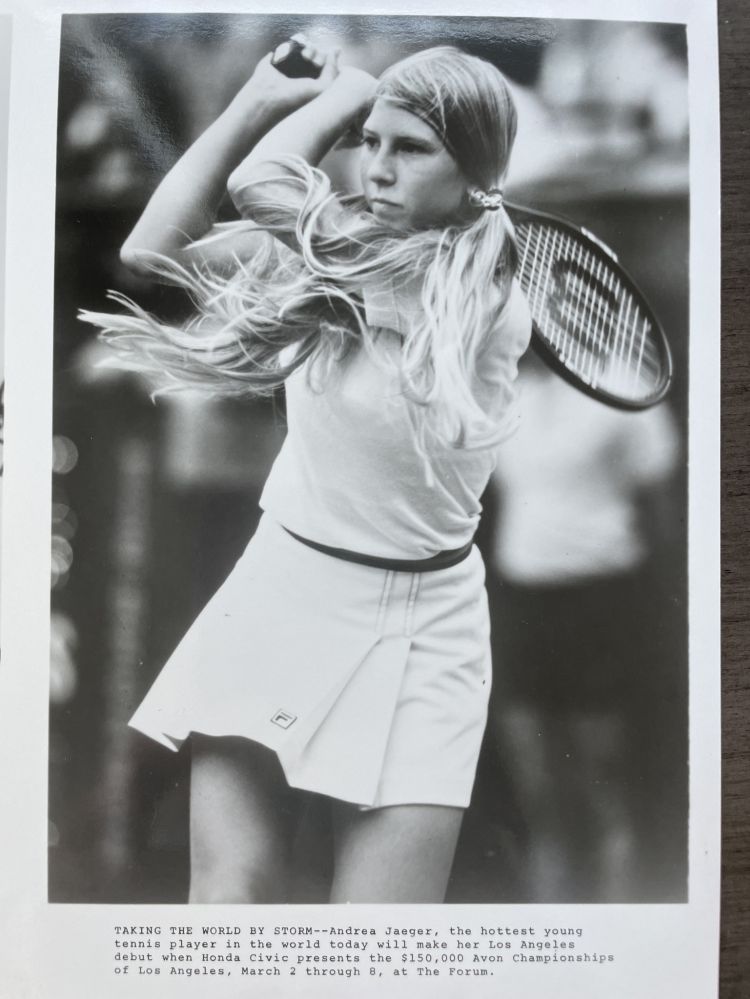
Photo Courtesy: Andrea Jaeger
The Equal Pay Argument Misses the Point
Equal pay is about valuing the women’s game for what it is, not for how closely it mirrors the men’s. Women’s tennis draws viewers, fills stadiums, and generates revenue. Three-set matches are not inferior; they are different. They reward consistency, mental toughness under immediate pressure, and the ability to perform without the safety net of a potential comeback from two sets down.
Some of the most iconic matches in tennis history have been three-setters. The format hasn’t diminished the women’s game; it has played a role in shaping its identity over time.
Where She’d Consider a Compromise
That said, Jaeger would have loved to play the longer best-of-five set matches during her era. She never grew weary in physical abilities during the three sets and would have been fine playing best of five. If tournaments wanted to test five-set formats for semifinals and finals only, she’d be curious to see how it plays out, knowing plenty of players will oppose the best-of-five format. That semifinals and finals approach would preserve the drama and high-stakes appeal of longer matches while potentially limiting the cumulative physical toll over a two-week event.
It would also maintain scheduling predictability for earlier rounds while delivering marquee five-set showdowns when the stakes justify the added demand. Players could manage their training and preparation knowing that only the deepest runs would require that extra level of endurance.
But a wholesale shift to five sets from the first round? She feels it is unlikely to happen. Not because women can’t do it, but because the cost-benefit analysis may not fully support such a change when considering player health, career longevity, and scheduling realities. Even at the beginning of tournaments, players are starting to get injured, and the additional strain could contribute to increased wear and tear over time.
The Question Nobody’s Asking
Here’s what Jaeger is curious about when discussing these Grand Slam tennis topics. Whether best of five happens or not, Jaeger feels that tennis would benefit from doing away with the break after the first set, unless that player has won the first set, and even then, breaks should only come after the second set. Jaeger feels that too often players use the loss of a first-set break time to disrupt the momentum of the other player. She feels, “Tough. You lost the first set. Deal with it. Stay on court, and if you want a break to change clothes or use the bathroom, then win the first set to do it, or take the break after the second set.” That first set break may disrupt play, the fans may not always enjoy it, and for Jaeger, it can sometimes appear to reflect a lack of professionalism or sportsmanship when used strategically.
Her Honest Take
If Jaeger were still playing and the WTA announced a shift to five sets at Grand Slams, she’d be excited and would adjust training accordingly. Players always do. But she’d also know that injuries could potentially occur more frequently, that physical strain would accumulate over time, and that the margins between winning and losing might narrow in ways that relate more to endurance than skill.
She’s proud of women’s tennis and what it represents. She’s wary of changes that sound good in theory but may not fully account for the realities of competing consistently at a high level.
The five-set debate will continue. But Jaeger hopes the conversation shifts from “can women do it?” to “they likely can if needed, but is it necessary?” She would rather see professional tennis reconsider the first-set breaktime instead.