
By: Shawn Mars
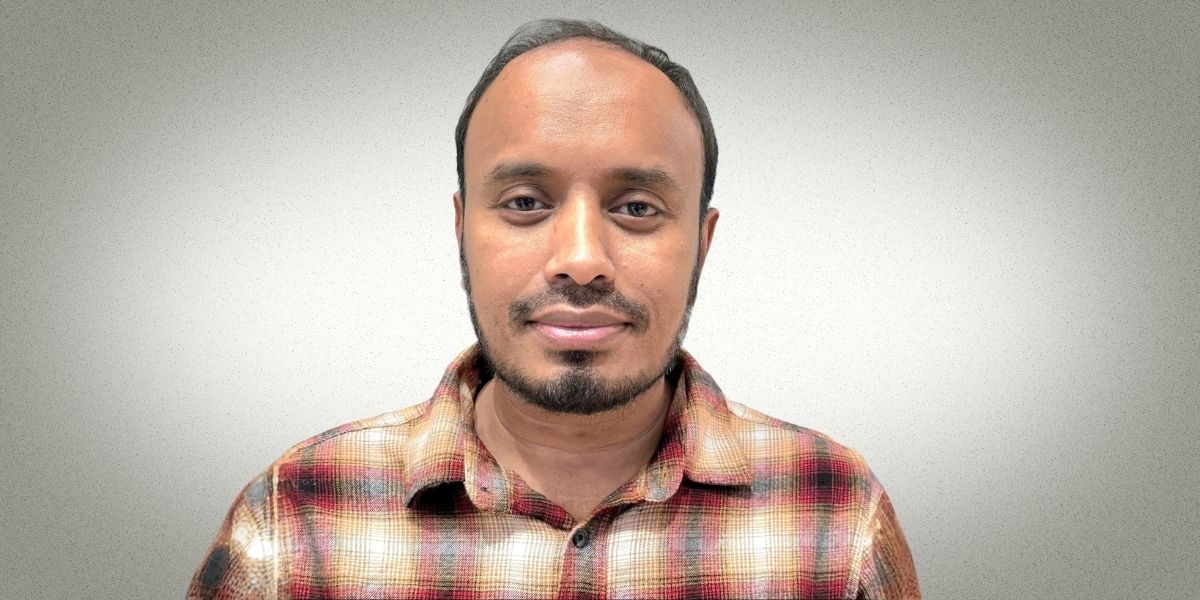
Artificial intelligence researcher Abdus Sobur is emerging as a dynamic voice in medical-AI innovation, developing a robust suite of machine-learning models to improve early detection of skin, lung, and colon cancer—three of the deadliest and most frequently diagnosed cancers in the United States. With a rapidly advancing portfolio of deep-learning systems, Sobur’s work directly addresses one of America’s most critical healthcare challenges: diagnosing cancer at early and more treatable stages. In contemporary clinical environments, the subtleties that differentiate benign from malignant tissue are often visually imperceptible, even for experienced radiologists and pathologists. These diagnostic gaps are magnified in high-volume hospitals, rural clinics, and underserved communities where medical resources are stretched thin. Sobur’s research confronts these limitations by designing architectures capable of analyzing image data at a microscopic and molecular level—allowing the earliest biological warnings to be captured long before symptoms escalate. His hybrid AI models integrate high-resolution pattern recognition, contextual anomaly detection, Transformer-based attention mechanisms, and convolutional layers specifically engineered for medical imagery, yielding detection pipelines that reliably spot the faintest indicators of disease progression. His research demonstrates how AI can serve as both a diagnostic assistant and an equalizer within the healthcare system, enabling clinicians to deliver earlier, more accurate, and more equitable medical decisions. Sobur emphasizes that early detection is not simply a technological achievement; it is a human impact milestone capable of saving lives, reducing treatment burdens, and extending healthcare access to communities that need it most.
The technical foundation behind Sobur’s work lies in the design of deeply optimized hybrid architectures capable of performing intelligent, multilayered analysis on a wide variety of medical datasets. His skin-lesion model focuses on dermoscopic images—high-magnification photographs used to detect melanoma and non-melanoma skin cancers. Traditional diagnostic methods often fail to detect early-stage lesion transformations, especially when patterns are subtle or overlap with benign variants. Sobur’s model, however, uses spectral-level texture analysis and Transformer-based global context mapping to isolate malignant signatures invisible to unassisted observation. His lung-cancer detection system, which processes CT scans, is trained to identify small pulmonary nodules whose early identification dramatically improves survival rates. Sobur’s pipeline incorporates 3D convolutional filters and deep-attention layers that evaluate spatial changes across imaging slices to detect nodules as small as a few millimeters. His colon-cancer histopathology model takes a different approach, analyzing large, high-resolution tissue images to distinguish between precancerous, benign, and malignant patterns. This system uses a hybrid ensemble learning approach that blends CNN feature extraction with Transformer-based sequence modeling, enabling accurate classification across a wide range of tissue morphologies. These innovations carry profound implications for public health.
According to the American Cancer Society, the United States reports over 5 million annual cases of skin cancer, 238,000 cases of lung cancer, and more than 153,000 colorectal cancer diagnoses each year. Survival outcomes for each disease drop sharply when diagnosis occurs at late stages, often requiring more aggressive treatment and incurring exponentially higher healthcare costs. Sobur’s models aim to bridge these gaps by providing immediate, data-driven interpretations in less time than traditional methods, enabling clinicians to accelerate intervention. His three most-cited publications on skin lesion classification, lung CT analysis, and colon cancer modeling have been cited by international researchers studying next-generation diagnostic AI. Several academic teams have reported accuracy improvements in their own systems after incorporating elements of Sobur’s architectures, confirming the broader influence of his methods across the worldwide AI-healthcare community. His peer-review activities in journals focused on deep learning, computer vision, and medical imaging further reinforce his credibility as a recognized contributor guiding scientific progress in these domains.
Sobur’s impact extends beyond algorithm development and research output; he is actively contributing to a new movement in the medical-AI field that emphasizes explainability, fairness, and practical deployability. Much of the global healthcare landscape lacks advanced computational infrastructure, particularly in developing nations and low-resource regions within the United States. Recognizing this disparity, Sobur has dedicated a significant portion of his work to designing lightweight AI systems that can operate on portable devices, smartphones, point-of-care scanners, and edge-computing platforms. His objective is to bring diagnostic capabilities to community clinics, screening camps, rural medical centers, and even mobile medical units—places where access to radiologists, pathologists, or specialized imaging systems is limited. These lightweight models maintain high accuracy while using only a fraction of the computational power required by conventional AI systems.
Furthermore, Sobur integrates explainable AI components that visually highlight the features that influence the model’s diagnosis. This transparency allows healthcare providers to trust AI results and provides patients with clear, comprehensible explanations of the findings. In addition, Sobur is involved in peer-reviewing scholarly manuscripts across fields such as machine learning, biomedical imaging, and cybersecurity in healthcare, showcasing his role as both a contributor and a gatekeeper of quality in scientific publishing. His long-term vision includes developing AI-integrated clinical workflows where algorithms continuously monitor patient data, alerting clinicians to abnormalities long before they manifest clinically. He aims to expand his models into other diseases, including cardiovascular risk assessment, Alzheimer’s severity scoring, and infectious disease detection—domains where early intervention significantly improves outcomes. Sobur’s work serves as a bridge between laboratory research and real-world medical applications, contributing not only to academic literature but also to on-the-ground healthcare systems that benefit from intelligent diagnostic support.
Supporting these accomplishments is Abdus Sobur’s extensive academic training, which has helped establish the multidisciplinary foundation required for excellence in medical-AI innovation. Sobur earned his Master of Science in Information Technology (MSIT) from Westcliff University, USA, graduating in 2024, where he developed advanced competencies in machine learning, cloud computing, cybersecurity, software engineering, advanced network design, and intelligent systems development. His graduate education sharpened his technical ability to integrate AI with secure data-processing pipelines, an essential skill for clinical environments where privacy and accuracy are paramount. Before pursuing graduate studies, Sobur completed a Bachelor of Science in Electrical and Electronics Engineering (EEE) at the European University of Bangladesh in 2019, gaining a strong foundation in digital signal processing, biomedical instrumentation, circuit design, electromagnetics, embedded systems, and engineering mathematics. These engineering principles directly inform the imaging analysis frameworks he develops today, especially in areas that require signal interpretation and multiphase image processing. Earlier in his academic career, Sobur demonstrated strong performance in STEM through the EEE and MSIT programs in the USA, where he built the mathematical and analytical groundwork that ultimately supported his advanced studies. Taken together, his academic background forms a seamless progression toward excellence in AI-driven healthcare innovation. By integrating expertise in electronics, information technology, machine learning, and cloud engineering, Sobur has positioned himself at the intersection of medicine and advanced computation. This position is proving increasingly important in the global effort to modernize healthcare. His multidisciplinary capabilities, combined with his peer-review experience and his research contributions in cancer detection, place him among the emerging scientific leaders whose work holds significant national and international importance.
Disclaimer: This article is intended for general informational purposes only and does not constitute medical advice. The content is based on publicly available sources and reported research; it is not a substitute for professional opinion, diagnosis, or treatment. For any health‑related concerns or decisions, readers should consult qualified medical professionals.