Thursday, August 6
Business · Technology · Leadership

The Origins of D-BAT: How Cade Griffis, Kyle Griffis, and Their Partners Built a Baseball Training Business in Texas

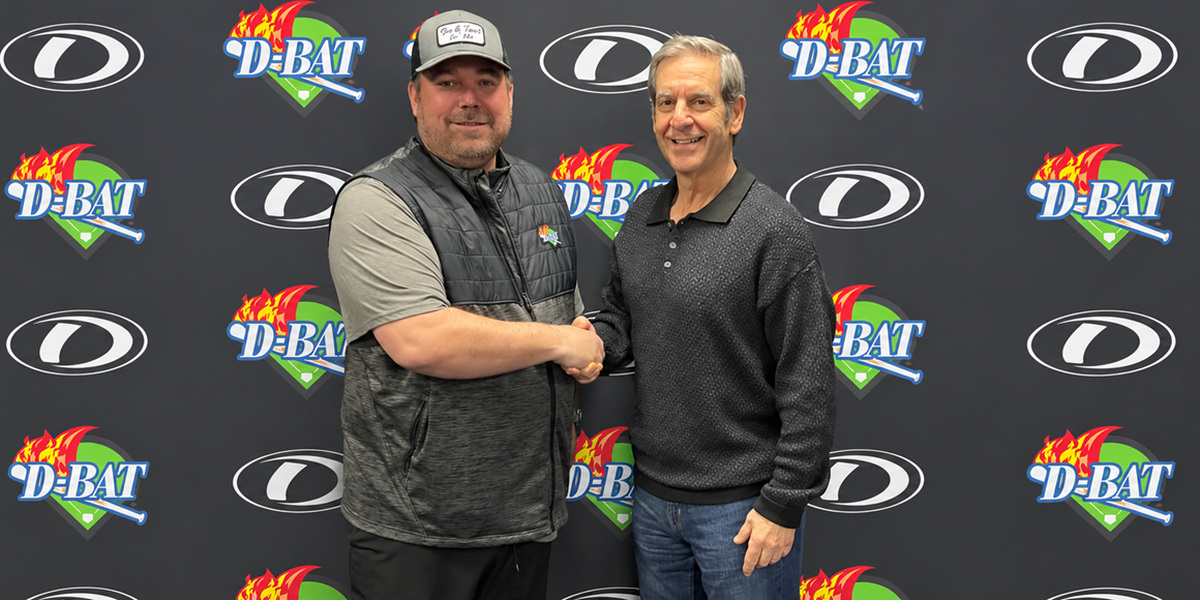
Private sports instruction became more visible in the United States during the 1990s as young athletes and their families sought training beyond school teams and local leagues. Baseball players often depended on outdoor fields, seasonal schedules, and volunteer coaching. Indoor facilities offered a different setting. Batting cages and private lessons allowed players to practice throughout the year, while coaches could work with athletes in smaller groups. These businesses also faced practical limits. They required costly space, specialized equipment, trained instructors, and enough local demand to support regular operations. The challenge was not simply teaching the sport. It was creating a business model that could provide instruction while covering the costs of a large training facility.

This environment shaped the creation of D-BAT, founded in Addison, Texas, in 1998 by Cade Griffis, his brother Kyle Griffis, and investor Craig Penfold. The company began with the goal of establishing an indoor baseball training center that could serve players outside the normal competition season. Cade had previously traveled to different Texas cities to provide private baseball lessons. That work helped identify demand for a permanent facility where instruction, batting practice, and equipment could be offered in one location. The founders opened the first academy after Cade’s professional playing career, bringing together his baseball background, Kyle’s involvement in the business, and Penfold’s investment.

The original facility required a substantial financial commitment. According to a 2015 profile published by D CEO, the first D-BAT academy was launched with approximately $185,000. The company began with six employees and operated from a relatively small facility in North Dallas. The founders had considered names such as “Yard Rats” and “Sweat Box” before selecting D-BAT, an abbreviation for “Developing Beliefs, Attitudes, and Traditions.” The name reflected the company’s stated focus on instruction and player development. Its first location was designed to offer a controlled setting where baseball and softball players could practice indoors rather than depending entirely on outdoor fields and seasonal schedules.

The early business strategy also reflected the needs of parents. The first location included air conditioning, clean restrooms, and well-lit batting cages. These details may appear basic, but they addressed practical concerns associated with youth sports facilities. The founders aimed to create an environment where parents could remain involved while their children trained. The academy offered private instruction and access to batting cages, creating several ways for customers to use the facility. The model did not depend only on team practices or seasonal programs. Instead, it combined lessons, individual training, and facility use within a single location.

Cade’s experience in baseball shaped the instructional side of the company. He had played at Dallas Baptist University and received NAIA All-American recognition before signing with the Kansas City Royals organization. His playing career lasted approximately two and a half years before a knee injury ended it. He later worked as a professional scout for the Chicago White Sox. These experiences gave him knowledge of competitive baseball and player evaluation. Available reporting does not establish that D-BAT introduced a new scientific training system. It does show that the company’s early model grew from practical experience in playing, coaching, and working with athletes.

The academy also developed an individual approach to instruction. Company materials state that players were taught according to their own abilities rather than through identical lessons. This approach was linked to the belief that athletes had different strengths and training needs. Such claims come from D-BAT’s own description of its model and should not be treated as an independent assessment of its results. Still, the approach helped define the services offered at the first location. The company sought to provide instruction for players at different levels, ranging from young beginners to more experienced athletes. That broad customer base became important as the business expanded.

Equipment sales soon became another part of the strategy. To reduce costs, Cade began importing D-BAT-branded baseballs from overseas. The company later added gloves, batting gloves, apparel, and other products that could be sold through the academy’s pro shop. This created a connection between training services and retail sales. Players attending lessons could also purchase equipment at the same location. The arrangement provided another source of revenue while keeping the company’s products connected to its core sports market. It also reduced reliance on a single service, which was useful for a business operating from a specialized facility.

In April 2001, D-BAT expanded into manufacturing by opening a wood bat factory in Mount Pleasant, Texas. The factory became part of D-BAT Sports and allowed the company to produce its own wooden bats. D CEO reported that the business later sold products through more than 250 dealers and 20 private labels, with customers in Australia, Korea, Mexico, and Europe. The manufacturing operation broadened the company beyond its original academy model. It also connected the training business with a larger equipment market. However, the two activities remained focused on baseball and softball.

The company later introduced programs that connected athletes with college and professional scouts. When gasoline prices reached approximately $4 per gallon, Cade created the Metro Scout League as a way to bring scouts together to observe high school players. According to D CEO, dozens of college and professional scouts attended events where hundreds of athletes could display their skills. The program addressed travel costs faced by families seeking exposure for young players. It also expanded D-BAT’s role beyond private instruction by creating a setting where recruiters and scouts could evaluate athletes.

D-BAT’s later growth showed how the early model could be expanded beyond Addison. The company began franchising in the late 2000s, although published sources differ on whether the process began in 2007, 2008, or 2009. By 2015, D CEO reported that D-BAT had 24 academies open, three under construction, and five sold. In 2017, the Dallas Business Journal reported $18 million in revenue across 32 United States locations during the previous year. That same period brought plans for international growth, including a franchise agreement for locations in China. These developments grew from a business that had started with one indoor academy and a small staff.

The origins of D-BAT illustrate how athletic experience and business planning were combined within a specialized sports enterprise. The founders did not begin with a national franchise network. They started with private lessons, one indoor facility, and an investment of about $185,000. Over time, the business added equipment sales, manufacturing, scouting programs, and franchising. The company’s development also reflected wider changes in youth sports, where year-round instruction and private training facilities became more common. Cade Griffis, Kyle Griffis, and Craig Penfold built D-BAT around a local need, then developed additional services that supported its longer-term growth.


Claire Smilow’s Early Bet on Cursor Shapes Her Founder Search

BoxGroup partner Claire Smilow is seeking emerging entrepreneurs on college campuses after her early investment in AI coding startup Cursor reportedly generated a roughly $1 billion return for the venture capital firm. Her approach centers on identifying potential founders before their companies reach established stages of development.

Key Takeaways

  • Claire Smilow is a partner at venture capital firm BoxGroup.
  • BoxGroup invested $750,000 in the company that became Cursor.
  • The investment reportedly generated an estimated return of roughly $1 billion for BoxGroup.
  • Smilow is visiting college campuses to identify potential startup founders.
  • Her founder-search approach includes engaging with students and emerging technical communities.

Claire Smilow’s Role in BoxGroup’s Early Cursor Investment

Claire Smilow, a partner at venture capital firm BoxGroup, is pursuing potential startup founders on college campuses following an early investment in Cursor that reportedly generated an estimated return of roughly $1 billion for the firm. Her work combines early-stage company investing with efforts to identify entrepreneurs before they establish mature businesses.

Smilow’s connection to Cursor began when its co-founder, Michael Truell, was a student at the Massachusetts Institute of Technology. BoxGroup invested $750,000 in the emerging company, according to the reported account. That early commitment gave the firm exposure to a business that subsequently developed into a major AI coding company.

The investment outcome has drawn attention to the process through which venture capital firms identify founders at the earliest stages of company development. At that point, prospective entrepreneurs may have technical projects, early product concepts or experience solving specific problems without having established revenue or a substantial customer base.

For investors, evaluating such founders requires attention to factors beyond conventional business performance. Technical ability, initiative, the problems a person wants to solve and the capacity to develop a product can all form part of an early-stage assessment.

Smilow’s continued outreach to college campuses places that search before the point at which many startups become widely known. Her work involves engaging with students and emerging technical communities to find people who may eventually establish companies. Tools such as AI platforms for startup development are also being used to help entrepreneurs develop and test business ideas.

BoxGroup’s Initial Funding for the AI Coding Startup

BoxGroup’s reported $750,000 investment in Cursor’s early company illustrates the role of initial funding in supporting a business before its eventual scale is established. The investment was made while Truell was still associated with MIT, placing the company at an early stage of its development.

Early-stage venture capital differs from funding businesses with established revenue and operating histories. Investors may need to assess a founder’s technical work, proposed product and understanding of a market before a company can demonstrate sustained commercial performance.

For founders, access to early capital can provide resources to develop a product, recruit collaborators and test whether a proposed solution meets a market need. The investment itself does not guarantee commercial success; a company must still develop a useful product and attract customers.

BoxGroup’s involvement with Cursor also provides a specific example of a venture capital firm identifying a founder through an academic and technical environment rather than waiting for a company to reach a more mature stage.

College communities can bring together people working on software, engineering projects and technical research. Some may already be considering commercial applications for their work, while others may be exploring problems that could eventually support a new business.

Smilow’s approach places direct contact with these communities within BoxGroup’s founder-search activities. The objective is to identify potential entrepreneurs while their ideas and companies are still developing. For founders weighing their financing options, early-stage fundraising decisions can shape how they approach investor relationships and determine whether venture capital fits their business plans.

Cursor’s Acquisition and Reported Return for BoxGroup

Cursor’s subsequent growth and reported acquisition by SpaceX in 2026 formed the basis of the estimated return attributed to BoxGroup’s early investment. The reported transaction valued Cursor at $60 billion, while the venture capital firm’s return was estimated at roughly $1 billion.

The figures describe the reported outcome of BoxGroup’s investment rather than the amount initially committed. The firm’s original $750,000 investment and the estimated return represent different stages of the investment’s financial outcome.

The reported result also illustrates the potential financial consequences of investing in a company before its commercial position is established. Early investors can participate in a business’s later valuation if their ownership remains in place through subsequent financing and transaction events.

However, the reported return should not be treated as a typical outcome for early-stage investments. New companies face substantial uncertainty, and the eventual value of an investment depends on the company’s performance, financing history, ownership structure and transaction terms.

For founders, Cursor’s development provides a case study in building a company that attracts substantial commercial interest. For venture capital firms, it offers an example of the outcome that can follow an early investment in a company that later reaches a large transaction valuation.

The acquisition and return figures also help explain the attention surrounding Smilow’s investment work. Her current search for founders is connected to the same early-stage process that led BoxGroup to invest in Cursor before the company reached its later scale.

Claire Smilow’s Outreach to College Campuses

Smilow is visiting college campuses to meet potential entrepreneurs and identify people who may become startup founders. Her outreach includes engaging with students and technical communities, extending the search beyond founders who already operate established businesses.

The approach gives investors an opportunity to learn about prospective entrepreneurs directly. Students may be developing technical projects, exploring applications for new tools or identifying problems through their academic work and relationships with peers.

These settings can expose investors to people before they have built a formal company. That is relevant to early-stage investing because a founder’s first commercial venture may begin with a technical idea or a project rather than a fully developed business plan.

Direct engagement can also help investors understand how prospective founders approach problems and collaborate with others. Those conversations provide context that may be difficult to assess from a pitch deck or a brief description of a product idea alone.

For students considering entrepreneurship, contact with venture capital professionals can provide an opportunity to discuss their ideas and learn about the process of building a company. An initial conversation, however, does not necessarily lead to an investment or a formal partnership.

Young entrepreneurs pursuing technical ventures offer examples of this early company-building stage, including the launch of a young founder’s AI startup. Smilow’s campus visits similarly focus on identifying potential founders before their businesses become established.

Early-Stage Founder Discovery at BoxGroup

BoxGroup’s reported investment in Cursor and Smilow’s campus outreach connect two parts of early-stage venture capital: finding entrepreneurs and assessing their potential before a company has an established operating record.

For investors, founder discovery can begin in places where technical skills and early product ideas are already developing. Universities and student communities offer access to people working on technical problems, although identifying a promising founder still requires an assessment of the individual, the proposed product and its potential market.

The distinction between a technical project and a viable business remains important. A product idea must eventually address a problem for which customers have a reason to adopt a solution. Founders also need to determine whether the business can attract users, sustain operations and develop an effective route to market.

Early conversations can help investors understand a founder’s objectives and the problem behind a proposed company. They can also reveal whether a prospective entrepreneur has begun testing an idea or gathering feedback from people who might use the product.

Smilow’s work at BoxGroup places these early interactions within the firm’s search for new companies. Her connection to Cursor provides a reported example of the firm investing before a startup reached its later valuation and acquisition outcome.

For aspiring founders, the process illustrates the role of early technical work and direct engagement in establishing relationships with potential investors. A project does not need to begin as a mature company to start a conversation about its commercial possibilities, but its eventual prospects depend on the problem it solves and the business built around it.

Frequently Asked Questions

Who is Claire Smilow at BoxGroup?

Claire Smilow is a partner at BoxGroup, a venture capital firm that invests in early-stage companies. Her work includes identifying potential founders through direct engagement with students and technical communities.

How much did BoxGroup initially invest in Cursor?

BoxGroup invested $750,000 in the company that became Cursor, according to the reported account of the investment.

How much did BoxGroup reportedly earn from its Cursor investment?

The investment reportedly generated an estimated return of roughly $1 billion for BoxGroup. The figure is a reported estimate of the investment outcome, not the amount the firm initially invested.

Why is Claire Smilow visiting college campuses?

Smilow is visiting campuses to identify potential startup founders at an early stage. Her outreach includes conversations with students and people in technical communities who may go on to establish companies.

How does BoxGroup identify potential startup founders?

Smilow’s approach includes meeting prospective entrepreneurs directly and learning about their technical interests, projects and ideas. These early interactions help the firm identify people whose work may develop into new businesses.

Injured in a Rideshare Accident? What to Know About Your Legal Options

Rideshare services like Uber and Lyft have made getting around easier, but they have also put more drivers on the road who spend long hours behind the wheel while checking their phones for their next pickup. According to a 2024 University of Illinois Chicago study reported by UIC Today, about one-third of ride-share drivers surveyed said they had been involved in a crash while working. Any of those crashes can leave passengers, pedestrians, cyclists, and other motorists with serious injuries and unexpected bills.

Rideshare accident claims often involve more insurance policies than a typical car crash, including the driver’s personal coverage and the policy carried by the rideshare company. Sorting out which policy applies can be confusing for someone who is also trying to heal from their injuries. A car accident lawyer can review the facts of the crash, identify every available source of coverage, handle communication with insurance adjusters, and pursue fair compensation for the injured person’s losses.

Can You File a Claim Against a Rideshare Driver’s Insurance After an Accident?

A claim against a rideshare driver’s insurance is often possible when the driver caused the crash. Uber and Lyft drivers can be at fault for many of the same reasons as any other motorist, such as speeding, running a red light, following too closely, or looking at a phone instead of the road. Rideshare drivers also face added risks like fatigue from long shifts and distraction from navigation apps or passengers. If the driver’s carelessness led to the collision, the injured person can usually seek payment for medical bills, lost income, and other losses through insurance tied to that driver.

In many Uber and Lyft accidents, the insurance provided through the rideshare company becomes the primary source of coverage. Most personal auto policies exclude coverage when a driver is using their vehicle to transport paying customers. As a result, the company’s commercial policy often steps in when the driver was logged into the app at the time of the crash. Which policy pays first depends largely on what the driver was doing at that moment.

Fault does not always fall on the rideshare driver, however. If another motorist caused the wreck, the injured person, including a rideshare passenger, may file a claim against that motorist’s insurance instead. Some crashes involve shared fault between multiple drivers, which can mean pursuing more than one claim at once.

When Do Uber and Lyft Provide Coverage for an Accident?

Uber and Lyft coverage for an accident generally depends on the driver’s status in the app when the crash happened. Insurance companies usually break a rideshare driver’s workday into a few different periods, and the available coverage changes from one period to the next.

● The first period covers any time the driver is offline. If the driver has not logged into the rideshare app, the company’s insurance typically does not apply. The driver’s personal auto policy is usually the coverage that handles the claim, just as it would in any other car accident.

● The second period begins when the driver turns on the app and waits for a ride request. During this time, Uber and Lyft generally provide limited third-party liability coverage for injuries and property damage the driver causes to others. This coverage often applies only if the driver’s personal policy does not pay, and the limits are much lower than they are during an active trip.

● The third period starts once the driver accepts a ride request and continues while a passenger is in the vehicle. During this stretch, the companies typically provide a much higher amount in third-party liability coverage. In many states, the policy also includes uninsured and underinsured motorist coverage, which can help when another at-fault driver has little or no insurance.

States set their own minimum insurance requirements for rideshare companies, and Uber and Lyft adjust their policies from time to time. The exact limits and terms can vary based on where the crash took place.

How Can Rideshare Accident Victims Protect Their Rights After a Collision?

Rideshare accident victims can protect their rights by taking a few practical steps as soon as it is safe to do so. Passengers should report the crash through the Uber or Lyft app, which creates a record that the trip was active and ties the accident to the company’s insurance. Photos of the vehicles, license plates, traffic signals, road conditions, and visible injuries can capture details before the scene is cleared. Names, phone numbers, and short statements from witnesses can help confirm how the crash happened if the drivers tell different stories.

Getting checked out at a hospital, urgent care clinic, or doctor’s office is just as important for a claim, even if the injuries seem mild. Concussions and soft tissue injuries may not come with obvious symptoms right away, and early medical records help link those injuries to the crash. Victims should also save medical bills, trip receipts, and screenshots of ride details, and it is usually wise to get legal advice before giving a recorded statement to an insurance adjuster.

How Much Is an Uber or Lyft Accident Claim Worth?

There is no set formula or average payout that applies to every rideshare accident case. Economic damages often include medical bills, future treatment, lost wages, reduced earning ability, and vehicle repairs. Non-economic damages can include pain and suffering, emotional distress, and loss of enjoyment of life.

State laws can have a major effect on what an injured person can recover. Many states reduce compensation based on the injured person’s share of fault, and some block recovery entirely once that share reaches a certain level. Some states also cap certain types of damages. The available insurance limits can affect the final amount as well, since a claim may be worth more than a single policy will pay.

How the Statute of Limitations Affects Rideshare Accident Claims

The statute of limitations for a rideshare accident claim sets a firm deadline for filing a personal injury lawsuit. Each state sets its own deadline. Many states allow two years from the date of the crash, while others allow as little as one year or as many as three years or more. If the deadline passes, a court will likely dismiss the case, and the injured person may lose the right to recover compensation altogether.

Certain situations can change how the deadline works. The clock may be paused for children who were injured, and some states adjust the timeline when an injury is not discovered right away. Wrongful death claims often follow a separate deadline that starts on the date of death.

Disclaimer: The content in this article is provided for general knowledge. It does not constitute legal advice, and readers should seek advice from qualified legal professionals regarding particular cases or situations.