Thursday, August 6
Business · Technology · Leadership

Dorsey Founder Meg Strachan Takes an Outsider Approach


Dorsey founder Meg Strachan says entering the jewelry industry without prior experience helped her challenge established product conventions and target consumers already interested in lab-grown diamonds. The eight-figure brand has also shifted away from rapid customer acquisition toward long-term product development and brand building.

Key Takeaways

  • Meg Strachan founded Dorsey in 2019 after working in brand marketing and growth at consumer startups.
  • Dorsey built its business around lab-grown diamonds rather than mined stones.
  • Strachan says the company targeted consumers already interested in lab-grown diamonds instead of focusing on skeptics.
  • Dorsey moved away from a growth-at-all-costs DTC approach toward long-term brand and product development.
  • Strachan challenged production conventions involving lab-grown stones, including rivière necklaces and lab-grown sapphires set in sterling silver.

Dorsey Founder Meg Strachan Entered Jewelry Without Industry Experience

Meg Strachan launched Dorsey in 2019 after working in brand marketing and growth at startups including Bandier and Girlfriend Collective. She entered the jewelry business without prior experience in the category and says that lack of industry background influenced the company’s approach to products and customers.

Strachan says being a beginner allowed her to question practices that experienced jewelry professionals accepted as standard. That approach became part of Dorsey’s product development process as the company built a business around lab-grown diamonds.

Dorsey has grown into an eight-figure business, according to Strachan. The company says its diamond business is growing 100 percent year over year.

Strachan’s previous experience was primarily in consumer-brand marketing and growth rather than jewelry manufacturing. That background shaped the way she approached customer acquisition, branding and product development after launching Dorsey.

A reporting on product positioning for founders similarly examines the role of defining a product’s value proposition and identifying a specific target audience.

Rather than treating established jewelry practices as fixed requirements, Strachan says she repeatedly questioned why particular materials, stones and styles were handled in certain ways. Some of those decisions led to products that became important to Dorsey’s business.

Dorsey Built Its Brand Around Lab-Grown Diamonds

Dorsey’s business model centers on lab-grown diamonds, while Strachan describes the mined-diamond market as being associated with exclusivity. The company positioned itself toward customers who were already interested in lab-grown stones rather than attempting to persuade consumers who rejected the category.

When Dorsey launched, Strachan says some consumers were still asking whether lab-grown diamonds were real or fake. She did not treat those consumers as the company’s primary audience.

Instead, Dorsey focused on shoppers who were already curious about lab-grown diamonds and interested in the company’s designs. Strachan says the company concentrated on customers who were asking questions and considering the category.

That approach also shaped the company’s marketing strategy. Strachan says Dorsey relied on product appeal and word of mouth rather than building campaigns specifically around changing the opinions of consumers who were skeptical of lab-grown stones.

The company’s positioning developed as more consumers became familiar with lab-grown diamonds. Dorsey focused on design alongside the type of stone, allowing the brand to compete on more than the distinction between mined and lab-grown diamonds.

Strachan says that being either a mined-diamond company or a lab-grown company is not sufficient by itself to define a brand. She says design, product development and storytelling also contribute to the company’s identity.

That approach gave Dorsey room to develop products without making the lab-grown category its only defining feature. The company instead used the category as part of a broader consumer-brand strategy.

Customer Focus Shaped Dorsey’s Market Strategy

Dorsey’s customer strategy was based on identifying consumers who had already expressed interest in lab-grown diamonds. Strachan says the company chose to serve those shoppers rather than spend its resources trying to convert skeptics.

The approach also affected how Dorsey interpreted customer reactions to its products. Strachan says consumers responded positively to designs that some production partners initially considered unconventional.

That difference between manufacturing expectations and customer response became relevant to the company’s product development. Strachan continued to ask whether a proposed design could serve customers even when a factory questioned the idea.

Dorsey’s focus on interested customers also separated its marketing strategy from efforts centered on explaining or defending the entire lab-grown diamond category. The company could concentrate on its own products and designs rather than making every customer interaction a debate over the category.

Strachan says word of mouth helped persuade some hesitant consumers after they encountered Dorsey’s products. The company’s strategy therefore placed product design at the center of customer acquisition rather than relying solely on campaigns designed to alter perceptions.

A guide on starting an accessory line identifies niche selection and target-audience definition as early considerations for entrepreneurs entering the accessories market.

The approach also gave Dorsey a defined customer base to build around. Instead of attempting to appeal equally to consumers with opposing views about lab-grown diamonds, the company focused its initial efforts on people already considering the category.

Dorsey Shifted From Rapid DTC Growth to Long-Term Brand Building

Strachan initially brought the direct-to-consumer model she had encountered at earlier startups to Dorsey, including an emphasis on rapid customer acquisition, immediate revenue growth and delayed profitability.

She later concluded that approach was not suited to Dorsey’s business. The company shifted its focus toward long-term brand building, product development and a more deliberate approach to growth.

Strachan said the change was driven by a decision to build a brand designed to last. That meant placing greater emphasis on product evolution and brand development rather than prioritizing customer acquisition above other business objectives.

Her experience at consumer startups gave her firsthand knowledge of the DTC growth model, while running Dorsey gave her an opportunity to reassess how that model applied to a jewelry brand. This approach aligns with steady small-business growth strategies that emphasize controlled expansion rather than rapid growth at any cost.

The change also shaped Dorsey’s approach to its market position. Strachan said relying too heavily on either mined or lab-grown diamonds as a defining brand story could limit the company’s ability to expand. She instead emphasized product, design, and brand development as parts of Dorsey’s long-term strategy.

Product Experimentation Challenged Established Jewelry Conventions

Strachan’s outsider perspective became particularly visible in Dorsey’s product development. She says production partners sometimes rejected ideas because they did not fit established jewelry practices.

One example involved rivière necklaces, a traditional jewelry style in which stones are set continuously around the neck. Strachan says a production partner advised against creating the style with lab-grown stones because the approach appeared unconventional.

Dorsey proceeded with the design, and Strachan says the resulting rivière necklace became one of the company’s most popular products.

She encountered similar resistance when she proposed using lab-grown sapphires with sterling silver. According to Strachan, the objection was based on the idea that the combination was not something traditionally done in jewelry.

Rather than abandoning the idea, she questioned the reason for the restriction. The company proceeded with experimentation instead of treating the established practice as a fixed requirement.

Strachan says the difference between what factories considered unusual and what customers wanted became an advantage for Dorsey. Product decisions were evaluated according to customer response rather than solely according to conventional manufacturing expectations.

That approach remains central to the company’s stated product philosophy. Strachan says Dorsey is not trying to replicate what other jewelry companies are doing.

For Dorsey, the strategy has meant combining lab-grown diamonds with designs that challenge assumptions about how jewelry should be made and marketed. The company’s product development process has therefore been shaped by both customer interest and Strachan’s willingness to question established practices.

Frequently Asked Questions

Who founded Dorsey?

Meg Strachan founded Dorsey in 2019. Before launching the jewelry company, she worked in brand marketing and growth at startups including Bandier and Girlfriend Collective.

When did Meg Strachan launch Dorsey?

Strachan launched Dorsey in 2019. She entered the jewelry industry without prior experience in the category.

What type of diamonds does Dorsey sell?

Dorsey built its business around lab-grown diamonds. The company says its diamond business is growing 100 percent year over year.

How did Meg Strachan’s lack of jewelry experience influence Dorsey?

Strachan says her lack of industry experience allowed her to question established jewelry practices. She applied that approach to product development, including designs that production partners initially considered unconventional.

How has Dorsey changed its growth strategy?

Dorsey initially followed elements of the rapid-growth direct-to-consumer model, including a strong focus on customer acquisition and revenue. Strachan says the company later shifted toward long-term brand building, product evolution, and a longer-term approach to growth.

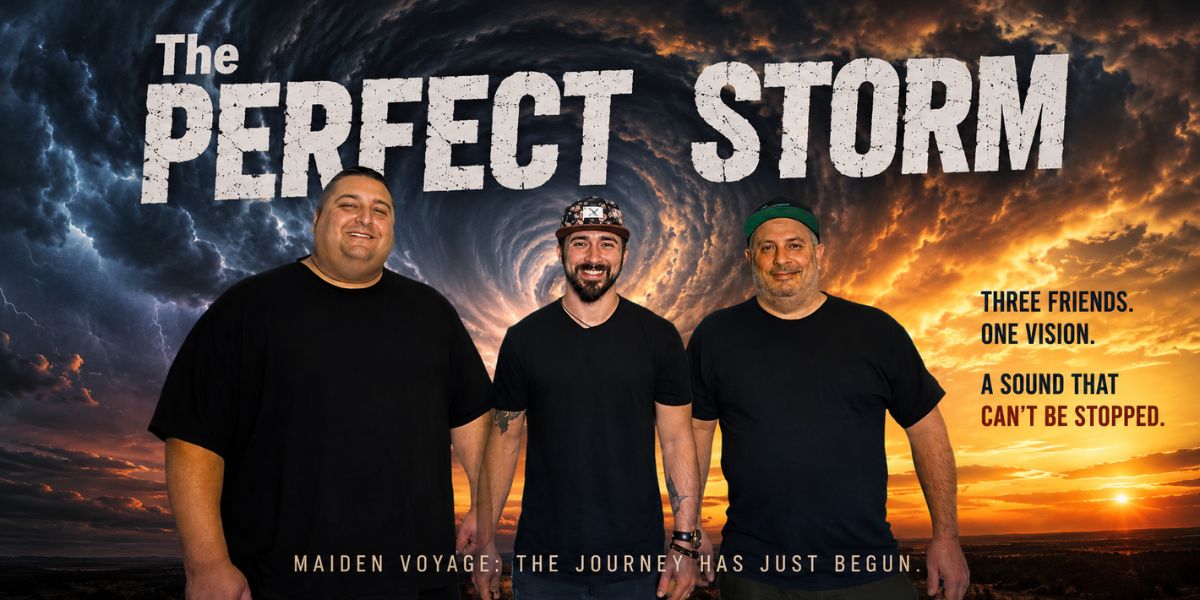
The Perfect Storm Looks Beyond Maiden Voyage and Toward a Legacy Built to Last

By: Ryan Caldwell

For The Perfect Storm, success has never been simply about chart positions, radio spins or industry accolades. Those milestones certainly matter, and the Albany, New York trio has accumulated its share of them. But when James Krakat, Matty Kirtoglou and Ethan Lynch talk about what Maiden Voyage has accomplished, they keep returning to something considerably more personal: people recognizing themselves in the songs.

That connection has been particularly meaningful for James.

“What is surprising is how people come up to us and start saying, ‘I really feel and relate to the songs,’” he says. Listeners have told him that “Magic Feeling” resurrected memories from their own lives, while others have responded to the emotional directness of “Lucky Guy.”

“I always knew that music was powerful,” James says, “but to see your own music connecting with people and becoming the soundtrack of their lives is amazing.”

Matty’s reaction is characteristically more measured. The response didn’t entirely surprise him because the trio had labored over Maiden Voyage until it met their collective standards. What couldn’t have been predicted was the commercial payoff.

“The three number ones really couldn’t have been planned,” he says.

That combination of optimism and pragmatism says plenty about The Perfect Storm. The three musicians aren’t carbon copies of one another, and their differences have become an essential ingredient in the band’s identity.

Ethan describes James as the eternal positive force, someone who regularly checks on his bandmates and maintains a “glass-half-full outlook.” Matty, meanwhile, supplies an infectious social energy.

Matty sees the dynamic similarly, although he describes Ethan as the group’s skeptic and himself as occupying the territory somewhere between the two.

“James’ personality is never say die, an eternal optimist,” Matty says. “Ethan is much more a skeptic. I try to be somewhere in the middle to balance that out.”

It’s an appropriate arrangement for a band called The Perfect Storm: three distinct forces colliding and somehow producing something stronger together.

The collaborative approach carries directly into songwriting. Ethan might arrive with an idea he needs to get out immediately. James may bring something to the group before everyone begins reshaping it. Other songs develop collectively.

“It’s always a work in progress,” Matty explains. “A song can be born in many ways, and like a newborn, you nurture it and see that uniqueness shine.”

James puts it more simply: “It really is a team effort.”

The themes emerging from that process aren’t particularly exotic. They’re about love, heartbreak, perseverance, loyalty, family and hope. These are the enormous emotions hiding inside ordinary lives.

That’s precisely the point.

“Who hasn’t had a rough go, been in love, or fallen out of love?” Matty asks. “Life is complicated, and I feel whatever resonates with me, if done right, will resonate with the masses.”

James agrees.

“Matty, Ethan and I are just everyday guys who want those things too.”

Perhaps that everyday quality explains why Maiden Voyage has connected. The Perfect Storm isn’t writing from some carefully constructed rock-star mythology. Its members have jobs to do, families to consider and real-world complications capable of interrupting even the best-laid musical plans.

Matty doesn’t describe those complications as major obstacles so much as life happening. An injury, an operation or a family emergency can suddenly derail a schedule.

The trick is continuing anyway.

Even increasing recognition hasn’t fundamentally altered the band’s approach. According to Matty, success hasn’t changed how The Perfect Storm writes songs because the band established its ambitions from the beginning. Recording against deadlines can present new challenges, while performing remains something the trio continually wants to improve.

Now, having demonstrated what it can do with Maiden Voyage, The Perfect Storm is preparing to stretch.

The band’s second album promises to expand its musical boundaries, including an instrumental track, new equipment and ideas that move beyond the template of its debut.

“You can’t rest on your laurels,” Matty says. “To keep it fresh, you have to push.”

That philosophy could prove particularly important for a group whose first album established an identifiable balance between accessibility and personality. Rather than attempting to reproduce what worked, The Perfect Storm appears determined to use that foundation as permission to explore.

And if the band’s members are thinking about what comes next, they’re also beginning to consider what might remain long after the charts and release campaigns have ended.

James wants the songs to be considered relatable and timeless. More importantly, he hopes people will remember that the music touched their lives.

Matty’s ambitions are equally straightforward.

“In music as in life, you just want to be remembered for doing something good in this world,” he says. “No matter what, this music is out there forever, so if you truly care about it, then hopefully that will shine through.”

For Ethan, the desired legacy begins with the relationship at the center of the band.

“I love working with James and Matty, and I hope that shines through in the music we do,” he says. “The Perfect Storm is good, and the music will stand the test of time.”

That’s a considerable ambition, but perhaps longevity begins with something much simpler.

Three friends made an album. People heard themselves in it. Now those three friends are heading back into the studio determined to make something even better.

Maiden Voyage may have launched The Perfect Storm, but judging by the band’s determination to keep pushing forward, the real journey is only beginning.

New Mexico Small Business Owners: Fast Capital for a State in Transition

New Mexico’s economy blends a genuine energy sector presence in the state’s southeastern oil producing region, a significant federal laboratory and defense contracting presence around Los Alamos and Albuquerque, and a growing film and television production industry drawn by the state’s tax incentives and varied landscapes.

The Permian Basin’s Energy Sector Financing Pattern

New Mexico’s portion of the Permian Basin has driven considerable oil and gas activity, supporting a network of service and supply businesses whose financing needs are tied to project timelines and payment terms that can shift with commodity pricing conditions.

Frequently Asked Questions

What exactly does unsecured mean in the context of a business loan?

Unsecured means the loan is not tied to a specific piece of property, equipment, or asset that the lender could seize if the loan goes unpaid. Approval is based primarily on the business’s revenue and banking history rather than a physical asset pledged as security. This differs meaningfully from a secured loan, where a lender evaluates and often appraises a specific asset before extending credit against it.

What credit score is typically needed to qualify?

Requirements vary widely by lender, but many alternative and online lenders will consider applicants with credit scores in the 550 to 600 range, weighting recent bank account revenue and consistency more heavily than the credit score alone. A strong, growing revenue trend can often offset a credit score that would disqualify an applicant at a more traditional lender.

Can a business with seasonal revenue still qualify?

Yes, though lenders typically want to see that the seasonal pattern is consistent and predictable rather than erratic. Some repayment structures, particularly revenue based ones, are specifically designed to flex with seasonal ups and downs rather than requiring a fixed payment year round, which can make a meaningful difference for a business whose revenue genuinely varies month to month.

Los Alamos and Albuquerque’s Federal Research Presence

New Mexico’s significant federal laboratory and defense contracting presence, anchored by Los Alamos National Laboratory and considerable activity around Albuquerque, supports smaller companies providing specialized engineering and technical services whose financing needs mirror patterns found in other states with significant federal contracting activity.

New Mexico’s Growing Film Production Industry

New Mexico’s film tax incentive program has attracted considerable production activity, supporting a growing ecosystem of smaller businesses providing equipment, catering, and specialized production services. These businesses often operate on genuinely project based, unpredictable revenue cycles that traditional bank underwriting struggles to evaluate confidently.

Same Day Funding Across New Mexico’s Varied Economy

This hybrid approach, where a platform funds directly but also maintains partner access for situations that call for a different fit, is exactly what companies like fundivi have built their process around, aiming for same day funding once an application clears underwriting. The practical benefit is that a business owner gets the speed of a direct lending relationship without losing the broader optionality a marketplace can offer, all within a single application. Whether the specific need comes from an energy services company, a federal research support business, or a film production company, this same day structure addresses New Mexico’s genuinely varied financing needs.

How to Research and Choose the Right Commercial Lending Company

Finding the right commercial lender is less about landing on the first search result and more about building a habit of comparison before urgency sets in. Business owners who take the time to look at multiple lenders, rather than defaulting to whichever company appears first, tend to end up with better rates, clearer terms, and fewer surprises once the paperwork is signed.

A good starting point is looking at how a lender is actually rated by other business owners rather than relying on its own marketing copy. Resources such as businessloansiq.com bring together comparisons of top rated business loan companies in one place, which makes it easier to see how different lenders stack up on speed, transparency, and overall customer experience before ever submitting an application.

From there, it helps to look past the advertised rate and understand the full cost of capital, including any origination fees, prepayment terms, and how repayment actually gets structured against day to day cash flow.

Side by side comparisons are especially useful at this stage of the process. A site like comparebusinessloansonline.com lets a business owner line up reliable business lenders against one another using the same criteria, so the comparison is grounded in real terms rather than a single company’s pitch.

Reputation and track record matter just as much as pricing, particularly for a business owner who may need to return to the same lender for future capital down the road.

Checking independent ratings, rather than only the testimonials posted on a lender’s own website, is one of the more reliable ways to spot a pattern of poor communication or hidden fees before it becomes your problem. Platforms including bestratedbusinessloans.com compile ratings across a range of business lenders, offering another useful reference point while narrowing down the list of who to actually call.

None of this needs to take more than an afternoon, and doing it before a cash flow gap actually arrives means a business owner is choosing from options they have already vetted, rather than scrambling to evaluate a lender for the first time under real pressure.

Santa Fe and New Mexico’s Creative and Tourism Economy

Santa Fe’s genuine arts and tourism economy adds another dimension to New Mexico’s already varied small business landscape, supporting galleries, hospitality businesses, and creative services that face financing needs distinct from the state’s energy, defense, and film production sectors.

What New Mexico Business Owners Should Verify Before Committing

Before accepting any unsecured financing offer, New Mexico business owners should confirm the total repayment cost, whether a personal guarantee is required, and how the lender handles a genuine payment difficulty, regardless of whether the business operates in the Permian Basin’s energy sector, Los Alamos’s federal research economy, or the state’s growing film production industry.

Building Long Term Financial Preparedness

Business owners in this category who take the time to understand their financing options well before an urgent need actually arises consistently navigate genuine emergencies with considerably less stress than those researching options for the first time under pressure. This preparation costs nothing beyond a few minutes spent completing a soft prequalification, a process that typically doesn’t affect your credit score and provides a clear, concrete picture of what your specific business actually qualifies for right now. Knowing this information in advance, rather than discovering it for the first time during a genuine crisis, removes much of the scramble and uncertainty that otherwise accompanies an urgent capital need, whether that need arrives as an equipment failure, an unexpected opportunity, or a seasonal cash flow gap that caught the business off guard. The businesses that handle financing decisions most successfully over time are consistently the ones that treat this kind of preparation as an ongoing practice rather than a one time event tied to a single specific crisis.

The Real Cost of Waiting on a Slower Financing Option

It’s easy to underestimate what a financing delay actually costs a business until that cost is calculated directly and honestly. A missed opportunity to secure favorable terms with a supplier, a delayed repair that costs additional lost revenue for every day equipment remains out of service, or a staffing gap that damages client relationships and team morale all represent real, if sometimes invisible, costs of waiting on a slower financing timeline when a faster option was genuinely available and appropriate for the situation. Business owners evaluating financing options should weigh not just the advertised cost of capital itself, but the full, genuine cost of any delay a slower option would introduce, since in many cases that delay cost meaningfully outweighs a modest difference in the financing rate between two specific offers under serious consideration.

Comparing Multiple Offers Before Committing to Any Lender

Business owners should resist the temptation to accept the first financing offer that arrives, even when a genuine need feels urgent and time sensitive. Requesting prequalification from two or three lenders, a process that typically takes only a few minutes per lender and commonly doesn’t affect your credit score at the initial soft pull stage, consistently produces meaningfully better terms than committing to a single offer without any real point of comparison. Converting every resulting offer into total dollars owed for the identical amount and repayment timeline, rather than comparing headline rates that may use entirely different pricing conventions, remains the single most reliable method for identifying which specific offer genuinely serves the business best. This discipline matters regardless of how urgent the underlying situation feels, since a fast decision on an offer that doesn’t actually fit the business’s genuine repayment capacity solves one problem while quietly creating another, potentially larger one down the road.

What to Verify Before Signing Any Financing Agreement

Before accepting any unsecured financing offer, business owners should confirm several specific details directly with the lender rather than assuming based on general marketing language or a quick summary. These include the total dollar repayment cost for the exact amount and timeline needed, whether a personal guarantee is required as part of the agreement, whether the lender reports account activity to personal credit bureaus, and how the lender genuinely handles a temporary payment difficulty should one arise during the repayment period. Taking the time to ask each of these questions directly, rather than relying on assumptions, protects against exactly the kind of unpleasant surprise that can turn an otherwise convenient and genuinely useful financing decision into a lasting source of financial and personal stress well after the original need has already been resolved.

Why Speed and Accessibility Have Become Genuinely Standard Expectations

The broader shift toward faster, more accessible business financing reflects a genuine change in how small business owners now expect financial services to operate generally, shaped considerably by experiences with fast, digital first services in nearly every other part of daily commercial life. A business owner who can check their bank balance instantly, transfer funds in seconds, and manage most aspects of daily operations through a smartphone naturally expects business financing to move with comparable speed rather than requiring weeks of waiting and extensive paperwork the way it may have decades ago. This shift has genuinely benefited business owners across virtually every industry, giving newer and smaller businesses meaningful access to working capital that a purely traditional banking relationship, built around older underwriting assumptions, might have made considerably more difficult or slower to obtain.

Why Bank Account Based Evaluation Changes Who Can Access Capital

Traditional bank underwriting was built decades ago around evaluating physical collateral and lengthy credit histories, an approach that made sense for the kinds of businesses and lending relationships common at the time but that increasingly leaves many genuinely healthy modern businesses underserved. A business generating strong, consistent revenue but lacking substantial physical assets to pledge, whether because it leases its space and equipment or because its value lies primarily in client relationships and expertise rather than owned property, often doesn’t fit neatly into a traditional bank’s evaluation model regardless of how financially sound the business actually is. Unsecured lenders evaluating actual bank account cash flow directly address this gap, opening genuine access to working capital for a considerably broader range of businesses than traditional collateral focused underwriting was ever built to accommodate fairly.