Thursday, August 6
Business · Technology · Leadership

Luxury Safaris for US Honeymooners, Private Camps, Remote Lodges and Romantic Wild Places

For US honeymooners, a luxury African safari offers something very different from a classic beach resort or city escape. It is intimate, adventurous and deeply memorable, with days shaped by wildlife, landscapes, quiet luxury and shared discovery. Instead of a honeymoon built around predictable relaxation, a safari gives couples moments that feel rare: lions moving through golden grass, elephants gathering at a waterhole, dinner beneath a wide night sky, or the first call of birds before sunrise.

The best honeymoon safaris are not about rushing from one famous destination to another. They are about privacy, rhythm and the right kind of comfort. Frank Steenhuisen, Co-founder and private guide at SAFARI FRANK, often encourages couples to think beyond a checklist of animals and focus on the feeling of the journey. A well-designed honeymoon should feel effortless, romantic and personal, while still keeping the wildness that makes Africa so powerful.

Why Safari Works So Well for Honeymoons

A honeymoon is not just another vacation. It marks the beginning of married life, so many couples want a trip that feels meaningful rather than ordinary. A safari naturally creates that sense of occasion. The days are structured enough to feel cared for, but unpredictable enough to feel alive. No two drives are the same, and many of the most memorable encounters happen without warning.

This is especially appealing for couples who want more than passive luxury. A safari combines comfort with presence. You are not simply checking into a suite and staying beside a pool for a week. You are waking early, tracking animals, crossing open landscapes, returning to camp for long lunches, and ending the day with sundowners as the light changes. The rhythm invites couples to slow down and pay attention together.

For many honeymooners, that shared attention becomes the real luxury. Phones are used less, conversations last longer, and the setting makes ordinary moments feel elevated. Even a quiet coffee before a morning drive can become part of the memory.

Private Camps and the Value of Seclusion

Private camps are often the strongest choice for honeymoon safaris because they offer intimacy without isolation. These camps are usually small, carefully positioned and designed to feel connected to the surrounding landscape. Instead of large hotel-style properties, couples can stay in tented suites, villas or lodges where the view, service and wildlife experience feel personal.

The most romantic camps are not always the most elaborate. Sometimes the appeal lies in a private deck, an outdoor shower, a plunge pool overlooking a riverbed, or a bed positioned so that the morning light enters gently through canvas. Good design keeps couples comfortable while preserving the sense of being in the bush.

Private concessions and conservancies can also make a major difference. They often allow fewer vehicles, more flexible guiding and a quieter safari atmosphere. For honeymooners, this means more space at sightings, more time with a guide, and more opportunities for private moments such as bush breakfasts, scenic sundowners or dinners away from the main camp.

Remote Lodges for a Deeper Sense of Escape

Remote lodges appeal to couples who want their honeymoon to feel far removed from everyday life. Reaching them may involve light aircraft flights, boat transfers or drives through wild country, but that journey is part of the experience. The farther the lodge feels from the ordinary world, the more powerful the arrival can be.

Botswana is one of the best destinations for this style of honeymoon. The Okavango Delta, Linyanti and other wilderness areas offer small camps, water channels, floodplains and exceptional guiding. A couple might move from a land-based camp focused on predators to a water-based lodge where mokoro trips, boat safaris and birdlife create a different pace.

In Tanzania, remote areas of the Serengeti or southern parks can create a similar feeling of space. Kenya’s private conservancies around the Masai Mara combine strong wildlife with a more exclusive atmosphere than busier reserve areas. Namibia offers a different kind of romance: desert lodges, vast horizons, dramatic dunes and silence that feels almost cinematic.

Choosing the Right Romantic Safari Style

Not every honeymoon safari should look the same. Some couples want classic big-cat sightings and dramatic plains. Others prefer wilderness, design, beach time, photography, walking safaris or a slower, more private rhythm. The right itinerary depends on what kind of romance feels natural to the couple.

East Africa works beautifully for honeymooners who dream of iconic safari landscapes. Tanzania and Kenya offer open plains, big skies, excellent wildlife and strong options for combining safari with Zanzibar, the Kenyan coast or other Indian Ocean beaches. This combination is especially attractive after a long flight from the United States because it creates a clear journey: adventure first, rest afterward.

Southern Africa suits couples who want variety. South Africa can combine Cape Town, the Winelands and a private safari reserve, making it ideal for travelers who enjoy food, wine, design and wildlife. Botswana is more remote and wilderness-focused, while Zambia can be excellent for couples interested in walking safaris and a more adventurous feel. Namibia is ideal for couples drawn to landscapes, photography and privacy rather than only big game density.

Comfort After the Long Flight From the United States

US honeymooners should plan the journey carefully. Africa is worth the distance, but the first days should not feel rushed. A smart itinerary may include an arrival night in a gateway city before continuing to a remote lodge. This gives couples time to recover from the long-haul flight, adjust to the time difference, and begin the safari rested rather than depleted.

The same applies to the end of the trip. Many couples choose to finish with a beach stay or a relaxed city stop before flying home. This gives the honeymoon a softer landing and avoids the stress of connecting from a remote airstrip directly to an international flight. A final buffer night can make the entire trip feel smoother.

Luggage planning also matters. Small aircraft often require soft-sided bags and lower weight limits than international flights. For honeymooners bringing special outfits, camera gear or beach clothing, it is important to pack with the most restrictive flight in mind.

Details That Make a Honeymoon Feel Personal

The most meaningful honeymoon details are often simple. A private dinner under the stars, a surprise picnic after a morning drive, a quiet afternoon with no scheduled activity, or a guide who understands when to linger and when to give a couple space can shape the emotional tone of the trip.

Couples should also be honest about their preferred pace. Some want every day full of activity. Others want fewer camp changes and more time to settle in. Three or four nights in a camp often feels better than two nights, especially on a honeymoon. It allows the couple to know the guide, understand the landscape, and relax into the rhythm of the place.

Romance on safari should never feel forced. The strongest moments usually come from the setting itself: the sound of lions at night, the warmth of a fire after dinner, the stillness of a private deck, or the shared silence when a herd of elephants passes close by.

A Honeymoon That Feels Wild and Personal

A luxury safari honeymoon works because it brings together contrast. It is adventurous and comfortable, remote and carefully hosted, wild and deeply romantic. For US couples traveling a long way, that combination makes the journey feel worthy of the occasion.

The best safari honeymoons are not the busiest or the most elaborate. They are the ones that match the couple’s style, choose camps with care, allow enough time to rest, and leave space for the unexpected. In private camps, remote lodges, and romantic wild places, a honeymoon becomes more than a beautiful trip. It becomes a shared story that begins with wonder.

About Frank Steenhuisen

Frank is the lead safari expert at specialists in exclusive safari adventures, SAFARI FRANK, helping travelers experience Africa’s wildlife safely and sustainably. Learn more at SAFARI FRANK.

The Entrepreneur Who Built an Empire From a Small Island and Wrote the Book That Finally Explains How He Thought About All of It

By: Mt. Michaels

There is a particular kind of entrepreneurial story that gets told so often it has stopped meaning very much: the overnight success, the inspirational pivot, the dramatic turning point that changed everything. Sebastian Bastian is not telling that story in The Lion Beneath the Fade, even though the surface facts of his life would easily support it. He became a millionaire at nineteen, founded more than twenty companies across real estate, technology, logistics, and renewable energy, and was appointed his country’s Ambassador to Central America before most people have figured out what industry they want to work in. What makes this book genuinely worth reading is that he is far less interested in the impressiveness of those outcomes than in the specific thinking, the specific decisions, and the specific mindset shifts that made them possible for someone who started without shortcuts, connections, or a formal roadmap.

Reading this book produces the specific quality of engagement that comes from encountering someone who has actually done the thing they are writing about and has thought seriously enough about how they did it to offer something more useful than inspiration. Bastian writes with the directness of a person who learned early that clarity of thinking was among the most valuable assets available to someone without inherited advantages, and that directness carries through every chapter in a way that makes even the more conceptually demanding sections feel immediately accessible and immediately applicable.

The themes he explores stretch well beyond entrepreneurship into questions about identity, geography, and the particular challenge of building something significant from a place the world has not been conditioned to expect significance from. His insistence that local roots can become global reach rather than a limitation is not just an inspirational claim. It is an argument made through the specific story of how he built companies in The Bahamas that eventually extended their reach across Central America and the Caribbean, and that specificity gives the book a weight that purely abstract encouragement never achieves.

What particularly distinguishes The Lion Beneath the Fade from the crowded field of entrepreneurial memoirs is Bastian’s treatment of opportunity recognition as a learnable skill rather than an innate gift. His four-point framework for evaluating opportunities, built from lived experience across multiple industries and multiple market conditions, is one of the most practically useful contributions of the book. His call for political awareness as a genuine business skill is another distinctive contribution, reframing the external environment not as a background condition to be tolerated but as an active strategic domain to be understood and engaged.

Bastian has built something genuinely useful here, grounded in real experience and oriented entirely toward the practical question of how a person with more hunger than resources actually builds something that lasts. For anyone who has ever sensed that the conventional success narrative was not written for someone starting where they are starting, this book is the proof that the narrative was always too narrow.

Find The Lion Beneath the Fade by Sebastian Bastian on Amazon and discover the specific thinking behind one of the most remarkable entrepreneurial journeys in the Caribbean.

Billy Ray Rock’s “This the Town I’m From” Makes Memory Matter

Hometown songs are dangerous business. Write one badly, and you get tourism-board country: street signs, Friday nights, mama’s cooking, obligatory hardship, everybody raise a glass. Billy Ray Rock includes several of those ingredients on “This the Town I’m From” and somehow avoids most of the traps. The reason is simple enough. He isn’t selling Fresno. He’s mourning time.

Rock grew up on Tuolumne Street in Fresno, California, in a crowded house where money was scarce, and entertainment frequently meant whatever the kids could invent. He remembers walking barefoot to the store, playing with a water hose, county fairs, backyard moonshine, oxtails and greens, old folks dancing and young folks making noise. None of this sounds extraordinary until you understand that extraordinariness is precisely what Rock rejects.

He knows ordinary life becomes precious after it disappears.

“This the town I’m from / It’s small but made me strong,” goes the chorus, grammar left conversational because polishing it would defeat the point. This isn’t Billy Ray Rock presenting himself as the poet laureate of Fresno. It’s a grown man remembering how people actually talked, lived, ate, and survived.

And survival matters here.

The poverty of Rock’s childhood isn’t repackaged as heroic suffering. He has spoken about how growing up with little made commonplace comforts later feel almost like wealth. That’s a more complicated observation than the standard entertainment-industry narrative in which poverty exists mainly as Act One before fame arrives in Act Three. Rock understands deprivation as something that alters your measurements permanently.

Musically, his genre promiscuity suits him. Soul, R&B, hip-hop, blues and country storytelling coexist because Rock apparently sees little reason they shouldn’t. Growing up listening to radio that might move from Hall & Oates to the Ohio Players, Elton John to Earth, Wind & Fire taught him the useful lesson that genre classifications are principally somebody else’s administrative problem.

If it feels good, use it.

That attitude gives “This the Town I’m From” an appealing lack of anxiety. It doesn’t spend four minutes desperately informing you what demographic should enjoy it. The song simply settles into its story and lets Rock’s voice do what matters most: communicate.

Which brings us to death.

Rock originally populated this song’s emotional rearview mirror with parents, siblings, and other people who had vanished from his life. Then his wife died. She had been profoundly affected by the song and its accompanying video; Rock has said she could barely watch the video because of the emotions it stirred. Now the record contains another ghost.

That changes everything without changing a note.

Suddenly “My folks have come and gone” isn’t merely nostalgic bookkeeping. It’s the organizing principle. People disappear. Houses remain. Somebody else moves in. Their kids run around the rooms where yours once did. Eventually they leave too. The building doesn’t care.

Rock does.

His smartest lyrical turn comes when recollection gives way to instruction. “Life is short, kids grow up fast,” he observes, before urging listeners to hold their people close. Hardly a revelation, except that pop music has spent seventy years demonstrating that familiar truths become clichés only when the singer doesn’t believe them.

Rock believes this one.

Fatherhood has apparently accelerated his move away from the artist’s most boring obsession: himself. He has said that raising his two youngest children means more to him than his musical accomplishments and that losing his wife altered his relationship with artistic recognition. Once, making a great record meant enjoying some of the “shine” that came with being its creator. Now he’s more interested in whether the song gives somebody else a few meaningful minutes.

That’s maturity, which rock criticism traditionally treats with suspicion because maturity frequently means acoustic guitars, tasteful production, and nobody having any fun. But Rock’s version is different. His maturity means understanding that legacy isn’t how brightly the spotlight hits you. It’s what survives after somebody switches it off.

“This the Town I’m From” occasionally risks sentimentality because sentiment is its subject. It repeats its central idea because choruses do that. And its hometown imagery could sound familiar, detached from the life behind it.

But detach it, and you’ve missed the record.

The song works because Tuolumne Street isn’t symbolic to Billy Ray Rock. It’s Tuolumne Street. The barefoot kid was him. The crowded house was his. The dead are his dead. Fresno isn’t shorthand for blue-collar authenticity. It’s where the memories happened.

And that specificity is what permits everybody else inside.

You don’t need to have grown up poor in Fresno. Substitute your street. Your kitchen. Your siblings. Your stupid childhood game. Your mother’s food. Your person who isn’t there anymore.

Then Rock’s hometown song becomes yours.

“This the Town I’m From.” Turns out nostalgia improves considerably when somebody remembers what it costs.

Tushneem Dharmagadda Has a Name for the Cost Hiding Inside Your HR Tech Stack

By: Alex Morgan

Every company evaluating HR software this year is being sold some version of the same pitch: AI included, often at little or no extra cost. Tushneem Dharmagadda has seen this pattern before, and he doesn’t think it ends the way most buyers assume.

A Pricing Model Built to Change Later

As founder of workforce platform HubEngage, Dharmagadda watches AI pricing evolve across the HR tech market from the inside. His read on it is blunt: vendors are bundling AI into their core products now because early customers wouldn’t pay extra for it as a standalone feature, not because the economics of unlimited AI usage are sustainable long-term. He points to Uber and Netflix as the closest precedent, both once cheaper than the alternatives they replaced, both eventually raising prices once the market had adjusted around them and, in Netflix’s case, once the market fragmented into a dozen competing subscriptions that add up to more than the cable bill they replaced.

“I’m not saying companies should avoid AI,” he says. “I’m saying they shouldn’t assume today’s bundled or subsidized pricing is what they’ll be paying three years from now.”

The risk, in his view, isn’t any single vendor’s price increase. It’s a company ending up with AI billed separately inside its HR system, its communications platform, and half a dozen other tools at once, each reasonable on its own, all of it adding up to something nobody at the company actually tracks.

The Cost Nobody Puts on a Spreadsheet

Dharmagadda has a name for what happens after a company buys the cheapest tool for every individual problem instead of one connected system: workforce experience debt. Every additional login, every separate interface, every tool with its own narrow chatbot compounds into a workforce that no longer knows where to go for a simple answer.

“Every new tool adds another login, another interface, another place employees have to search for information,” he says. “Over time, they no longer know where to go to get an answer or complete a task.”

The framing borrows its logic from technical debt, the accumulating cost of shortcuts an engineering team eventually has to pay down. Dharmagadda’s version applies the same idea to HR technology: a company can keep adding tools that each look affordable on their own, while the real cost quietly builds in integration work, administrator time, training, and a fragmented daily experience for the employee stuck working across all of it. None of that shows up on the invoice for any single tool, which is exactly why it goes unmeasured for so long.

Where AI Actually Earns Its Keep

Dharmagadda isn’t opposed to AI in HR tech; he’s opposed to treating every feature as equally transformative. The category where he sees the clearest value is bulk content analysis. A chatbot can answer policy and procedure questions instantly, provided the underlying content is organized well enough to make that possible, and he points to survey analysis as an even clearer case. HubEngage’s own AI tools sort open-ended employee responses into more than 40 recurring themes automatically. HR teams have traditionally handled that kind of sorting by reading through every submission by hand. Those are the high-volume tasks he thinks are worth automating.

What he’s skeptical of is the smaller stuff sold as major ROI, an AI feature that helps someone write a slightly better email, marketed with the same enthusiasm as a tool that takes on a full manual review cycle. Time saved on a small task, he notes, doesn’t automatically translate into payroll actually eliminated, a distinction he thinks gets lost in most vendor pitch decks.

Why This Becomes a Leadership Problem, Not a Departmental One

The deeper issue Dharmagadda describes isn’t really about any single tool. It’s that most organizations buy workforce technology one department at a time. Communications picks its own platform. Engagement sits in a different budget. Operations runs its own systems. Each purchase looks reasonable in isolation because nobody is responsible for the total cost across the company. That’s the structural reason tool sprawl persists even at companies that are otherwise disciplined about spending elsewhere.

HubEngage’s pitch is built around collapsing that fragmentation: one platform spanning communications, operations, engagement, and microlearning, with native functionality where a company needs it and the ability to integrate with systems already in place where it doesn’t. The goal isn’t replacing every existing tool; it’s reducing how many separate places an employee has to check to get through a workday, and giving one team, rather than four, visibility into what the whole stack actually costs.

The Reckoning Dharmagadda Sees Coming

Two years out, Dharmagadda expects companies to start noticing how many times they’re effectively paying for the same AI capability. His example: an organization running four workforce systems, each with its own embedded chatbot, buys a “super chatbot” layered on top so employees only have to ask one place. The experience improves, but the company is now paying for AI in all four underlying systems plus the new layer plus the integrations connecting everything. Once usage-based pricing replaces today’s bundled allowances, all of those costs can climb at once, and nobody budgeted for that compounding effect because each piece was purchased separately, at a different time, by a different department.

The platforms he expects to hold up aren’t the ones with the most AI features. They’re the ones built to use intelligence that already exists inside connected systems rather than rebuilding it again in a new layer stacked on top, an architecture question he thinks emerging standards like MCP may eventually help resolve, though he’s careful to note that outcome still depends on how vendors choose to price access rather than on the technology itself.

Form Energy Raises $750 Million for Battery Expansion

Form Energy $750 million funding will support the U.S. energy-storage startup’s expansion of iron-air battery manufacturing and its first commercial projects. The company plans to increase production at its Weirton, West Virginia, facility while advancing customer deployments of its long-duration energy storage system, which is designed for storage periods of up to 100 hours.

Key Takeaways

  • Form Energy raised $750 million in new funding.
  • The company has raised more than $2 billion in total capital.
  • The funding will support manufacturing expansion at its Weirton, West Virginia, facility.
  • Form Energy plans to use the funding to advance its first commercial projects and customer deployments.
  • Its iron-air batteries are designed to store electricity for up to 100 hours.

The new funding brings Form Energy’s total capital raised to more than $2 billion. The company is developing iron-air batteries designed for extended electricity storage, with systems capable of storing electricity for periods of up to 100 hours.

The financing is tied to the company’s next stage of development as it moves toward commercial projects. Form Energy plans to direct the new capital toward manufacturing and deployments rather than limiting the funding to research and product development.

The company’s approach is based on an iron-air battery system intended for long-duration storage. That technology gives Form Energy a distinct product focus within the energy-storage market while the company expands its manufacturing operations.

The funding comes as other U.S. energy startups are also developing technologies aimed at addressing infrastructure and energy needs. Related coverage of advanced energy startup funding provides another example of capital supporting technology development and commercialization in the energy sector.

Funding Supports Form Energy Battery Manufacturing

Form Energy plans to expand production at its facility in Weirton, West Virginia. The manufacturing site is a central part of the company’s plans to increase production of its iron-air battery systems.

The funding provides capital for that manufacturing expansion as Form Energy prepares to support customer deployments. Increasing production capacity is directly connected to the company’s commercial project plans because the battery systems must be manufactured before they can be deployed.

The Weirton facility therefore represents an important part of the company’s business development strategy. Form Energy is using the new financing to increase its ability to produce the systems while moving toward commercial applications.

The manufacturing expansion also connects the company’s technology development with physical production. Form Energy is not only developing an energy-storage system but also building the manufacturing capacity needed to produce it at a larger scale.

For the company, the $750 million financing provides resources for both sides of that effort. Manufacturing expansion supports production, while funding for commercial projects supports the deployment of the resulting battery systems.

The relationship between energy infrastructure and startup expansion has also been examined in startup power access constraints, which covers the role of electricity availability in the growth plans of energy-intensive businesses.

Weirton Manufacturing Expansion

The Weirton, West Virginia, facility is the focus of Form Energy’s planned production expansion. The company intends to increase manufacturing activity there as it advances its commercial projects.

The facility gives Form Energy a dedicated location for producing its iron-air battery systems. Expanding that operation is part of the company’s broader use of the new financing and supports its plans for customer deployments.

Iron-Air Battery System Targets 100-Hour Storage

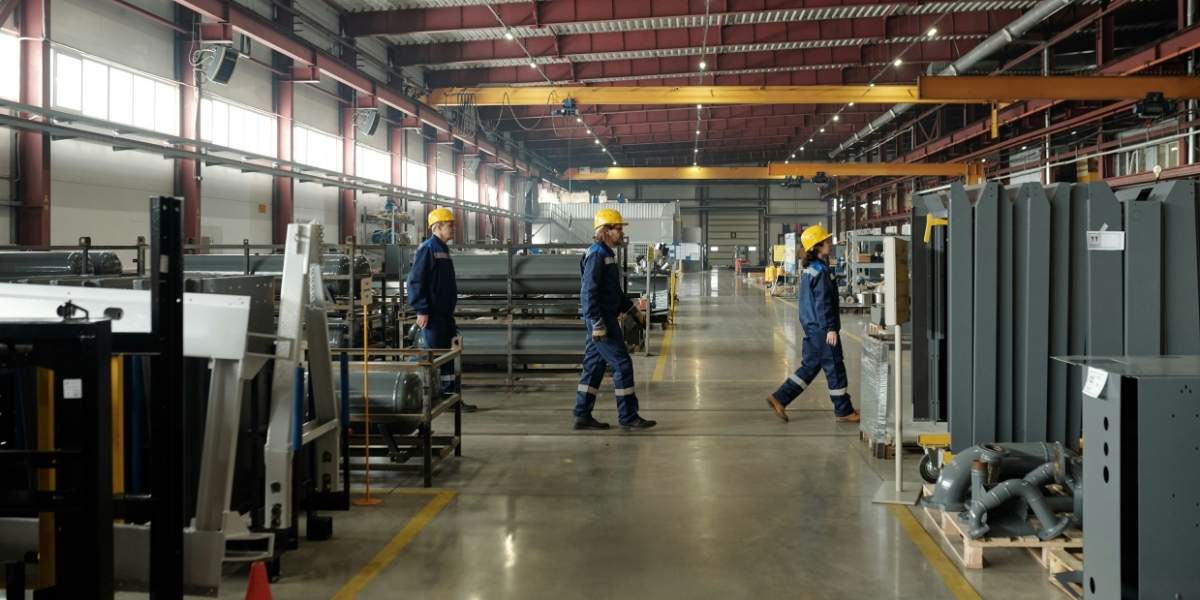
Form Energy Raises $750 Million for Battery Expansion

Photo Credit: Unsplash.com

Form Energy’s battery technology is designed for long-duration energy storage, with systems capable of storing electricity for up to 100 hours. The extended storage period is a central characteristic of the company’s iron-air battery system.

The technology uses iron-air chemistry as the basis for storing and releasing electricity. Form Energy has built its business around developing this system for applications requiring electricity storage over longer periods.

The company’s focus on long-duration storage also defines its commercial product strategy. Rather than concentrating solely on shorter storage periods, Form Energy is developing batteries intended to provide electricity storage for up to four days.

The 100-hour design target is therefore directly connected to the company’s product offering. It provides the basis for the long-duration energy storage systems that Form Energy plans to manufacture and deploy through its commercial projects.

The company’s new funding will support this technology as it moves through manufacturing expansion and customer deployment. Those activities connect the battery system’s technical design with its intended commercial use.

The development of advanced energy technology also requires substantial technical and production capabilities. A separate example is industrial manufacturing software growth, where new funding supports a startup developing technology for advanced manufacturing environments.

Form Energy Advances Commercial Battery Projects

Form Energy plans to use part of the new funding to advance its first commercial projects. The company’s commercial work represents a step beyond manufacturing expansion because it involves deploying the battery systems for customers.

Customer deployments will require Form Energy to produce the systems at its manufacturing facility and deliver them for commercial projects. The new financing supports both the production capacity and the company’s efforts to advance these deployments.

The commercial projects also provide a direct application for Form Energy batteries. The company is moving its iron-air technology toward use in long-duration energy storage projects rather than keeping the technology limited to development activities.

The $750 million funding therefore supports several connected parts of Form Energy’s business. Manufacturing expansion increases production capacity, while commercial project development creates opportunities to deploy the resulting battery systems.

Form Energy’s first commercial projects are part of the company’s plans for its newly raised capital. The financing gives the startup resources to continue developing its operations as it moves toward customer deployments.

Frequently Asked Questions

How much funding did Form Energy raise?

Form Energy raised $750 million in new funding. The financing brings the company’s total capital raised to more than $2 billion.

What does the new funding support?

Form Energy plans to use the funding to expand iron-air battery manufacturing at its Weirton, West Virginia, facility and advance its first commercial projects and customer deployments.

How long can Form Energy batteries store electricity?

Form Energy’s iron-air battery systems are designed to store electricity for up to 100 hours.

Where is Form Energy expanding battery manufacturing?

Form Energy plans to expand manufacturing at its facility in Weirton, West Virginia.

What is Form Energy’s iron-air battery technology?

Form Energy’s iron-air battery technology is designed as a long-duration energy storage system capable of storing electricity for periods of up to 100 hours.