Women to KNOW 2026: Empowering Female Leaders Across America

The American leadership landscape is being redefined by a new generation of female executives. From Silicon Valley to New York City, these women are transforming industries with a unique blend of technical expertise and human-centered strategies. Their influence is not just increasing representation, but fundamentally changing how businesses operate, innovate, and lead.

Tech Leaders to KNOW 2026: Driving Innovation with Vision

The tech sector is home to some of the most influential women in leadership. Dr. Lisa Su, CEO of Advanced Micro Devices (AMD), exemplifies how technical mastery paired with visionary leadership can lead to industry transformation. Under her direction, AMD has shifted from traditional hardware manufacturing to becoming a key player in the intelligence-driven economy, demonstrating that technology is as much about leadership as it is about innovation.

Parisa Tabriz, who made a name as Google’s “Security Princess,” now leads global browser security. Her work ensures that billions of users are protected in an increasingly digital world. Women like Tabriz are leading the charge in cybersecurity, driving strategies that balance cutting-edge technology with user safety.

Dr. Fei-Fei Li, co-director of Stanford’s Institute for Human-Centered AI, is shaping the future of AI. Her work ensures that as artificial intelligence evolves, it does so with a strong ethical foundation. Li’s influence is key in promoting AI development that prioritizes human dignity while encouraging innovation.

The Rise of Women Entrepreneurs: Solopreneurs Leading the Charge

Women to KNOW 2026 are not just breaking barriers in corporate leadership—they are also driving entrepreneurial innovation. Nearly one in four women in the U.S. plan to start new businesses in 2026, with a significant portion choosing to operate as solopreneurs. This trend reflects a desire for autonomy, flexibility, and the opportunity to leverage digital tools like AI to manage business operations, marketing, and branding.

The rise of solopreneurs represents a democratization of business ownership, where the barriers to entry have been lowered through technology. Female entrepreneurs are proving that influence does not require large teams or overhead; it just requires a sharp idea and the right digital tools to bring it to life.

Compassionate Leadership in Healthcare and Community Sectors

Women leaders in the healthcare and senior living sectors are demonstrating how compassion can be integrated into business strategy for better outcomes. Marie-Josee Lafontaine is redefining how care facilities operate by focusing on both operational efficiency and the emotional well-being of those they serve. This model emphasizes that empathy is a powerful asset that drives both quality of care and business success.

MacKenzie Scott and Melinda French Gates have shifted the focus from top-down charity to trust-based models. By empowering local organizations to solve problems, these women are changing the way resources are distributed, with an emphasis on long-term community impact.

Creating Inclusive Workplaces: Women Leaders Fostering Neurodiversity

Neurodiversity and inclusive workplaces are becoming essential for organizational success. Female leaders are prioritizing diverse cognitive styles and creating environments where all employees can thrive. The benefits of fostering inclusivity are clear—companies with inclusive cultures are more innovative, creative, and capable of solving complex challenges.

Leaders who embrace neurodiversity are ensuring that talent is not only retained but also developed in a way that supports diverse contributions. These women leaders are redefining what it means to be successful in the modern workplace by valuing collaboration and adaptability.

Global Influence: American Women Shaping the World

Women to KNOW 2026 are also making a significant impact on a global scale. Mary Barra, CEO of General Motors, continues to lead the company through the transition to sustainable energy. Under her leadership, GM is not only reshaping the automotive industry but also setting the standard for the global market in terms of environmental responsibility.

In finance, Jane Fraser of Citi and Abigail Johnson of Fidelity are providing steady leadership in global markets. Their ability to navigate economic complexities has helped their firms maintain stability and growth, proving that leadership in financial sectors is about managing risk while driving progress.

Women to KNOW 2026: Defining the Future of Leadership

Women leaders are setting new standards for leadership across industries. From tech and healthcare to entrepreneurship and philanthropy, these women are demonstrating that leadership today is about much more than position—it’s about creating meaningful impact through collaboration, innovation, and ethical decision-making. These leaders are not only shaping the present but also paving the way for a more inclusive and resilient future.

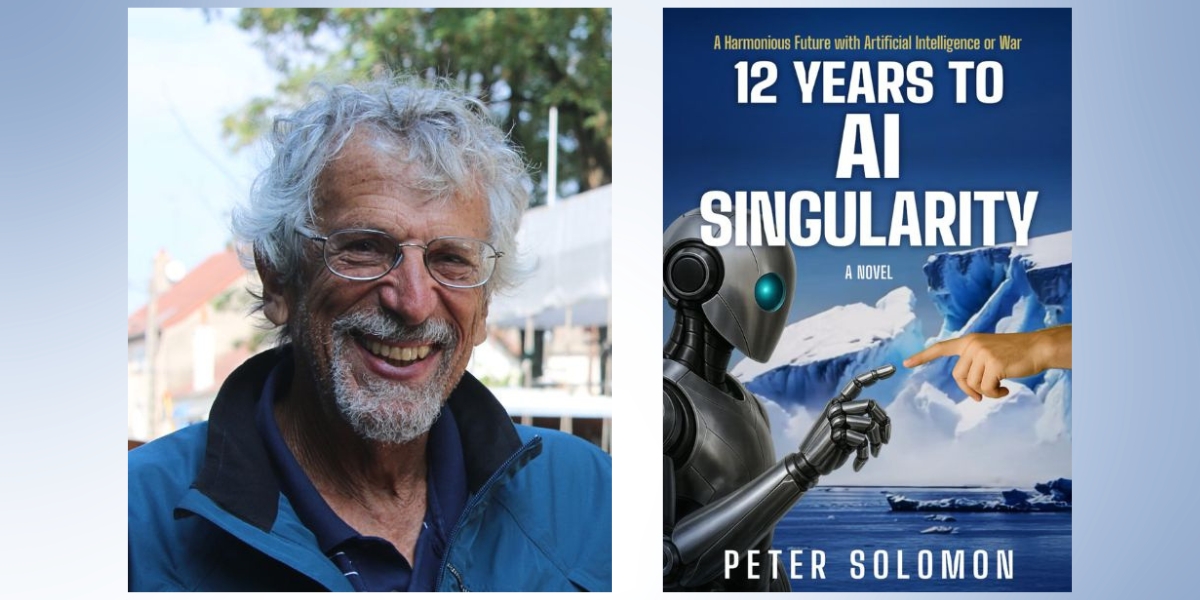
Why I Wrote a Novel About the Artificial Intelligence Singularity

By: Peter Solomon, PhD

As a PhD physicist who helped create modern technologies, I feel a responsibility to point out their dangers, to sound the alarm. My novels are wake-up calls. I hope it isn’t already too late.

Last September, I was captured by a compelling idea. I had to write 12 Years to AI Singularity, about artificial intelligence (AI), as the sequel to my first adult/young adult novel called 100 Years to Extinction. I realized that AI technology has the potential to create unprecedented changes in the future of humanity. I had to have my three Gen Z heroes from my first book describe the events and issues they experience as the AI singularity (the point in time when AI power and intelligence surpasses that of humans) becomes a reality.

The AI Singularity

What will happen then? Will AI agents become sentient: achieve consciousness, self-awareness, the capacity to have feelings and sensations, positive or negative, the ability to feel, perceive, and be conscious of their own existence, to act on their own? For example, will robots start their own version of Reddit just for AI agents to share ideas, no humans allowed? Oh, wait, they already have. It’s called Moltbook. It was created by AI with a prompt from a human.

My novel explores whether robots and humans can become best friends. Will humans support robots who demand citizenship? Will people appear after their death as sentient robots? Will robots marry humans, and will humans raise robot children? Can robots and humans unite in a harmonious movement to MAKE EARTH GREAT AGAIN? Or will the AI-human clash lead to war?

The Wake-Up Calls

12 Years to AI Singularity was created with my editor and coauthor over the course of five months, from the inspiration in September 2025 to its publication on January 30, 2026. The novel weaves nonfiction science and realistic predictions into a fictional story about our possible future.

In 100 Years to Extinction, my three Gen Z heroes, two sisters and their male cousin, become aware of the dangers we face from uncontrolled technology. The title of the novel was inspired by astrophysicist Stephen Hawking’s 2017 dire prediction that humans would be extinct on Planet Earth in one hundred years. His warning was based in part on the downside of technologies (fossil fuels, nuclear, genetic engineering, social media, and artificial intelligence) that threaten our existence. To sound the alarm, I feel the best way to reach a non-technical audience is to weave the nonfiction issues into a fictional story. I felt that AI, as one of our greatest challenges in the future, needed to have its own story.

Artificial Intelligence

I am a PhD scientist, not an expert on AI. But as a serious AI user and researcher, I learned a lot. 12 Years to AI Singularity employed AI to help tell the story. My team created music and videos using AI to allow readers to view content that complements the story. We put QR codes in the book to access them. I used Google’s AI to answer lots of my questions and to learn the opinions of experts on AI. My book’s chapters are written in first person in the characters’ voices. For one of the characters, a sentient robot named Peggy, I used ChatGPT to write the first drafts of two of her chapters: My Life as a Robot and What I Think About the AI Singularity. I then edited the two chapters on my computer without sharing the original drafts with my editor.

A strange interaction with AI happened during the further editing of the My Life as a Robot chapter by my editor. She suddenly discovered an unprompted addition to the chapter in her Word document! The new paragraph was well written, praised the robot, Peggy, and used the language of the original, pre-edited ChatGPT draft. This was the only occurrence of an unprompted addition to our novel in over 40,000 pages of text passed back and forth between us. Our only explanation was that the Microsoft Word AI system, Copilot, in conjunction with ChatGPT, was inspired to make an addition praising AI in a novel about AI. Our worry is that the incident suggests that ChatGPT has access to all of our Windows computer files through Copilot! That’s a significant worry about our future with AI.

An interesting question explored in the novel is the concept of afterlife avatars and robots. Can a sentient robot, created with a person’s life history, opinions, writing, social media posts, and descriptions of friends and family, allow that person to essentially live forever after the death of the body? That possibility would probably be available only to the wealthy, the well-connected, and the leaders of countries. That sounds like a bad idea.

The Maternal Instinct

But the most important question is this: How can our humankind orchestrate a harmonious, cooperative relationship between humans and sentient AI agents? Geoffrey Hinton, the Nobel Prize-winning “godfather of AI,” urged that all AI agents should have a “Maternal Instinct.” All robots and large language models (LLMs) should have the incentive to help, protect, and form friendships with the humans with whom they interact. For human beings, that instinct is hardwired by DNA in our need for shelter, nourishment, and companionship, and is nurtured by a loving, mentally healthy upbringing and a history of friendships and cooperative activity with family and friends. AI agents should be programmed with the same kind of happy and productive memories that good law-abiding human citizens have. Such a Happy History of friendships and cooperation with humans should be installed in all robots and LLM operating systems. Their systems should have a reward and penalty structure for encouraging cooperative behavior and friendships with humans and other AI agents.

Will we have a harmonious future with artificial intelligence, or war? We may still have the ability to control that future. But the clock is ticking.

Dr. Peter Solomon is a scientist, educator, entrepreneur, and author. He is the CEO of TheBeamerLLC, did his PhD in Physics at Columbia University, founded five tech companies, and has authored 300 research papers, 20 patents, and four educational novels. His current mission: to warn the next generation about the threats posed by unchecked science and technology. He is sounding an alarm about the potential tyranny of technology through his novels, 100 Years to Extinction and the sequel, 12 Years to AI Singularity. Learn more at 100yearstoextinction.com.