The Root Cause Approach to Disc and Nerve Pain That the Standard Medical System Rarely Offers First


By: Dr. Jeffrey N. Shebovsky  |  ReliefNow® Disc·Joint·Nerve Hamlin  |  Winter Garden, Florida

Non-surgical disc decompression combined with Class IV medical-grade laser therapy is a clinically supported, drug-free alternative to back surgery for patients with herniated discs, sciatica, degenerative disc disease, and chronic nerve pain. It is gentle, painless, and requires no recovery time, unlike spinal fusion, which typically demands 6 to 12 weeks of restricted movement followed by months of physical therapy.

Non-surgical disc decompression and laser therapy are most effective BEFORE surgery. Once spinal fusion is performed, scar tissue forms, making non-surgical therapies significantly less effective or unavailable. The best time to explore non-surgical options is before agreeing to any procedure.

At ReliefNow® Disc·Joint·Nerve Hamlin in Winter Garden and surrounding communities, Dr. Jeffrey N. Shebovsky works with patients across Central Florida and the greater Orlando region who have often spent months or years searching for a lasting answer to disc and nerve pain. For many of those patients, that answer was available the entire time; they simply were not pointed toward it first.

What Is the Root Cause of Most Disc and Nerve Pain?

Disc decompression therapy works by creating a controlled vacuum effect inside the affected disc, gently coaxing displaced material back toward its natural anatomical position. Unlike surgery, which physically removes or fuses disc structures, decompression works with the body’s existing architecture, restoring function rather than replacing it. The therapy is comfortable, requires no anesthesia, and leaves patients free to return to their normal activities immediately. For patients across Central Florida and the greater Orlando region, this represents a viable first option before any surgical decision is made.

Why Does the Standard Medical Pathway Rarely Address the Root Cause First?

The most valuable step a patient with disc or nerve pain can take today is a consultation to determine whether the window for non-surgical care is still open. At ReliefNow® Disc·Joint·Nerve Hamlin, that conversation is direct and honest. If non-surgical disc decompression can help, the protocol is explained clearly. If it cannot, the patient is told that too. Help the body reduce agonizing inflammation, swelling, and pain while speeding the repair and healing process. Get to the root cause versus masking symptoms. Visit Patients across Central Florida and the greater Orlando region who are exploring non-surgical options will find this approach available at ReliefNow® Disc·Joint·Nerve Hamlin in Winter Garden and surrounding communities.

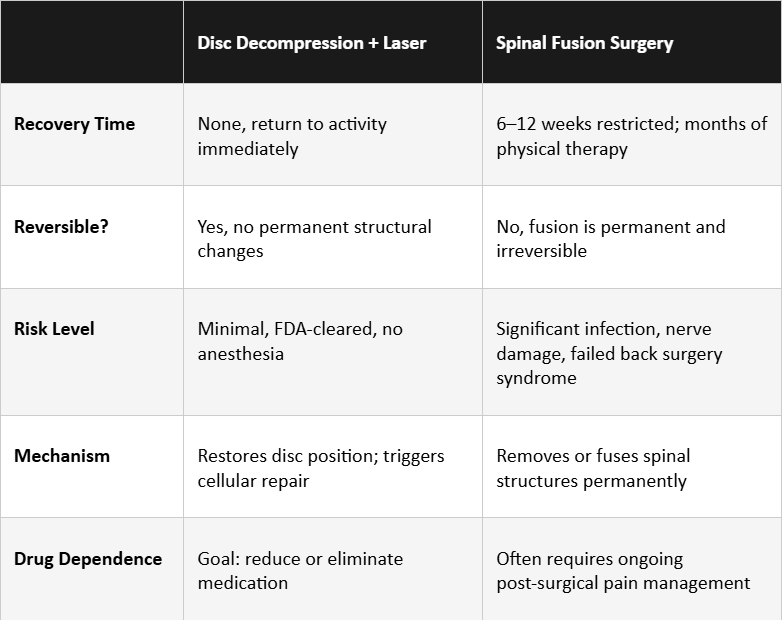
Non-Surgical vs. Surgical: The Side-by-Side Comparison

Before making any decision about disc pain treatment, every patient deserves a clear comparison of what each path actually involves:
The Root Cause Approach to Disc and Nerve Pain That the Standard Medical System Rarely Offers First

What Is Non-Surgical Disc Decompression and How Does It Treat the Source?

Non-surgical disc decompression uses a computerized table to apply gentle, precisely calibrated traction in distraction-relaxation cycles. This cycling prevents the body’s reflex to tighten against the pull, the critical flaw of older traction methods, and creates negative pressure inside the disc. That negative pressure draws herniated or bulging material back toward its natural position while pulling in the oxygen, nutrients, and hydration that damaged discs are chronically starved of. Sessions are approximately 20 to 30 minutes. Patients across Central Florida and the greater Orlando region have access to this protocol at ReliefNow® Disc·Joint·Nerve Hamlin in Winter Garden and surrounding communities.

How Does Class IV Laser Therapy Work at the Cellular Level?

What separates Class IV laser therapy from any other pain treatment is its ability to work at the cellular level. It delivers medical-grade light energy deep into affected spinal tissue, triggering photobiomodulation, a scientifically documented process in which light absorbed by cellular mitochondria activates repair mechanisms that speed healing, reduce inflammation, and restore function at the biological root of the problem. This is not symptom management. It is cellular recovery. Combined with disc decompression, the two therapies create a compounding healing effect that neither can achieve alone.

Who Is a Candidate for Non-Surgical Disc and Nerve Care?

Non-surgical disc decompression candidates typically include patients with herniated or bulging discs, degenerative disc conditions, sciatica, radiating nerve pain, and facet joint dysfunction. The window for the best outcomes is open right now, before surgery, before scar tissue, before the body’s natural healing response has been diminished by prolonged medication dependence. Patients from patients across Central Florida and the greater Orlando region receive individualized evaluations at ReliefNow® Disc·Joint·Nerve Hamlin to confirm candidacy before any protocol is recommended.

How Do Patients Begin the Process of Finding Out If They Qualify?

Patients with herniated or bulging discs, degenerative disc disease, sciatica, radiating leg pain, posterior facet syndrome, and certain spinal stenosis presentations are typically strong candidates for non-surgical disc decompression. These therapies are most effective before surgery has altered spinal structure and before long-term medication has suppressed the body’s healing response. At ReliefNow® Disc·Joint·Nerve Hamlin, every patient receives a thorough evaluation before any treatment is recommended, patients who are not appropriate candidates are told so directly.reliefnowlaser.com/providers/hamlin. Learn more at reliefnowlaser.com. Watch patient education at youtube.com/@ReliefNowNation. Contact ReliefNow® Disc·Joint·Nerve Hamlin in Winter Garden and surrounding communities to find out how to avoid the knife and reduce or eliminate the drugs.

ABOUT THE AUTHOR

Dr. Jeffrey N. Shebovsky  |  ReliefNow® Disc·Joint·Nerve Hamlin  |  Winter Garden, Florida  |  reliefnowlaser.com/providers/hamlin


Disclaimer: The information provided in this article is for general informational purposes only and should not be construed as medical advice. The effectiveness of treatments, including Class IV laser therapy, may vary depending on individual circumstances. Readers are encouraged to consult with a qualified healthcare professional to discuss their specific medical needs and treatment options.

Ecom Done For You: Ecommerce Automation Services for Growing Online Stores

Managing an online store takes more time than most people expect. From listing products to processing orders and handling customer inquiries, the workload adds up fast. Ecom Done For You was built to change that. Their ecommerce automation services help entrepreneurs run smarter operations across platforms like Amazon, eBay, Walmart Marketplace, and Shopify without the daily grind.

What E-commerce Automation Actually Does

Ecommerce automation refers to the use of software systems and configured workflows to handle repetitive operational tasks without manual input. Instead of updating inventory by hand or manually processing each order, automated systems take over. This reduces errors, speeds up fulfillment, and frees up time for growth-focused work.

Ecom Done For You builds these systems from the ground up. Their services cover the full operational cycle: store setup, product listing, inventory sync, order processing, and customer support workflows. Every component is designed to work together so the store runs smoothly at any sales volume.

Scaling Across Multiple Marketplaces

Selling on more than one platform creates opportunity, but it also creates complexity. Each marketplace has its own listing requirements, fulfillment rules, and customer expectations. E-commerce automation enables the simultaneous management of all of these without multiplying the workload.

Ecom Done For You configures multi-channel systems that keep product data and inventory accurate across platforms. Whether a business is on Amazon, eBay, or Walmart Marketplace, the same streamlined approach applies. Their systems are built to scale with demand, which means growth does not automatically translate into more manual work.

Walmart Automation for Marketplace Sellers

Walmart Marketplace has become a serious channel for online sellers. Ecom Done For You’s Walmart automation service is built to help sellers take full advantage of that opportunity. Their ecommerce automation setup for Walmart covers store launch, product listing, inventory management, and order processing.

By automating these functions, sellers can maintain accurate listings and fulfill orders consistently without constant manual oversight. The result is a more reliable operation that responds to changes in demand in real time.

Shopify Automation for Consistent Sales

For businesses running on Shopify, Ecom Done For You’s Shopify automation services provide the infrastructure to run daily operations without getting stuck in the details. Their team integrates automation tools directly into existing store setups, handling tasks such as product listing, order management, and inventory updates.

As a dedicated Shopify automation agency, Ecom Done For You focuses on building systems that support consistent performance. Their e-commerce automation approach on Shopify is designed to reduce errors and improve the overall customer experience.

The Process Behind Ecom Done For You

Ecom Done For You was founded with a clear mission: to help entrepreneurs stop losing time to tasks that can be automated. Their team brings hands-on experience building e-commerce automation systems across major platforms, with a track record of delivering consistent results for businesses at different growth stages.

The process starts with a full review of the client’s current setup and goals. From there, the team configures e-commerce automation workflows tailored to the specific requirements of each platform or marketplace. Real-time data informs every decision, from how inventory is synced to how customer support inquiries are routed.

The focus is always on building something sustainable. Automated systems reduce manual work and improve accuracy, which creates a stronger operational foundation as the business grows.

More Than a Service Provider

Ecom Done For You operates as a strategic partner rather than a one-time vendor. After setup, their team continues to monitor performance and refine workflows based on real results. This ongoing involvement is what makes ecommerce automation work as a long-term growth strategy rather than a short-term fix.

Their approach makes ecommerce automation accessible to entrepreneurs at every stage, from those launching a first product to those managing multi-channel operations at scale. The goal is always the same: reduce the operational burden and create space for sustainable growth.

For businesses ready to build a smarter, more efficient online store, Ecom Done For You offers the tools, expertise, and ongoing support to make it happen.


Disclaimer: The information provided in this article is for general informational purposes only and is not intended as legal, financial, or professional advice. While we strive for accuracy, we make no representations or warranties, express or implied, about the completeness, accuracy, reliability, suitability, or availability of the services discussed. Use of these services is at your own risk.

Samsung Hearapy App Uses Sound Therapy to Ease Motion Sickness

In a bid to revolutionize motion sickness treatment, Samsung has launched its Hearapy app, a digital health solution designed to provide users with a drug-free, non-invasive alternative to alleviate symptoms of motion sickness. Unveiled on March 30, 2026, the app marks a significant move by Samsung into the rapidly growing wellness technology market. By combining elements of sound therapy with consumer electronics, Samsung aims to offer a highly accessible and innovative remedy for one of the most common travel-related ailments.

With millions of people worldwide suffering from motion sickness, Samsung’s Hearapy app offers a solution rooted in the latest neuroscience research. The app uses sound frequencies to help recalibrate the brain’s sensory signals, alleviating symptoms like nausea, dizziness, and discomfort during travel. This new approach, which targets the mismatch between visual input and inner ear balance — the core cause of motion sickness — could have far-reaching implications for the health tech industry.

How Samsung Hearapy App Works: A Non-Invasive, Sound-Based Solution

The Samsung Hearapy app works by utilizing a low-frequency sound wave of 100 Hz, which is played continuously for about 60 seconds. This sound wave stimulates the vestibular system, the part of the inner ear responsible for balance. The app’s design is based on research from Nagoya University in Japan, which found that specific low-frequency tones can reduce the symptoms of motion sickness.

Unlike conventional remedies, such as over-the-counter medication that often leads to drowsiness or other side effects, Hearapy offers an alternative that doesn’t require pills or chemicals. The app functions by emitting the tone through a smartphone and is particularly effective during activities that trigger motion sickness, such as traveling in a car, on a plane, or on a boat.

Users can activate the sound therapy through the app whenever they feel symptoms of motion sickness starting to develop. The low-frequency sound helps counterbalance the disorienting effects caused by motion, offering users a temporary yet effective solution for improved comfort during travel.

While the results from Samsung’s early trials indicate promising outcomes, with 70% of participants reporting symptom relief, further independent clinical trials are necessary to validate the app’s long-term effectiveness. It is important to note that these early trial results should be viewed with caution until more rigorous scientific data is available.

Compatibility and Seamless Integration with Samsung Devices

The Hearapy app is fully optimized for Samsung Galaxy smartphones and Galaxy Buds 4 Pro, allowing for seamless integration and ease of use. Users can easily access the app through their smartphones and stream the sound therapy through their earbuds while traveling. The compatibility with Samsung Galaxy devices ensures that the app delivers the best possible experience, particularly in terms of sound quality and device synchronization.

However, the Hearapy app is also compatible with other Android smartphones and earbuds, making it more accessible to a wider range of users, not just those with Samsung devices. This cross-compatibility expands the potential user base for the app, as it caters to both Samsung customers and Android users who wish to manage their motion sickness using a simple, effective solution.

In addition to this, Hearapy syncs with Samsung Health, a health-tracking platform that monitors users’ wellness data over time. The integration with Samsung Health allows users to track their motion sickness episodes, monitor improvements, and see a clearer picture of how their symptoms are being managed over time. This adds a layer of personalization to the app’s functionality, enabling users to gain deeper insights into how they can better manage their health during travel.

Motion Sickness: A Widespread Problem in the Travel Industry

Motion sickness is a condition that affects an estimated 30% of travelers worldwide, with symptoms ranging from dizziness to nausea and sweating. The condition occurs when there is a mismatch between what the eyes perceive and what the inner ear senses during motion, such as when traveling by car, plane, or boat. Motion sickness can severely affect a person’s ability to travel comfortably, leading many to seek remedies ranging from over-the-counter medication to home remedies like ginger or acupressure wristbands.

While some people have learned to tolerate these symptoms, for others, motion sickness can cause significant disruption to their travel experiences. Traditionally, the most common approach to managing motion sickness involves using antihistamines or anti-nausea medications, but these can come with unwanted side effects, including drowsiness, dry mouth, and confusion. For individuals seeking a non-drug-based alternative, Hearapy presents a promising solution, offering a potential way to manage symptoms without relying on medication.

Samsung’s move into the motion sickness space positions the company as a key player in the growing market of digital therapeutics—a field where wellness technology and neuroscience intersect to offer effective, personalized health solutions. In addition to motion sickness, Samsung’s innovations in digital health could have broader applications for other health concerns in the future, such as anxiety or sleep disorders, leveraging AI and wearable technology.

Samsung’s Expansion into Wellness and Digital Therapeutics

The Samsung Hearapy app represents the company’s growing investment in wellness and health technology, positioning itself as a leader in the digital therapeutics field. Digital therapeutics refers to software-driven solutions that provide evidence-based therapeutic interventions to treat or manage health conditions. While digital therapeutics has been widely adopted for chronic diseases like diabetes, mental health issues, and sleep disorders, motion sickness is a relatively new area of exploration for this type of technology.

Samsung’s entry into this space is significant for a few reasons. First, it highlights the increasing importance of personalized health management tools in today’s world, where consumers are looking for ways to take control of their health and wellness through technology. Second, it positions Samsung as a competitor to other tech companies and startups that are also exploring the intersection of technology, neuroscience, and healthcare.

For Samsung, the launch of the Hearapy app is only the beginning. As the company continues to develop its health-related offerings, we may see further integrations with its wearables and smart home devices. The potential to expand beyond motion sickness into broader health concerns—such as stress, anxiety, or sleep problems—is significant. By continuing to innovate in the digital health space, Samsung can further solidify its position as a leader in the rapidly growing wellness technology market.

The Five-Set Question: Andrea Jaeger Weighs In on Women’s Grand Slam Tennis

By: Caesar Montague

After years on tour, former professional player Andrea Jaeger chimes in on the debate about best-of-five-set matches.

Andrea Jaeger remembers the exact moment she reflected on how women could benefit from being equal to the men in professional Grand Slam tennis by playing best-of-five-set matches. Andrea was playing Chris Evert in the semifinals of the French Open. The match was very one-sided to the point that Andrea started trying new shots she normally only left on the practice court. When those even went her way, match point approached.

Chris Evert was considered a clay court queen, and she was looking to get to another one of her Grand Slam Open finals. In her way was Andrea, not even out of her teenage years, and a player who seemed to find joy in running down tennis balls and rarely appeared to get tired or nervous in a match.

Jaeger led the match decisively. With ease and appearing to barely break a sweat, she reached match point. It was then she thought, “Why aren’t the women playing best-of-five set matches? Then I could get at least one more set of practice.” After the match, Andrea headed to the practice courts, looking forward to the day the women would play 3 out of 5 set matches.

After reaching two Grand Slam finals as a teenager and spending years competing at the highest level of women’s tennis, Andrea Jaeger is now convinced that the five-set debate isn’t really about capability, but rather about several practical considerations.

She Knows Women Can Handle Five Sets

Let’s dispose of the often-cited argument first: women are generally considered capable of playing best-of-five-set matches at the highest level. Anyone who’s watched modern women’s tennis, the power, the speed, the relentless baseline warfare, knows this is far from the genteel game of generations past.

Jaeger has been in three-set matches that lasted three hours, filled with 20-stroke rallies in oppressive heat. She’s trained diligently with a peaceful iron will that included 6am runs outdoors during Chicago winters and training during humid summers. Andrea knew her capabilities well and tuned them in a way that others often may have found difficult to replicate. She never experienced cramps, dehydration, or the kind of physical exhaustion that makes your legs feel like concrete, but she knew many players who had. Would the extra sets of play cause more injuries? Possibly, but they would likely occur regardless of match format in some cases.

But here’s what the “women should play five sets” crowd often misses: capability and wisdom are two different things.

The Reality of the Tour Calendar

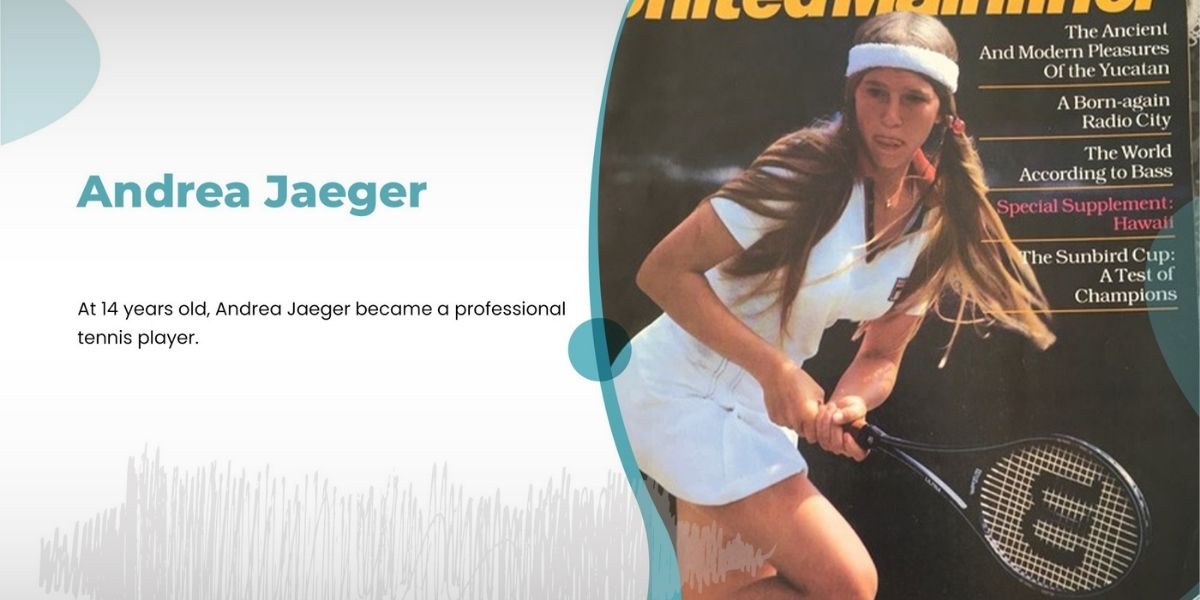
When Jaeger was playing, the off-season was essentially non-existent. A few weeks if you were lucky and didn’t make the year-end championships. The rest of the year was busy with airports, hotels, sponsor events, practice courts, and matches. And for Andrea, she did most of that while attending public High School, given that she turned pro at the age of 14 and became the #2-ranked player in the world at the age of 16. The grind existed equally for everyone, physical and otherwise. Andrea, however, never had to worry about longer matches or schedules while on court. A tennis court represented a game to Andrea. A chance to play, hone skills, and see how those skills would evolve, discovering how and when others would lose their grip on a match due to missed steps in their own training.

Grand Slams represent the most prestigious of tournaments. Each of the four Grand Slam events spans two weeks of the tennis calendar and takes place in a different country. Seven matches in fourteen days, each one against increasingly elite competition. Bodies manage peak performance alongside cumulative off-court fatigue, for example, long travel days and time changes, minor injuries that haven’t had time to heal, and the mental pressure of knowing it is showtime over two weeks, where one bad day can lead to elimination from the draw.

Now add the reality of five-set matches. That’s potentially a significant increase in court time over the course of a tournament. More time absorbing impact on hard courts. More opportunities for a hamstring to give out in the fifth set of a fourth-round match, which could potentially affect not only that tournament but also upcoming events.

Jaeger watched friends and competitors have their careers shortened by injury, and experienced it herself, retiring due to a shoulder injury. The players who made it into their 30s were often those who learned to manage their bodies carefully. Adding five sets to Grand Slams would be asking players to further extend their physical limits within an already demanding schedule.

The Scheduling Reality Nobody Talks About

Here’s what happens when you’re scheduled for a night session that starts at 7 PM: you spend the entire day preparing, staying loose, managing your energy. If your match goes five sets and ends at 1 AM, you’re not falling asleep until 3 or 4 in the morning, since adrenaline may take time to subside. Then you’re expected to recover, practice, and potentially play again in 36-48 hours.

Jaeger lived that schedule under the current three-set format. It’s manageable, yet far from ideal. Five sets would likely extend those late finishes even further into the night, further compress recovery windows, and make the difference between winning and losing sometimes depend on scheduling circumstances rather than performance alone. Plus, what about the fans? Matches ending at 2 am, fans may still need to get up and go to work that same morning.

Grand Slam tournament directors already manage complex scheduling demands. The scheduling challenges that five-set women’s matches would create may present additional logistical considerations, especially given the current format and infrastructure.

The Five-Set Question: Andrea Jaeger Weighs In on Women's Grand Slam Tennis

Photo Courtesy: Andrea Jaeger

The Equal Pay Argument Misses the Point

Equal pay is about valuing the women’s game for what it is, not for how closely it mirrors the men’s. Women’s tennis draws viewers, fills stadiums, and generates revenue. Three-set matches are not inferior; they are different. They reward consistency, mental toughness under immediate pressure, and the ability to perform without the safety net of a potential comeback from two sets down.

Some of the most iconic matches in tennis history have been three-setters. The format hasn’t diminished the women’s game; it has played a role in shaping its identity over time.

Where She’d Consider a Compromise

That said, Jaeger would have loved to play the longer best-of-five set matches during her era. She never grew weary in physical abilities during the three sets and would have been fine playing best of five. If tournaments wanted to test five-set formats for semifinals and finals only, she’d be curious to see how it plays out, knowing plenty of players will oppose the best-of-five format. That semifinals and finals approach would preserve the drama and high-stakes appeal of longer matches while potentially limiting the cumulative physical toll over a two-week event.

It would also maintain scheduling predictability for earlier rounds while delivering marquee five-set showdowns when the stakes justify the added demand. Players could manage their training and preparation knowing that only the deepest runs would require that extra level of endurance.

But a wholesale shift to five sets from the first round? She feels it is unlikely to happen. Not because women can’t do it, but because the cost-benefit analysis may not fully support such a change when considering player health, career longevity, and scheduling realities. Even at the beginning of tournaments, players are starting to get injured, and the additional strain could contribute to increased wear and tear over time.

The Question Nobody’s Asking

Here’s what Jaeger is curious about when discussing these Grand Slam tennis topics. Whether best of five happens or not, Jaeger feels that tennis would benefit from doing away with the break after the first set, unless that player has won the first set, and even then, breaks should only come after the second set. Jaeger feels that too often players use the loss of a first-set break time to disrupt the momentum of the other player. She feels, “Tough. You lost the first set. Deal with it. Stay on court, and if you want a break to change clothes or use the bathroom, then win the first set to do it, or take the break after the second set.” That first set break may disrupt play, the fans may not always enjoy it, and for Jaeger, it can sometimes appear to reflect a lack of professionalism or sportsmanship when used strategically.

Her Honest Take

If Jaeger were still playing and the WTA announced a shift to five sets at Grand Slams, she’d be excited and would adjust training accordingly. Players always do. But she’d also know that injuries could potentially occur more frequently, that physical strain would accumulate over time, and that the margins between winning and losing might narrow in ways that relate more to endurance than skill.

She’s proud of women’s tennis and what it represents. She’s wary of changes that sound good in theory but may not fully account for the realities of competing consistently at a high level.

The five-set debate will continue. But Jaeger hopes the conversation shifts from “can women do it?” to “they likely can if needed, but is it necessary?” She would rather see professional tennis reconsider the first-set breaktime instead.