

How EAG Studio Approaches Architecture Across the Bay Area

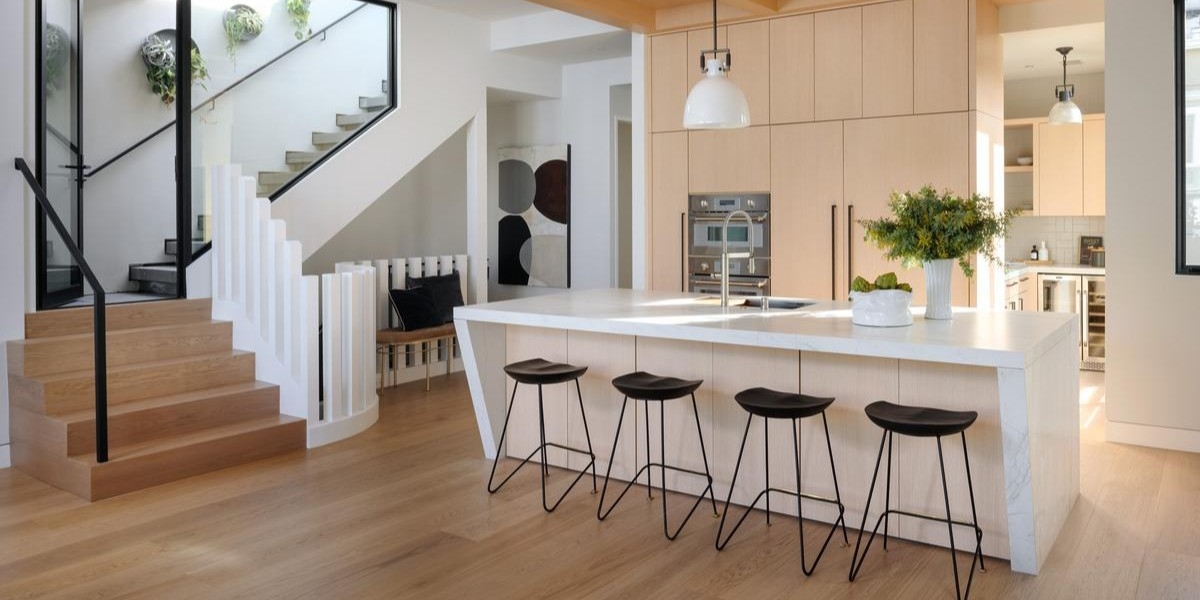
Despite growing pressures, city-based architects now navigate layered rules alongside shifting climate demands. Instead of focusing solely on looks or usability, teams must handle approvals and green benchmarks while aligning build timelines. Within U.S. metro zones like San Francisco, most designs demand alignment among various departments, code compliance, plus synchronized engineering inputs. Digital tools, especially 3D models, have quietly taken over as key aids for streamlining tangled tasks.
EAG Studio, founded in 2002 by Vincent Léger, operates in this context as a San Francisco-based architecture and design firm. Headquartered in the SoMa neighborhood, the firm employs more than 20 professionals and manages approximately 250 projects across six U.S. states as of 2026. The studio undertakes a wide range of project types, including single-family residential estates, multifamily developments, mixed-use urban infill, hospitality properties, and commercial interiors. The firm also reports managing roughly 30 active construction projects at any given time, reflecting its scale relative to regional architectural firms of similar size.
The firm’s residential work encompasses both new construction and renovation, and includes site-specific considerations, including hillside topography, coastal exposure, and urban constraints. The Coastal Modern residence in San Francisco’s Marina District and the Nob Hill Cosmopolitan project in Russian Hill illustrate the firm’s focus on verticality, fusible window-wall systems, and indoor-outdoor relations. The firm’s multifamily housing projects are responsive to the circulation and use of common areas, maximization of double-loaded corridors, and compliance with local zoning and building codes, and the firm aims to achieve design and permit approval within that framework.
Another area of expertise includes commercial and hospitality design. ANTHEM, a workplace interior in San Francisco, exemplifies a focus on an efficient layout and integration with existing building systems. The firm’s approach to operational needs encompasses a combination of materiality, architectural detailing, and functional modular furniture or partition systems. Hospitality and retail design projects are, in this sense, equally attentive to and coordinated within occupied volumes, making adjustments with interior finishes beyond those governed by codes for accessibility and fire safety.
Project coordination and construction management are central to the studio’s methodology. EAG Studio maintains involvement across every phase of a project, including site assessment, conceptual design, permitting, construction documentation, and contractor coordination. Permitting processes are described as requiring early engagement with zoning offices, parallel submittals to regulatory agencies, and proactive resolution of neighbor or agency concerns. According to the firm, standard residential remodels and tenant improvement approvals can be secured within days to weeks. At the same time, complex landmark or estate projects may take three to six months to achieve approval.
Integrated planning in the construction industry meshes with design processes to improve the efficiency of buildout. The strategy incorporates early procurement of long-lead materials, prefabricated parts to minimize on-site work, and effective request for information processes to minimize delays. A specific example of the strategy is the construction of a 3,400-square-foot hillside residence in Sonoma, finished in nine months. The strategy revolves around the inspection process and contractor coordination in conjunction with design to minimize delays in urban and hillside projects.
Digital modeling and BIM tools enhance the integrated process. The firm employs 3D modeling to identify clashes between mechanical, electrical, and structural systems prior to construction. The process enables the alignment of interior, exterior, and landscape design and maintains consistency in documentation for permitting purposes. The process also enables prefabricated construction and prefabrication, which is increasingly practiced in projects where time or budget is constrained.
Sustainability and resource management are considered within the context of project execution. EAG Studio’s portfolio includes off-grid systems, energy-efficient mechanical systems, and water-management strategies. For example, the Sonoma Hillside Ranch House in Glen Ellen incorporated on-site energy generation and water treatment to support resilience following the 2017 Sonoma wildfires. Similarly, the Panda Ranch in Jackson Hole, Wyoming, integrates radiant-heated exterior surfaces and environmental controls appropriate for cold-climate conditions.
The studio’s portfolio has received coverage from various design and real estate publications. California Home + Design put the firm in the spotlight twice, first in November 2017 and again in March 2023. Robb Report showcased some of its projects in August 2020. Mansion Global took notice of a San Francisco project back in January 2018, and Inhabitat covered the firm’s residential work in October 2017. The firm’s work hasn’t gone unnoticed—Best of Houzz awards came in for Service in 2014 and 2016, and for Design in 2013, 2019, and 2023. The American Institute of Architects’ San Francisco chapter also recognized the firm: they were part of the Small Firms, Great Projects program in 2016, and got a featured firm profile in 2018.
Every project grows out of the site’s unique conditions, the rules and codes in play, and the latest technology. Under the guidance of Vincent Léger and Michael Terndrup, the leadership team’s main concern is to provide continuity throughout the process, coordinating consultants and contractors, and meeting building standards while remaining loyal to what the client wants and what the realities of operation entail.
EAG Studio has been operating in the professional environment of architecture and construction for over twenty years. During this time, the company has developed a diverse portfolio of projects that vary in type and conditions. The company’s focus on integrated design, construction management, permitting, and regulatory coordination puts it in the midst of a professional environment characterized by urban complexity, environmental demands, and client-driven projects. Through the integration of 3D modeling, modular construction concepts, and interdisciplinary collaboration, the studio works in the Bay Area and elsewhere in the regional markets.