Revolutionizing Natural Gas Tariffs with NatGasHub’s Unified Digital Mapping Technology

By Christina Marquez

In today’s rapidly evolving energy market, the demand for precise, real-time data has become the defining edge for stakeholders seeking operational excellence. With natural gas supplying power grids and industries across North America, the processes behind tariff management have traditionally lagged behind in both pace and transparency. Amid this backdrop, NatGasHub.com has emerged as a transformative force, introducing what many industry veterans are calling the “Google Maps of Natural Gas Pipeline Tariffs.” This innovative platform is setting a new benchmark by delivering automated, centralized, and standardized tariff data on an unprecedented scale.

Navigating the intricate landscape of natural gas tariffs has long been a formidable challenge. Hundreds of pipelines and utilities, thousands of regulatory filings, and constantly shifting rate structures have turned even routine tariff management into an arduous daily task. The manual effort required not only slowed operations but also heightened the risk of costly errors and pitfalls that could have significant financial and regulatory repercussions. Recognizing this industry-wide bottleneck, NatGasHub, spearheaded by CEO Jay Bhatty, developed the Automated Gas Pipeline Tariffs system, or gTARIFF, fundamentally changing how the sector approaches tariff intelligence.

At its core, gTARIFF is a powerful, real-time tariff API encompassing data from more than 215 interstate and intrastate pipelines and nearly 500 gas utilities across the United States and Canada. Unlike the cumbersome patchwork of pipeline portals and individual utility websites, the platform consolidates all tariff information into a single, standardized stream. Energy companies can now leverage this unified data feed directly within their own energy trading and risk management systems, eliminating both redundancy and the potential for human error.

What sets NatGasHub’s solution apart is its commitment to both data integrity and flexibility. Each day before 6:00 AM Central Standard Time, the system updates its database with the latest regulatory-approved tariff changes, from reservation and commodity charges to fuel percentages and surcharges. This daily automation ensures that traders, schedulers, and operational teams have the most current and accurate information at their fingertips, enabling faster, more informed decisions. In a market where minor discrepancies can impact millions, timely and precise tariff updates are not merely helpful; they’re essential.

Regulatory compliance is another cornerstone of gTARIFF’s architecture. Navigating the regulatory terrain of both the U.S. Federal Energy Regulatory Commission (FERC) and various Canadian authorities, the platform only delivers validated tariff data. Filings pending approval are clearly flagged, keeping subscribers aware of potential changes before they become effective. Once regulatory bodies approve new tariffs, the system seamlessly incorporates them, ensuring absolute confidence in the data’s currency.

Revolutionizing Natural Gas Tariffs with NatGasHub's Unified Digital Mapping Technology

Photo Courtesy: NatGasHub / Jay Bhatty

Security and reliability are paramount, and NatGasHub leaves little to chance. The platform operates under NAESB certification and SOC 2-compliant security standards, aligning with the highest benchmarks for data integrity and cybersecurity. As digital infrastructure becomes ever more critical to the functioning of global energy markets, robust security is no longer a bonus; it’s a prerequisite.

Another feature setting gTARIFF apart is the intelligent integration with enterprise energy trading and risk management platforms. Each tariff line item receives a unique identifier, mapped directly to clients’ internal systems, ensuring a seamless flow of data into daily operations. This automation removes the traditional pitfalls of manual entry and data scraping, dramatically reducing errors while freeing up valuable staff time for essential analytical and strategic tasks. Preview functions further empower users to review tariff updates before applying them, providing transparency and control throughout the process.

Automated monitoring scripts work around the clock to identify any changes across pipelines and utilities, capturing even the smallest updates to commodity or fuel charges. This thorough and consistent monitoring enables companies to adjust cost models and schedules almost instantly, staying nimble in a volatile and competitive marketplace. Automation, in this context, is about more than convenience; it’s about predictive agility and risk mitigation.

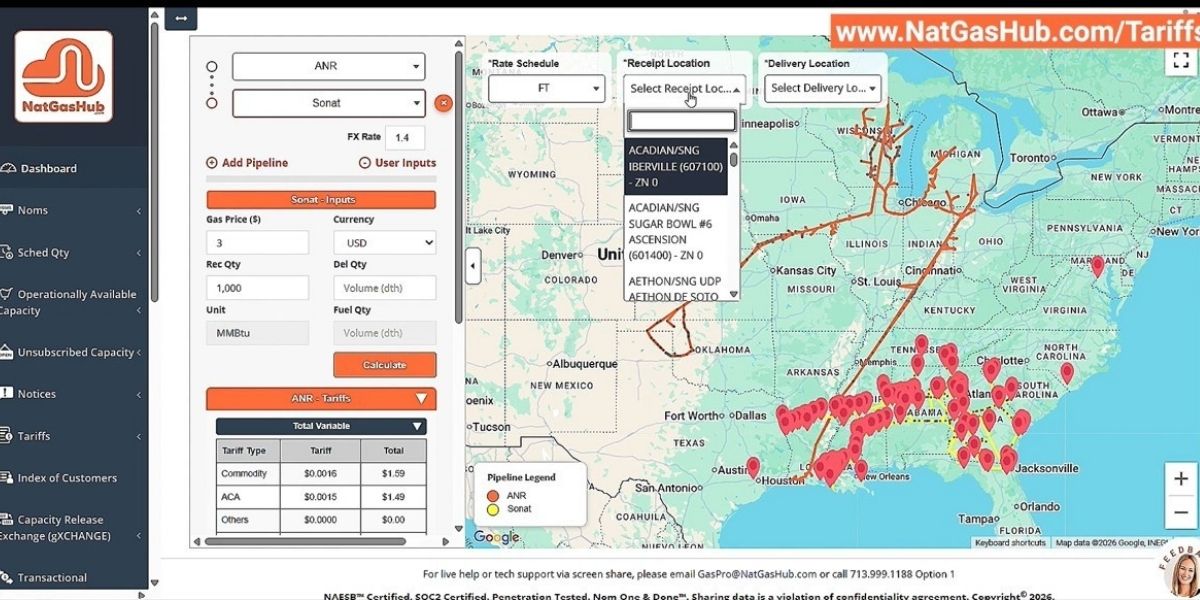
gTARIFF’s strengths also extend into visualization and analytics. Through an intuitive, map-based interface reminiscent of popular mapping technologies, users can view interactive pipeline routes and tariff data in powerful new ways. This geographic modeling capability enables traders, schedulers, and analysts to simulate transportation costs, apply customized scenarios, and gain strategic insight at a glance. For organizations managing complex, multi-jurisdictional operations, this level of clarity and analytical power can be transformative.

The resonance across the industry is clear. Gas traders benefit from a single, reliable source of tariff data, arming them with the precision needed to craft competitive pricing strategies and secure profit margins. Schedulers and operational teams, freed from the grind of manual verification and spreadsheet wrangling, can refocus on optimizing nominations and logistics, a shift that boosts morale as much as productivity. Even utilities and producers, often navigating a shifting regulatory environment, find themselves better positioned to anticipate changes, defend budgets, and adapt strategies proactively.

By consolidating hundreds of disparate tariff sources into a single cohesive system, NatGasHub delivers the level of standardization and transparency the industry has long sought. The impact is systemic: improved operational efficiency, stronger compliance, and the freeing of human potential from repetitive tasks to strategic ones. The vision of Jay Bhatty and his team has coalesced into a platform that not only leverages artificial intelligence for speed but also pairs it with human oversight for accuracy, a hybrid approach that reflects both ambition and diligence.

While NatGasHub’s solution is subscription-based, designed for integration rather than public browsing, its industry impact is broad. By providing a robust, up-to-date tariff data backbone, it accelerates digital transformation within the sector and enables energy companies to compete with sharper foresight and fewer obstacles.

As the energy industry continues to respond to market volatility, environmental imperatives, and the expansion of digital infrastructure, platforms like NatGasHub’s gTARIFF are shaping a smarter, more adaptable future. In placing reliable, real-time data at the core of natural gas operations, NatGasHub not only solves an old industry problem, but it also sets a standard for what’s possible when technological vision meets operational need. For forward-thinking companies, the future of natural gas tariff management has arrived.


Dior’s Extended UNESCO Partnership: Advancing Women’s Leadership & Education

Dior has extended its ongoing collaboration with UNESCO, reinforcing its commitment to empowering women through education, leadership, and mentorship programs. Originally launched in 2017, this partnership is built on a shared mission to break barriers for women worldwide, especially in industries where male leadership is still the norm. By renewing this partnership in 2026, Dior signals a continued investment in initiatives that help foster female leadership and access to education on a global scale.

A Stronger Focus on Mentorship and Leadership Development

Dior’s extended partnership with UNESCO will focus on significantly expanding its existing mentorship program, Women@Dior & UNESCO, which pairs young women from around the world with mentors in fields like technology, arts, business, and science. This initiative aims to provide guidance in both professional skills and leadership, helping participants navigate their career paths and develop the confidence needed to take on leadership roles in their chosen fields.

The mentorship aspect of the program is not limited to career advice. It is designed to equip participants with the tools necessary for leadership positions, focusing on building skills that will enable them to lead with integrity and innovation. Dior’s role in this program is to offer its experience in the world of luxury fashion while providing participants with access to a powerful global network.

Since its inception, the program has helped hundreds of young women gain valuable insight from Dior professionals and other influential leaders in a range of sectors. With the extension of this partnership, Dior is amplifying its investment in long-term leadership training, aiming to create a global community of empowered women who will shape the future of their industries.

Expanding Access to Higher Education

A key area of focus for the renewed partnership is expanding access to higher education for women, particularly in regions where educational opportunities are limited. Dior and UNESCO aim to increase resources directed toward scholarships, training programs, and leadership workshops, providing young women with the support they need to succeed in higher education and beyond.

While the program is not designed to function as a traditional scholarship fund, it does direct critical resources to ensure young women are given opportunities to pursue degrees in fields where they may have otherwise faced barriers. By supporting women’s educational aspirations, Dior and UNESCO are advancing a critical pillar of gender equality: access to education.

Fashion’s Growing Role in Global Social Responsibility

This partnership between Dior and UNESCO is a clear example of how the fashion industry is evolving, with luxury brands increasingly expected to take a leading role in social issues like gender equality, education, and community development. Dior’s continued commitment to this partnership demonstrates that luxury fashion is not only about creating beautiful products but also about making a positive social impact.

In an era where consumers are more socially conscious than ever before, brands are under increasing pressure to demonstrate that their business practices align with their values. Dior’s involvement in this education and mentorship program underscores how the fashion industry can use its global reach to support initiatives that drive meaningful change.

Empowering Women to Break Barriers in Male-Dominated Industries

One of the core goals of the partnership is to support women entering industries where men have traditionally held leadership positions. Dior and UNESCO are focused on providing women with not just financial resources but also mentorship and visibility that will help them break into sectors such as technology, business, and the arts. The partnership emphasizes the importance of supporting women as they navigate careers that are often seen as male-dominated, offering them the tools to challenge the status quo and establish themselves as leaders.

The Women@Dior & UNESCO program plays a pivotal role in helping women gain the confidence and visibility they need to make an impact in these industries. Through this initiative, Dior helps to foster an environment where women can flourish as leaders, surrounded by mentors and peers who provide encouragement and guidance.

Private-Sector Partnerships: The Key to Sustainable Change

The extended partnership between Dior and UNESCO comes at a time when private-sector involvement in social issues is more important than ever. As corporations are increasingly being called upon to address global challenges, partnerships like the one between Dior and UNESCO serve as an example of how businesses can use their resources and influence to create positive change.

By working with UNESCO, an organization with a long history of supporting education and gender equality, Dior is able to leverage its global presence to make a lasting impact. This collaboration highlights how private companies can work alongside international organizations to tackle issues that affect women worldwide, including access to education and opportunities for leadership.

This partnership is also a reflection of the evolving role of luxury brands in society. No longer confined to just selling products, brands like Dior are taking on broader social responsibilities, demonstrating that true leadership goes beyond financial success.

Public and Institutional Response: A Model for the Future

The response to the extended Dior–UNESCO partnership has been overwhelmingly positive, with both public officials and industry leaders praising the collaboration. UNESCO officials have described the partnership as a model for cooperation between the private sector and global organizations, emphasizing the long-term benefits of such partnerships for advancing gender equality and education.

The public has also responded positively to the continued focus on empowering women through education and leadership, recognizing that initiatives like this are crucial in creating a more equitable future. By aligning itself with education and mentorship programs, Dior is positioning itself as a socially responsible brand that is making a tangible impact on society.

Clarity Creates Confidence: How The Association of Related Churches Uses Timelines to Reduce Leadership Anxiety

Planting a church carries both deep excitement and significant pressure. Vision fills the heart, yet practical questions quickly surface. Where should a planter begin? How does a calling become a sustainable reality? The Association of Related Churches brings clarity to that journey through a framework of proven timelines that can help reduce uncertainty and enhance focus. By establishing clear milestones and defined phases of preparation, ARC church planting helps leaders move forward with a greater sense of confidence, build healthy teams, and lay the foundation for strong, life-giving churches.

What Is a Timeline in Church Planting?

A timeline in church planting is a practical roadmap that places key priorities onto specific dates and seasons leading up to launch day. While sequencing determines the proper order of steps, a timeline determines when those steps should take place. It translates principles into calendar commitments. Fundraising goals receive target months, launch parties receive scheduled dates, team meetings begin at defined intervals, and practice services are planned with intention. This structure aims to ensure that preparation moves forward steadily rather than drifting. A clear timeline helps bring accountability to the process, helping leaders track progress, manage energy wisely, and build consistent momentum toward a strong and sustainable launch.

Why Timelines Matter in Church Planting

Church planting thrives in environments where clarity and community work together. That belief shapes every step of the ARC process. A church launch often feels like standing at the base of a mountain. The summit may appear inspiring. The path forward can feel uncertain. A well-built timeline has the potential to change that experience.

A timeline creates urgency before urgency turns into panic. It protects emotional energy. It helps leaders focus on the right priorities at the right time. Most planters drift when priorities remain undefined. A written timeline replaces reaction with more intentional leadership. It’s important to write the vision on a piece of paper and start off by keeping it simple and focused. When vision lives on paper with weekly benchmarks, leaders gain confidence, and teams have more direction.

Start With the End in Mind

Strong ARC church planting begins with launch day and works backward. When planters map the calendar from launch day in reverse, clarity becomes clearer. Holidays, school schedules, equipment lead times, and community rhythms come into view. Six months no longer seems abstract. Each week takes on purpose. This backward planning model reduces leadership anxiety because it helps ensure nothing sneaks up unexpectedly. Vision moves from inspiration to implementation.

Choosing a Launch Date That Builds Momentum

Launch day shapes the first several months of attendance, giving, and consistency. Momentum requires strategy. Healthy launch windows often align with natural rhythms in a city. Early fall after Labor Day or late January frequently provides strong second-Sunday momentum. Families return to routine. Schedules stabilize. Community attention increases. The Association of Related Churches assists planters through this decision with coaching and guardrails. Alignment with proven launch seasons can increase clarity and support early growth patterns.

How The Association of Related Churches Reduces Leadership Anxiety

The Association of Related Churches aims to reduce anxiety for church planters by providing clarity, coaching, and community at every stage of the journey. Each of these elements directly addresses common pressures leaders face. Clear processes and defined milestones help eliminate confusion and bring focus. Ongoing coaching provides planters with guidance so that they do not make decisions alone, replacing isolation with experienced support. Relational community brings encouragement and shared wisdom, helping ease the uncertainty that often accompanies new initiatives. ARC supports this through:

  • A structured framework with clear milestones
  • Experienced pastor support through every phase
  • Funding guidance that may accelerate sustainability
  • Relational connections that remind leaders that planting does not happen in isolation

Alignment is central to the process. Leaders understand what to focus on and when to focus on it. That clarity frees up emotional energy for prayer, relationships, and vision.

About the Association of Related Churches

The Association of Related Churches is a global network of independent churches that strategically resources pastors and church planters through coaching, training, and relational support to help them launch strong, stay healthy, and reach people with the message of Jesus.