Strong Is Beautiful: How RITFIT Is Redefining the Modern Woman’s Home Gym

These days, strength is no longer confined to the gym. It can be found in curated homes, morning rituals, and in the confidence of a woman knowing that she has always been powerful. This is true for a growing number of fitness enthusiasts across the United States, and RITFIT is the brand that is redefining what strength actually looks and feels like.

RITFIT was founded in Delaware in 2015. Their mission is simple, yet ambitious: to make professional-quality home fitness equipment accessible and affordable. The name RITFIT, was inspired by the words “Right” and “Fitness,” and the brand was built with the belief that everyone has the right to control their fitness journey, as well as the right to choose equipment that supports it.

It all started with beginner-friendly yoga, Pilates, and dumbbells, and has now evolved into a comprehensive home gym ecosystem. This includes the Smith machine package options and multifunctional strength systems that have been designed for real life and real people.

Strength Designed for Women Who Love Beauty

The modern woman is no longer one-dimensional: she is a beauty enthusiast as well as a disciplined lifter. She is the curator of her own space, and no longer needs to choose between performance and design, or femininity and power. She can have both.

RITFIT is undergoing a brand evolution, from a purely functional gym brand into a premium lifestyle fitness brand. It has more than 60 patents, as well as recognition from reputable industry platforms such as Garage Gym Reviews, Garage Gym Life, and Luke’s Garage Gym. In fact, the company has earned the trust of over 300,000 customers since its inception.

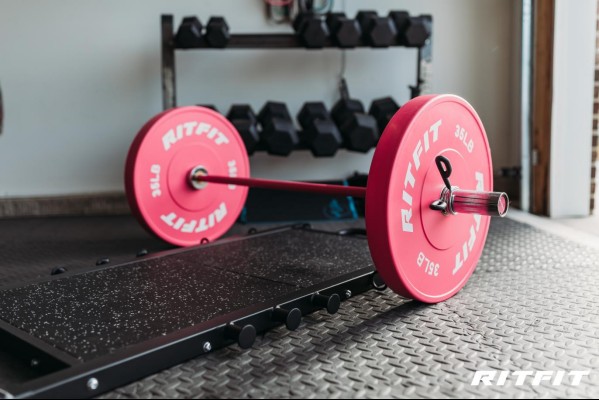
Its newest chapter invites women to see that beauty and strength are intertwined with RITFIT’s Pink Series that deeply embodies this understanding. Instead of saying that “women can be strong too,” RITFIT has elevated this message with a new one: “I’ve always been strong”.

The Pink Series was engineered with more than simply decoration in mind. It has been engineered with pure intentionality. The equipment fits seamlessly into contemporary living spaces, instead of being hidden away in the garage or the spare room.  Its design has been a thoughtful one, especially in an era where wellness has become part of both interior design and self-care rituals.

This is not pinkwashing, it is rooted in lived experience, and  RITFIT’s equipment has been designed to be both an aesthetic statement and a performance tool.

AURASPIN Grip Plates: Where Design Meets Real Life

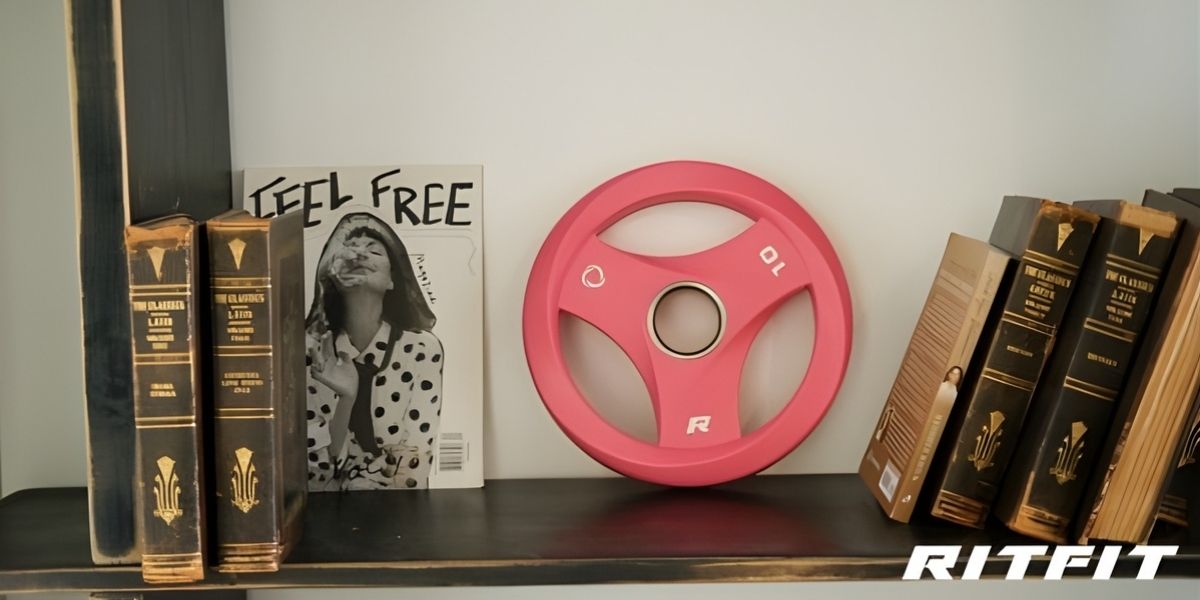
One of the most prominent examples of this philosophy is the AURASPIN Grip Plates, which are now available through the brand’s Pink Series collection.

The inspiration behind the Pink Series Collection is refreshingly honest, and places emphasis on how manicured and extended nails often clash with traditional weight plates. This is a problem that is not often acknowledged in mainstream strength culture, yet instantly relatable for many women.

RITFIT does not believe that this is trivial and has decided to treat it as a legitimate design challenge.

The AURASPIN Grip Plates have been engineered with a contoured grip structure. This means that it allows for secure handling without compromising nail integrity. Proof of this concept lies in the “Nails × Grip” dynamic, demonstrating that this is not ornamental design but ergonomic innovation.

For women who balance workouts with family life, work commitments and personal care routines, these plates have been crafted with the intention to enhance stability, comfort, and confidence during training sessions, especially in home gyms.

RITFIT essentially owns this pain point, which has allowed it to differentiate itself in an already saturated home gym market, and the AURASPIN design validates this. The brand genuinely listens to women rather than simply marketing to them.

Beyond Equipment

The founders of RITFIT have backgrounds that span car design, IT engineering, and furniture design, and have built a team that includes former athletes, nutritionists, ergonomic experts, and sports pedagogy professors. This means that safety, professionalism and practicality are not simply afterthoughts; they are foundational principles.

What was once a challenge to deliver professional-grade equipment at an affordable price point has become possible through optimized production processes and design innovation. In fact, RITFIT has gone so far as to balance value with durability, ensuring that every woman who is building their first home gym does not have to compromise on quality.

Women no longer need to trade softness for strength, and RITFIT recognizes that they should be able to deadlift in a space that feels refined. A place where they can maintain manicures as well as muscle.

The Future of Feminine Strength

RITFIT envisions become universally accessible and affordable for everyone, with women at the forefront of its design evolution. The brand continues to expand its Pink Series and multifunctional home gym solutions to build a community grounded in confidence, inclusivity, and long-term commitment to health.

For women who are ready to curate a home gym that reflects both power and polish, RITFIT invites exploration of its collections and current offerings at https://www.ritfitsports.com/pages/ritfit-sales.

Strong Is Beautiful: How RITFIT Is Redefining the Modern Woman’s Home Gym

Photo Courtesy: RITFIT Inc.

Follow RITFIT and learn more:
TikTok: https://www.tiktok.com/@ritfit.sports
Shop & updates: https://www.tiktok.com/@ritfitshop

How AI-Powered Factories Are Changing Hardware Startups

Hardware startups are entering a new phase of manufacturing as AI-powered factory models gain visibility across Europe and North America. The shift is being driven by companies attempting to merge software platforms with traditional industrial production, a model that places digital coordination at the center of factory operations.

London-based manufacturing technology company Isembard recently announced a $50 million Series A round intended to support the rollout of AI-powered factories focused on aerospace, defense, and other advanced manufacturing sectors. The company has stated that the funding will support the development of a network of factories scheduled to expand across multiple regions, including Europe and the United Kingdom, with plans referencing locations such as Germany, France, and Ukraine.

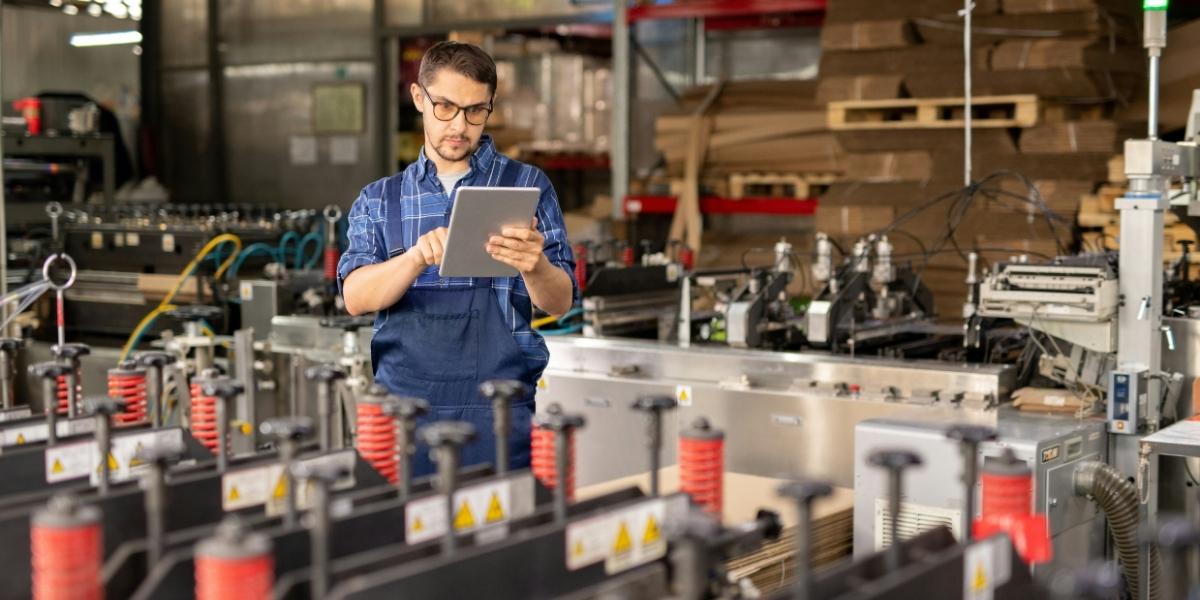
Isembard’s strategy centers on software designed to manage and coordinate factory operations. The platform, known as MasonOS, integrates quoting, scheduling, supply-chain coordination, manufacturing workflows, quality control processes, and delivery management within a single digital environment.

The concept positions the factory not only as a physical production space but also as a system governed by software infrastructure. Manufacturing activity still depends on machinery, skilled labor, and engineering standards, but operational coordination increasingly relies on centralized software systems designed to organize production tasks across facilities.

The announcement has drawn attention from technology and manufacturing observers because the model attempts to address a long-standing challenge for hardware startups: the complexity and cost associated with physical production.

How AI-Powered Factories Are Positioned for Hardware Startups

Hardware startups traditionally face barriers that differ from those encountered by software companies. Developing physical products often requires access to specialized equipment, manufacturing facilities, and experienced operators before a product can move from prototype to commercial production.

AI-powered factories attempt to reorganize parts of this process through shared production infrastructure coordinated by software. In this model, startups design products while manufacturing operations are handled by facilities that integrate digital scheduling, workflow coordination, and production management systems.

Software-driven coordination can allow multiple manufacturers to operate under standardized digital systems. Production scheduling, supplier coordination, and quality tracking may be handled through centralized platforms that monitor factory activity and allocate resources accordingly.

Industry analysts have described this shift as part of a broader movement toward software-defined manufacturing environments. In these systems, software platforms coordinate production lines, supply chains, and equipment utilization while engineers and operators manage physical processes on the factory floor.

For hardware startups, this structure may reduce the need to build independent manufacturing infrastructure during early development phases. Shared facilities operated through digital management systems allow smaller companies to access advanced production environments without establishing standalone factories.

The approach resembles the transformation seen in software infrastructure during the rise of cloud computing, when centralized platforms allowed digital startups to deploy applications without maintaining their own servers. In manufacturing, however, physical production remains essential, meaning that software coordination operates alongside traditional industrial operations rather than replacing them.

Manufacturing Supply Chains Face Structural Pressures

The growing attention around AI-driven factory networks comes at a time when manufacturing supply chains across Europe and North America face structural challenges.

Industry research and recent reporting have documented an aging ownership base among many small and mid-sized manufacturing firms. In Germany, a country known for its Mittelstand industrial base, a large number of factory owners are approaching retirement age. Analysts have warned that succession challenges could lead to closures or consolidation across parts of the manufacturing sector.

These shifts may affect supply chains that depend on specialized component producers. Aerospace, robotics, energy systems, and defense manufacturing often rely on networks of smaller firms capable of producing precision components that meet strict engineering standards.

Technology companies entering the manufacturing sector have begun exploring ways to respond to these pressures. Distributed factory networks and digitally coordinated production systems are presented as one potential approach for maintaining local manufacturing capacity while modernizing operations.

Within this environment, companies such as Isembard describe their model as a way to strengthen industrial capacity while introducing software-driven coordination across manufacturing sites.

The manufacturing sector also continues to evolve alongside broader technological changes. Market research organizations tracking smart manufacturing estimate that global spending on smart manufacturing technologies reached hundreds of billions of dollars in recent years. These technologies include industrial automation systems, digital factory software, robotics, and analytics platforms used to monitor and coordinate production.

Investors Back Software-Driven Manufacturing Models

Financial support for manufacturing technology companies has increased as venture firms explore opportunities tied to industrial software and automation.

Isembard’s Series A round included backing from venture firms such as Union Square Ventures, Tamarack Global, and IQ Capital. The round also included angel participants connected to technology and robotics companies, including Alex Bouaziz of Deel, Andrei Danescu of robotics company Dexory, and Matt Briers, former chief financial officer of Wise.

The participation of venture firms historically focused on software reflects growing interest in the intersection between digital platforms and industrial operations. Over the past decade, venture investment has expanded into areas such as robotics, supply-chain software, advanced manufacturing tools, and factory automation platforms.

Manufacturing technology companies frequently position themselves as building infrastructure for modern industrial production. Their platforms may focus on areas such as factory coordination software, robotics integration, production monitoring systems, and automated inspection technologies.

These developments occur alongside wider efforts in the aerospace and defense sectors to strengthen domestic manufacturing capacity and shorten supply chains for critical components. Governments and private industry have both expressed interest in expanding advanced manufacturing capabilities within their respective regions.

Operational Challenges Remain for AI-Driven Factory Networks

While the concept of AI-powered factories has gained attention, the model still faces practical challenges.

Manufacturing processes in sectors such as aerospace and defense require strict certification standards, traceability, and regulatory oversight. Facilities must meet precise engineering and documentation requirements before parts can be approved for use in aircraft, defense systems, or other safety-critical applications.

Ensuring consistency across multiple factory sites can also present operational challenges. Even when digital systems coordinate workflows, physical production depends on machinery calibration, material quality, environmental conditions, and skilled operators.

Scaling manufacturing networks therefore requires coordination between software systems and traditional engineering disciplines. Digital platforms can assist with scheduling, data collection, and operational monitoring, but they operate within the constraints of physical production processes.

Industry observers also note that hardware founders have historically relied on direct oversight of production environments. Transitioning to outsourced or shared manufacturing facilities may require companies to adjust their development and quality-control workflows.

Adoption of new manufacturing models often occurs gradually as companies evaluate reliability, regulatory compliance, and operational transparency within emerging production networks.