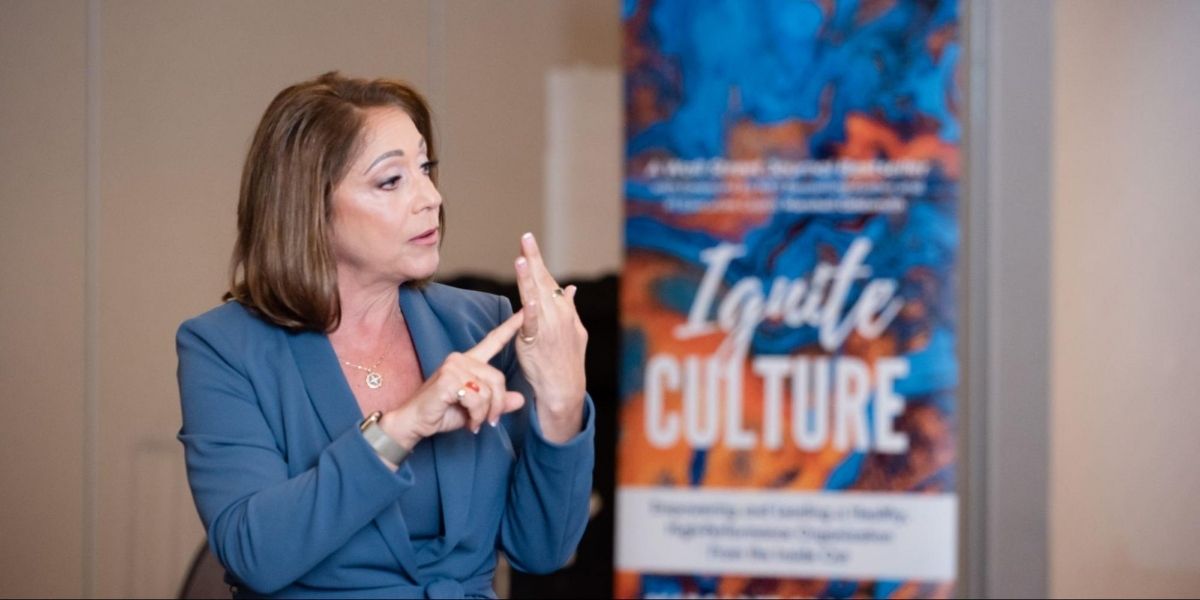
Women in Hustle Culture: Shaping the Future of Modern Business

Hustle culture has long been associated with late nights, relentless ambition, and a badge of honor worn by founders chasing growth. But in recent years, women have stepped into this space with a different kind of energy, one that’s reshaping how hustle culture is defined, practiced, and valued in modern business.

Across industries, women are building companies, leading teams, and managing side hustles with a level of intentionality that challenges the old playbook. They’re not just participating in hustle culture, they’re rewriting it.

Why Hustle Culture Looks Different Through a Female Lens

Women in hustle culture aren’t just grinding, they’re navigating layered expectations. Many are balancing entrepreneurship with caregiving, community leadership, and systemic challenges that still persist in funding and visibility. That context makes their approach to hustle culture more nuanced, and often more sustainable.

Rather than glorifying burnout, many women founders are building businesses that prioritize flexibility, mental health, and long-term impact. They’re redefining what it means to “go all in,” choosing strategy over speed and resilience over exhaustion.

This shift is especially visible in startup ecosystems where women-led ventures are gaining traction. Whether it’s a tech founder scaling a SaaS platform or a creative entrepreneur launching a product line, the hustle is real, but it’s also intentional.

Entrepreneurship as a Form of Agency

For many women, hustle culture isn’t just about ambition, it’s about agency. The ability to create, lead, and earn on their own terms is a powerful motivator. With barriers to entry lowered by digital platforms and remote work, more women are launching businesses, building audiences, and monetizing skills without waiting for permission.

This trend aligns with broader shifts in how young people are approaching work. As highlighted in reporting on side hustles and rising living costs, economic pressure is driving innovation, and women are leading the charge.

From freelance design to e-commerce, consulting to content creation, hustle culture is giving women a way to build income streams that reflect their values and strengths. It’s not just about survival, it’s about ownership.

The Role of Community and Collaboration

Hustle culture has often been portrayed as a solo pursuit. But women are challenging that narrative by building networks, sharing resources, and supporting each other’s growth. Whether it’s through founder circles, mentorship platforms, or social media communities, collaboration is becoming a core part of the hustle.

This collective mindset is helping women navigate challenges that are unique to their experience, like access to capital, representation in leadership, and work-life integration. It’s also creating space for more inclusive definitions of success.

In founder-focused environments, this shift is prompting deeper conversations about culture. As explored in coverage on work culture challenges, the way leaders build their teams and set expectations is evolving. Women in hustle culture are often at the forefront of that evolution.

Balancing Hustle With Health

One of the most significant contributions women are making to hustle culture is the emphasis on balance. While the drive to succeed is still strong, there’s a growing recognition that burnout isn’t a badge, it’s a barrier.

Founders are integrating wellness into their routines, setting boundaries around work hours, and designing businesses that support, not sabotage, their health. This isn’t about slowing down, it’s about sustaining momentum.

Some women-led startups are even embedding wellness into their brand DNA, offering products and services that reflect this philosophy. Whether it’s a coaching platform focused on emotional resilience or a retail brand built around mindful living, the message is clear: hustle can be healthy.

Visibility and Representation Matter

As more women succeed in hustle culture, their visibility is changing the narrative. Seeing women lead, scale, and innovate is inspiring the next generation of founders, and challenging outdated assumptions about who belongs in business.

Women in Hustle Culture: Shaping the Future of Modern Business


Photo Credit: Unsplash.com

Representation isn’t just symbolic, it’s strategic. When women see others navigating hustle culture with authenticity and success, they’re more likely to take risks, seek funding, and pursue leadership roles. That ripple effect is reshaping startup ecosystems across the U.S.

Media coverage, investor interest, and community support are all playing a role. But the most powerful driver is the women themselves, showing up, speaking out, and building businesses that reflect their vision.

What Hustle Culture Could Look Like Next

The future of hustle culture isn’t about working harder, it’s about working smarter. Women are leading that shift by building businesses that are agile, values-driven, and community-oriented. They’re proving that hustle doesn’t have to mean hustle alone.

As more founders adopt this mindset, the culture around entrepreneurship is changing. It’s becoming more inclusive, more sustainable, and more aligned with the realities of modern life.

That evolution is good for business, and even better for the people building it.

Margaret Graziano Explains Why Immersive Retreats Transform Leadership

By: Mary Sahagun

Most leadership teams are stuck in meetings that look productive and change nothing. Decks get reviewed. Issues get discussed. Decisions get delayed or reversed weeks later.

Meetings fail leaders under pressure because they reward control, composure, and speed. They hide reactivity. They mask misalignment. They keep leaders talking about problems instead of revealing how they actually operate when it matters.

“When pressure is high, meetings become performance theater,” says Margaret Graziano, leadership expert and founder of Keen Alignment. “People manage perception instead of behavior. That’s where execution breaks.”

Margaret works with leadership teams when meetings stop producing clarity, trust, or momentum. These organizations are navigating leadership transitions, stalled growth, or cultural strain that cannot be solved with tighter agendas, to-do lists, or better facilitation.

Why Meetings Stall and Retreats Don’t

Meetings are designed for information exchange. They are time-bound, role-bound, and shaped by hierarchy. Leaders speak carefully. Tension stays unspoken. Patterns like avoidance, control, overfunctioning, or withdrawal stay invisible.

Retreats remove those constraints.

Margaret’s immersive, multi-day retreats take leaders out of daily operations and place them into sustained, real-time interaction. Over several consecutive days, default behaviors surface quickly. How leaders listen, react, decide, and influence becomes visible to themselves and to one another.

“You cannot talk your way into alignment,” Margaret says. “You have to see yourself operating inside the system you’re trying to lead.”

This is where her ResponseAgility: From Friction to Flow™ framework begins.

Defining ResponseAgility: From Friction to Flow™

ResponseAgility: From Friction to Flow™ outlines the capacity to notice pressure, regulate internal response, and choose behavior intentionally instead of reacting. It’s not a mindset, it’s a practiced leadership skill.

In Margaret’s retreats, leaders learn by experiencing friction in real time. They see how stress affects decision quality, communication, and collaboration. They practice self-regulation, slowing reaction, stabilizing priorities, and responding with clarity.

“When leaders regulate themselves, execution speeds up,” Margaret explains. “Teams stop bracing for chaos and start moving.”

What Pressure Reveals That Conversation Hides

A core element of Margaret’s retreats is intentional pressure. This pressure mirrors real organizational conditions like uncertainty, interdependence, and accountability.

Exercises such as high ropes courses and complex group problem-solving tasks place leaders into situations where coordination and trust matter immediately. Titles do not help. Prepared language disappears. Patterns emerge fast:

Who takes control.
Who hesitates.
Who listens.
Who overrides.
Who adapts.

“You don’t need a personality assessment to see leadership patterns,” Margaret describes. “You need pressure and feedback.”

From Insight to Embodied Change

Most leadership programs create insight without behavior change. Margaret closes that gap.

Each experience is followed by structured reflection and peer feedback. Leaders receive direct input on how they showed up and how it affected others. The feedback is specific, immediate, and delivered without blame.

Over multiple days, leaders practice responding differently and see the impact in real time. New behaviors stick because they are lived, not just discussed.

What Changes, and How Fast

The outcomes of immersive retreats are not abstract.

Teams typically see:

  • Clearer decision-making within days, with fewer reversals and escalations
  • Noticeable reduction in reactive behavior across the first 30 to 90 days
  • Faster execution as priorities stabilize and trust increases
  • Improved leadership alignment that carries back into meetings and operations

“What used to take months of coaching surfaces in days,” Margaret says. “Because the system gets honest.”

Why Time Compression Matters

Cultural change fails when it is fragmented. One-off workshops and quarterly off-sites do not create enough continuity to interrupt ingrained habits.

Margaret’s retreats compress time. Leaders stay engaged long enough to surface unresolved issues, practice new responses, and integrate change before returning to work.

This continuity turns awareness into action.

Margaret primarily works with privately held, growth-oriented companies where leadership effectiveness directly affects performance. For these organizations, retreats are not perks. They are strategic interventions.

The work does not aim to fix culture. It develops leaders capable of sustaining an emergent culture that adapts under pressure.

“When leaders change how they respond, culture follows,” Margaret says.

Communication becomes direct.
Decisions happen closer to the work.
Responsibility gets shared instead of escalated.

Meetings still matter. They just stop carrying the weight of unresolved leadership behavior.

Sometimes, the fastest way forward is not another conversation. It’s lived experience that changes how every conversation happens after.

Microsoft Launches Maia 200 AI Chip, Targets Big Tech Cloud Competition

Microsoft has officially launched the Maia 200 AI chip, a custom processor designed to power the next generation of artificial intelligence workloads. The chip is being deployed in U.S. data centers, beginning in Iowa and expanding to Arizona. With this rollout, Microsoft positions itself directly against Amazon and Google in the cloud hardware race.

The Maia 200 builds on the company’s earlier efforts to reduce reliance on external suppliers. By designing its own silicon, Microsoft gains greater control over performance, efficiency, and cost. This move signals a shift toward self‑sufficiency in AI infrastructure.

Industry analysts view the launch as a turning point. Microsoft is no longer just a software giant—it is now a hardware competitor in the AI space. The Maia 200 represents both technological ambition and strategic necessity, reshaping how the company is perceived in the broader tech ecosystem.

Technical Specs That Raise the Stakes

The Maia 200 is built on TSMC’s advanced 3‑nanometer process, packing more than 100 billion transistors. It delivers up to 10 petaflops of performance at FP4 precision and 5 petaflops at FP8 precision. These figures highlight its focus on inference workloads, which are increasingly costly as AI models expand.

Microsoft claims the chip is three times faster than Amazon’s Trainium on certain benchmarks. It also reportedly outperforms Google’s TPU in multiple inference tests. Such comparisons have fueled debate about how the chip will reshape competition in cloud computing.

Efficiency is a central theme. By lowering inference costs, Microsoft aims to make AI services more accessible to businesses and consumers. This balance of performance and affordability is key to its appeal, especially as demand for AI services continues to surge globally.

Deployment Across U.S. Data Centers

The rollout of Maia 200 begins in Des Moines, Iowa, with Phoenix, Arizona, next in line. Microsoft plans to expand deployment across additional U.S. data centers throughout 2026. This phased approach ensures stability while scaling workloads.

The chip is already powering OpenAI’s GPT‑5.2 and Microsoft 365 Copilot. These applications require massive computational resources, making the Maia 200’s efficiency critical. Early reports suggest smoother performance and reduced latency in AI services, a benefit that could quickly be noticed by end users.

For Microsoft, the deployment is about more than infrastructure. It is a demonstration of control over its technological destiny. By embedding custom chips into its ecosystem, the company gains flexibility in shaping future AI experiences and reducing dependency on external suppliers like Nvidia.

Cloud Rivals Face New Pressure

Amazon and Google have long dominated the AI hardware space with Trainium and TPU. Microsoft’s entry with Maia 200 raises the stakes in what many call the “AI chip wars.” Each company is racing to deliver faster, cheaper, and more efficient solutions.

The competition is not limited to performance metrics. It extends to cultural influence, as these chips power the tools that shape modern work and communication. Microsoft’s move positions it as a challenger to established narratives and signals its ambition to lead in AI infrastructure.

Analysts suggest that the Maia 200 could shift customer preferences. Businesses seeking cost‑effective AI solutions may find Microsoft’s offering compelling. The chip’s rollout could redefine how enterprises choose their cloud providers, especially as AI workloads become central to daily operations.

Cultural Dimensions of Innovation

The Maia 200 is more than a piece of hardware—it is a symbol of how technology companies frame their role in society. By creating its own chip, Microsoft emphasizes independence and innovation. This resonates with audiences who see AI as both opportunity and challenge.

For developers, the chip represents new possibilities. Faster inference means more responsive applications, from productivity tools to creative platforms. The cultural impact lies in how these experiences shape daily life and redefine expectations of technology.

Communities are watching closely. The debate is not only about technical superiority but also about accessibility and trust. Microsoft’s narrative of innovation will influence how people perceive AI in the years ahead, shaping conversations about responsibility and progress.

What It Means for AI Services

The Maia 200 sets a precedent for how cloud providers approach AI infrastructure. Its rollout demonstrates that custom hardware is becoming essential to delivering scalable services. Other companies may follow suit, accelerating the trend toward in‑house chip design.

For users, the implications are immediate. AI tools integrated into everyday platforms could become faster, cheaper, and more reliable. The chip’s efficiency promises to lower barriers to adoption across industries, from healthcare to finance to creative sectors.

The Maia 200 represents a turning point in the AI era. It embodies both technological ambition and cultural significance. As Microsoft expands deployment, the conversation about AI’s role in society will only grow louder, ensuring this chip remains at the center of industry debate.