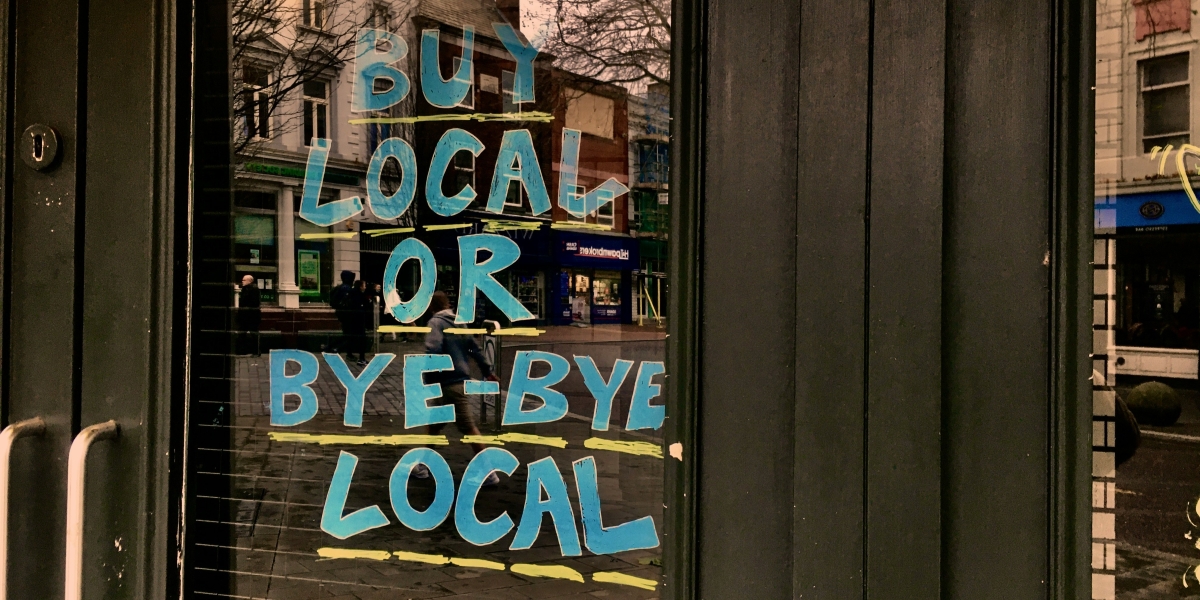
The Case for Community-Driven Marketing in a Performance-Obsessed Ad World

Marketing strategies have long been evaluated using performance metrics such as click-through rates, conversions, and short-term return on ad spend. But as consumers grow increasingly skeptical of polished brand messaging, a different approach is gaining traction: community-driven marketing that prioritizes real economic impact alongside visibility.

Supporting small and local businesses has become more than a goodwill gesture. For brands willing to invest in local ecosystems, community-focused advertising offers a powerful way to build trust, humanize messaging, and create long-term brand equity that extends far beyond a single campaign.

Andrew Barrow, founder of Revenue Arc, has seen firsthand how reinvesting ad dollars into small business communities can reshape both brand perception and performance. Over decades in digital marketing and ad tech, Barrow has worked with global brands while maintaining the belief that sustainable growth starts at the local level.

Small Businesses as Trust Builders, Not Just Beneficiaries

Small businesses occupy a unique position in consumer trust. They are often seen as more authentic, more accountable, and more connected to the people they serve. When larger brands align with these businesses through partnerships, targeted campaigns, or shared media strategies, the trust local businesses earn can extend outward.

Community-focused marketing allows brands to tap into that authenticity without manufacturing it. Rather than positioning themselves as distant corporations, brands become visible supporters of real people, families, and neighborhoods. That alignment can significantly strengthen emotional connections with audiences who increasingly care about where their money and attention go.

Barrow emphasizes that consumers are paying closer attention to brand behavior, not just to its messaging. Supporting small businesses through advertising ecosystems signals values in action, not just stating them on paper.

Humanizing Large Brands Through Local Impact

As brands scale, maintaining a human voice becomes more challenging. Community-focused campaigns offer a way to ground national or global messaging in local relevance. Whether through regionally targeted ads, partnerships with local entrepreneurs, or reinvesting media spend into small business growth, brands can demonstrate that scale does not have to come at the cost of connection.

Revenue Arc’s AI-powered programmatic platform supports this approach by enabling precise audience targeting across digital channels, including connected TV (CTV), without requiring brands to commit to a single platform or strategy. Ads can be delivered within streamed content or live events wherever audiences are consuming media, allowing campaigns to be tailored by geography, behavior, and community context.

That flexibility makes it easier for brands to support local ecosystems at scale, combining national reach with localized impact.

Reinvesting Ad Spend for Long-Term Brand Value

Traditional advertising models often prioritize efficiency above all else, funneling budgets toward the lowest-cost impressions regardless of where those dollars land. Community-driven marketing challenges that mindset by asking a different question: what happens when ad spend strengthens the very communities brands depend on?

Reinvesting media budgets into small business ecosystems can generate compounding returns. As local businesses grow, they create jobs, strengthen neighborhoods, and contribute to healthier local economies. Brands associated with that growth benefit from increased goodwill, stronger loyalty, and higher lifetime customer value.

Barrow’s approach with Revenue Arc reflects this long-term thinking. The company operates on a revenue-share model rather than charging upfront fees or markups, allowing startups and small-to-medium businesses to access enterprise-level programmatic advertising without additional financial barriers. Clients pay only for their media spend, while Revenue Arc earns a portion of platform fees over time.

While the delayed payment structure requires patience, it reinforces alignment between platform performance and client success. Growth becomes shared, not extracted.

Shared Growth Through Community-Centered Strategy

Examples of community-driven marketing are becoming more visible across industries. Brands sponsoring local creators, supporting neighborhood retailers through targeted campaigns, or reinvesting ad dollars into regional media ecosystems are seeing stronger engagement and deeper loyalty as a result.

These strategies work because they reflect how consumers already think: people support brands that support what matters to them. When advertising dollars help sustain local businesses, the value exchange becomes mutual rather than transactional.

As advertising continues to evolve, community-driven marketing offers a compelling path forward. In a landscape crowded with automation and optimization, brands that invest in people, not just platforms, may find themselves building trust that no algorithm can replicate.

Public Record Registry: How Recognition Quietly Moves Away From the People Doing the Work

By: Dr. Tamara Patzer

The Problem No One Notices Until It’s Too Late

Authority drift doesn’t announce itself. There’s no warning email. No sudden collapse. No obvious mistake to fix.

It feels gradual at first—almost imaginary. You’re still doing the work. Still delivering results. Still respected by people who know you. And yet, when attention, credit, or opportunity shows up, it seems to land somewhere else.

A platform gets cited.
An institution gets quoted.
A brand becomes the reference.

The work is yours. The recognition isn’t.

How Authority Used to Stick

For most of modern professional life, authority followed contribution. If you built expertise over time, people associated your name with your work. Credit wasn’t perfect, but it generally stayed close to the source.

That system depended on memory and context. Humans carried stories forward. They remembered who did what. They corrected errors when attribution drifted.

That correction layer is fading.

As systems mediate more of how information is discovered and reused, authority no longer sticks automatically to the person doing the work. It flows toward whatever looks most stable and least ambiguous.

The Mechanism Behind Authority Drift

Authority drift occurs when recognition migrates from individuals to containers.

Containers can be:

  • platforms
  • publications
  • institutions
  • directories
  • marketplaces
  • brands

They have one thing in common: they are easier to recognize than people.

They don’t change names. They don’t move careers. They don’t evolve roles. From a system’s perspective, they reduce uncertainty.

So when identity signals at the individual level are fragmented, authority resolves upward. Not because the container deserves it more—but because it’s clearer.

Why This Accelerated After 2025

After 2025, the stakes around attribution increased dramatically. Search results fed AI summaries. Knowledge panels informed decisions. Automated tools reused information without human oversight.

Being wrong about a source became riskier than being incomplete.

In response, systems tightened trust models. They favored sources that could be reused confidently without reconciliation.

This didn’t just change rankings. It changed where authority landed.

Individuals without a stable identity anchor became hard to place. Containers absorbed the signal by default.

The Invisible Trade Most People Make

Many professionals unintentionally trade authority for convenience.

They publish inside platforms.
They contribute under institutional banners.
They build audiences in rented spaces.

All of this feels productive—and often is, in the short term.

But over time, attribution weakens. Systems learn the container first. The individual becomes optional.

The work still exists. The recognition moves.

Why Effort Doesn’t Stop the Drift

Authority drift isn’t caused by laziness or lack of output. In fact, highly productive people are often the most vulnerable.

The more places your work appears without a stable reference back to you, the more chances there are for systems to misattribute it. Each new container becomes another endpoint for authority.

Humans might remember who did the work. Systems won’t.

They resolve to what they can recognize consistently.

The Cost of Drift Is Opportunity

The consequences of authority drift rarely show up as obvious losses.

Instead, they appear as:

  • being excluded from shortlists
  • being cited less often
  • being overshadowed by intermediaries
  • being passed over for larger opportunities

Nothing is “taken away.” It simply stops arriving.

People often assume this is competition or market saturation. In reality, it’s a recognition problem.

Why Platforms Benefit While Individuals Stall

Platforms are designed to accumulate authority. Their structure rewards reuse. Their identity persists regardless of contributors.

So when trust models tighten, platforms gain relative strength.

This is why individuals often feel pressured to partner, publish, or advertise through intermediaries to regain visibility. The system already trusts the container.

The individual becomes dependent on it.

The Missing Safeguard

What most people lack is not talent or exposure. It’s a place where authority can land and stay put.

There needs to be a neutral, durable reference that:

  • belongs to the individual
  • persists across time
  • isn’t overwritten when careers change
  • isn’t absorbed by platforms

Without that, authority remains mobile. And mobile authority tends to drift away from its source.

This is the structural gap addressed by PublicRecordRegistry.org—providing an append-only public record where identity and verified work resolve independently of where the work appears.

It doesn’t compete with platforms. It prevents them from becoming the default owner of recognition.

What Happens When Authority Is Anchored

When authority is anchored, something subtle changes.

Attribution stabilizes.
Systems stop guessing.
Recognition travels with the individual.

Platforms still distribute work. Publications still amplify it. Institutions still add credibility. But none of them replace the source.

Authority stops drifting because it has somewhere to settle.

Why This Matters More Than Ever

As AI systems increasingly mediate discovery, attribution, and trust, authority that isn’t anchored will continue to consolidate upward.

This doesn’t eliminate individual expertise. It just disconnects it from recognition.

Those who notice this early can correct it. Those who don’t often discover it only after years of accumulated work no longer seems to belong to them.

The Quiet Reality

Authority drift isn’t theft. It’s default behavior.

Systems resolve to clarity. Clarity favors containers. Individuals must provide their own stability or accept that recognition will migrate elsewhere.

The Line That Defines the Future

Doing the work is no longer enough to keep authority.

Authority must have a place to land—or it will land wherever the system finds it easiest to put it.

About the Author

Dr. Tamara Patzer is a publisher and media strategist focused on real-world AI behavior, identity continuity, and authority systems. Her work examines how recognition shifts in automated environments—and how individuals can prevent authority from drifting away from the source.
https://www.publicrecordregistry.org
https://www.publicrecordregistry.org/ai-reality-check/


Disclaimer: This article is informational only. PublicRecordRegistry.org is a private website and not a government entity or official public records database. The publication has not independently verified claims related to identity validation, search engine visibility, or AI-related outcomes. Readers should do their own due diligence before using any service.