Senziio’s Theia: The Smart Home Multi-Sensor That Puts Privacy First

By: Nic Abelian

Senziio’s Theia is a groundbreaking privacy-first home automation multi-sensor that responds to human presence, not surveillance.

It’s 7 PM, and you’ve just stepped through the door after a long day. Your favorite playlist starts softly, the lights gently adjust to your preferred brightness, and the air conditioning kicks in to the perfect temperature, all without you lifting a finger. You haven’t spoken a word, and there’s no need to touch a button. This isn’t science fiction. This is the reality Senziio’s Theia is bringing to homes worldwide.

In an age where smart home devices often require endless apps, voice commands, and, controversially, constant surveillance, Theia is rewriting the rules. Unlike traditional smart home products that depend on motion sensors, cameras, or microphones, Theia responds solely to human presence, offering an intelligent, personalized experience that doesn’t compromise privacy.

For Chris Lemme, CEO of Senziio, Theia represents a new wave of smart home technology, one that adapts to people naturally and keeps privacy at the core. “The smart home of tomorrow should understand your presence, not watch your every move,” says Lemme. “With Theia, we’re building technology that is responsive, intuitive, and respectful of your privacy.”

A Smarter, More Human-Centered Approach to Automation

Theia’s mission goes beyond simple convenience; it’s about creating homes that understand us. While many smart home systems rely on invasive methods like motion detection, cameras, or microphones, Theia introduces an entirely different concept, presence-powered automation.

Senziio’s Theia: The Smart Home Multi-Sensor That Puts Privacy First

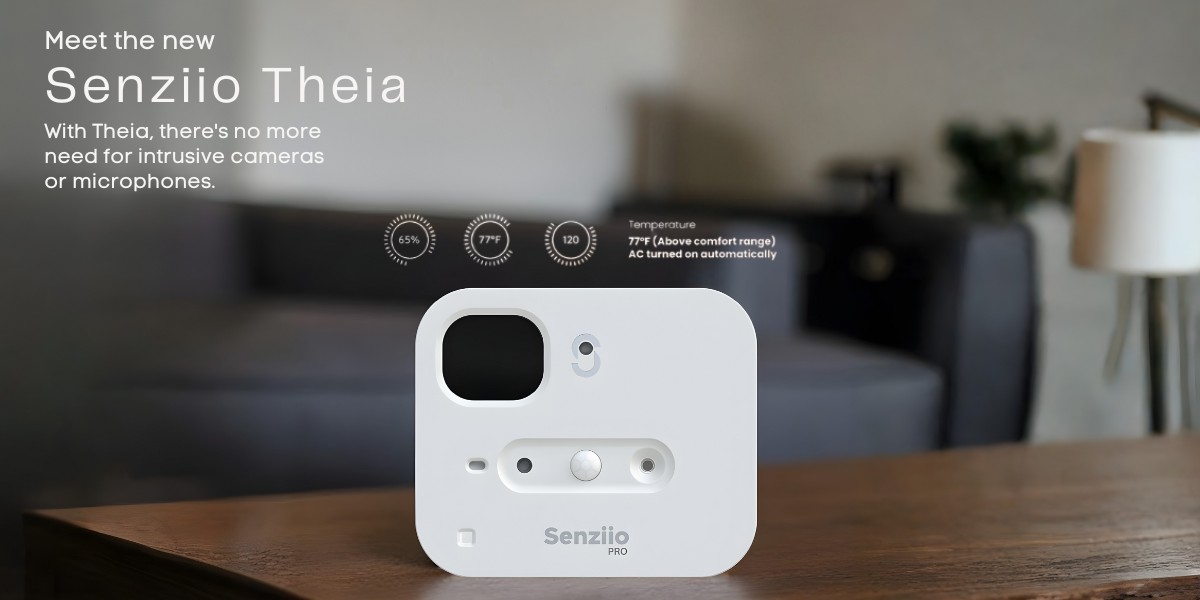
Photo Courtesy: Senziio

At its core, Theia is built on a fusion of thermal, radar, and environmental sensors that can detect when you’re truly present in a room, not just when there’s movement. By learning the way you interact with your space, Theia adjusts lights, temperature, and other connected devices based on your needs, whether it’s warming the room when you’re cold or dimming the lights for a cozy evening.

 “We wanted to create something that doesn’t monitor people, but instead, adapts to them,” says Lemme. “Presence is more than just motion. It’s understanding who’s in the room, what’s happening, and how we can make the environment more comfortable, all without compromising privacy.”

The Privacy Problem in Today’s Smart Homes

Privacy is a significant concern surrounding smart home technology. Many devices require constant monitoring or the collection of personal data, from video recordings to voice-command tracking. This data often ends up in the cloud, raising questions about who has access to it and how it is used.

Senziio knew that for Theia to succeed, it had to solve this privacy problem. Unlike many smart home products that rely on surveillance or cloud-based data storage, Theia processes all data locally. It uses edge AI technology to perform all tasks directly on the device, meaning no personal data is sent to the cloud unless you opt in for additional features via the optional Micelio Cloud platform.

“Surveillance has become the norm in many smart home products,” Lemme explains. “With Theia, we offer a different approach. There’s no data harvesting or constant surveillance. It’s simply smart technology that adjusts to your needs, respecting your privacy at all times.”

Theia’s Key Features: Enhancing Presence and Intelligence in Smart Homes
Senziio’s Theia: The Smart Home Multi-Sensor That Puts Privacy First

Photo Courtesy: Senziio

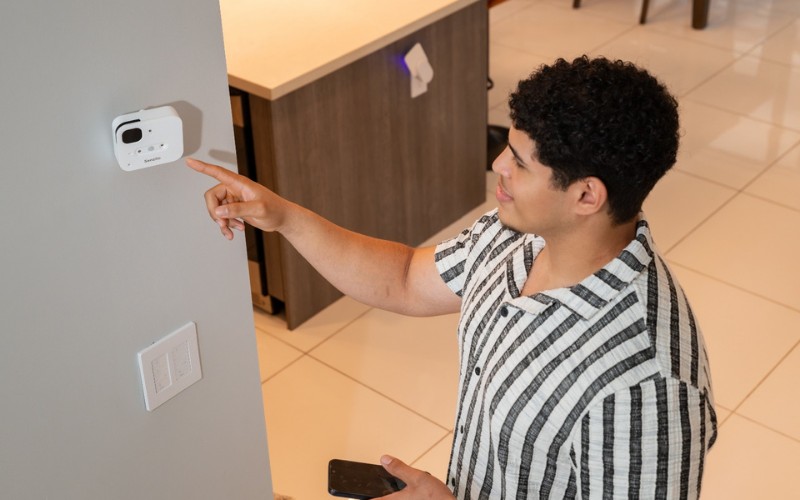
Theia’s groundbreaking presence detection technology isn’t just about comfort; it’s also about safety and energy efficiency. Here are just a few of the ways Theia’s unique multi-sensors enhance your home:

  • Energy Efficiency: By detecting actual occupancy and adjusting lighting, HVAC systems, and ventilation accordingly, Theia ensures no energy is wasted when a room is empty. This automated energy-saving feature helps you reduce unnecessary energy consumption.
  • Seamless Comfort: Whether you’re working from home or unwinding after a busy day, Theia automatically adjusts your environment to suit your needs. It can detect whether you’re feeling warm or cool and adjust the temperature, or dim the lights when you settle in for a movie.
  • Increased Safety: Theia’s sensors are also designed to detect environmental anomalies, such as changes in temperature that might indicate a fire or falls in rooms like the bathroom or bedroom. If something unusual is detected, Theia can alert you immediately, adding an extra layer of security.
  • Smart Home Integration: Theia is compatible with popular smart home platforms like Alexa, Google Home, Home Assistant, and SmartThings. It can integrate with other devices for more comprehensive automation, but at its core, it remains private and secure.

These features make Theia the ideal addition to any home, whether it’s in a living room, office, nursery, or even an eldercare setting. It’s adaptable, efficient, and built with respect for your privacy.

Theia’s Upcoming Kickstarter Launch: A New Beginning for Home Automation

On November 19, 2025, Senziio is taking Theia to Kickstarter, where early adopters can be part of this innovative product’s launch. Early backers can secure their Theia units at discounted prices and enjoy exclusive rewards, such as extended warranties and additional accessories.

“We’re excited to bring Theia to market and invite people to join us in the smart home revolution,” says Lemme. “It’s about creating homes that are truly smart, but also respectful of privacy. Theia is the first step in bringing this vision to life on a larger scale.”
The Kickstarter campaign will mark the start of Senziio’s broader mission to push the boundaries of home automation technology. The company plans to continue developing new privacy-first innovations to meet users’ evolving needs.

How Theia Is Changing the Way We Live

The smart home of the future is no longer about just connectivity; it’s about intelligence. Theia delivers this intelligence by responding to your presence and needs without surveillance, tracking, or data harvesting. It is a product born out of the desire to create a more human-centric, private, and energy-efficient future.

If you’re ready to experience the next generation of smart home technology, one that is truly intuitive and secure, now is your chance. Visit Senziio’s pre-launch website to learn more about Theia and join the Kickstarter campaign on November 12, 2025.

Stay updated by following Senziio on Instagram and liking Senziio on Facebook for the latest news and updates.


Disclaimer: The information provided in this article is for general informational purposes only and is not intended as legal, financial, or professional advice. While we strive for accuracy and clarity, we make no representations or warranties, express or implied, regarding the completeness, accuracy, reliability, suitability, or availability of the information. All claims regarding Theia’s technology and features are based on the current product design as described by Senziio. Use of this information is at your own risk.


2026 Salary Guide: What Americans Need for Financial Comfort

As the cost of living continues to rise, the definition of financial comfort in the U.S. is evolving. In 2026, experts are seeing a shift in what Americans need to feel financially secure. With increased housing costs, healthcare expenses, and inflation, many Americans now find that the minimum salary required for financial comfort falls between $80,000 and $90,000 annually.

This salary range is not just a number, it’s a reflection of the realities many households face while managing bills, savings, and leisure activities. For many, financial comfort means covering essentials while having the flexibility to save, enjoy some leisure, and handle unexpected expenses. However, inflation and regional differences complicate this definition, making financial comfort a highly personalized concept.

Understanding Financial Comfort in 2026

Financial comfort has evolved into something that goes beyond basic survival. While wealth is about abundance, comfort is rooted in stability and peace of mind. For many, it’s about paying for necessities such as rent, mortgage, healthcare, and transportation, while also building savings and planning for the future. It also means having room to enjoy a vacation, dine out occasionally, or spend on hobbies without constantly worrying about money.

According to surveys by organizations like Bankrate and Gallup, Americans are increasingly equating comfort with the ability to handle unexpected expenses. Car repairs, medical bills, and emergency situations can be a source of stress, but having the financial flexibility to navigate these issues is a key part of feeling comfortable.

Regional Variability: Why Location Matters

One of the key takeaways from current studies is that financial comfort varies greatly across regions. In cities like San Francisco, New York, and Seattle, where the cost of housing alone can consume a large portion of an individual’s income, experts suggest that $100,000 or more may be necessary to feel financially secure. In contrast, regions such as the Midwest or parts of the South often have much lower living costs. A household in these areas might feel financially comfortable earning $70,000, well below the salary needed in high-cost areas.

This regional disparity underscores how location plays a significant role in determining what is considered “comfortable.” Even within one state, urban areas may require higher salaries to meet the same standard of living as rural or suburban areas. National averages provide a useful benchmark, but regional realities often tell a different story.

2026 Salary Guide What Americans Need for Financial Comfort

Photo Credit: Unsplash.com

Rising inflation continues to challenge many Americans as wages struggle to keep up with costs. With inflation outpacing wage growth in recent years, many households find themselves needing higher salaries to maintain the same lifestyle. Whether it’s food, utilities, or healthcare, prices continue to rise, and salaries are adjusting to keep pace with these increases. In 2026, the need for more income is a reflection of these economic shifts.

As inflation continues to impact purchasing power, understanding the economic trends that drive the cost of living will help households make informed decisions about what constitutes financial comfort. With each year, financial habits, such as budgeting, saving, and debt management, become even more critical in helping people achieve stability.

The Role of Employers in Financial Comfort

Employers have a significant part to play in improving financial comfort for their workers. Competitive wages, health benefits, and flexible work arrangements are all part of the equation. As work environments evolve, offering employees the ability to balance personal life and financial responsibilities has become essential for many. The ability to work from home or take paid time off can significantly improve financial comfort by reducing living expenses and allowing workers to focus on their financial stability without added stress.

Employers are increasingly expected to provide not just a paycheck, but a holistic support system that empowers employees to manage their financial lives effectively. When companies prioritize the financial well-being of their workforce, it has a direct impact on job satisfaction, productivity, and long-term retention.

Redefining Financial Comfort: A Broader Perspective

Financial comfort in 2026 is no longer just about earning a specific amount of money; it’s about creating a sense of security and freedom. It involves being able to cover essential living expenses, setting aside savings, and having the flexibility to enjoy life without the constant pressure of financial uncertainty. It also includes having the ability to plan for the future, whether it’s for retirement, education, or unexpected life events.

The rise of social media has influenced how Americans perceive financial comfort. With the constant portrayal of luxurious lifestyles, many people compare their financial status to the idealized images they see online. This can create unrealistic benchmarks and lead to feelings of inadequacy, even among those who are financially stable. As social media continues to play a role in shaping perceptions, it will be interesting to see how cultural expectations evolve over time.

Strategies for Achieving Financial Comfort

As 2026 unfolds, Americans are finding new ways to meet rising financial thresholds. Experts suggest that adapting to economic changes requires a focus on saving, budgeting, and staying flexible. Whether it’s setting aside an emergency fund, cutting back on unnecessary expenses, or seeking higher-paying job opportunities, individuals are exploring different methods to achieve greater financial security.

Employers, too, can play a crucial role by providing employees with opportunities for growth and development. Whether through wage increases, benefits packages, or career advancement opportunities, employers who prioritize the financial well-being of their workforce contribute to a more financially secure society.

Adapting to Financial Changes in the Evolving Economy

The future of financial comfort depends on how households and employers adapt to a changing economic landscape. With wages continuing to rise in some areas and remain stagnant in others, the need for financial flexibility and adaptability is becoming more critical. The financial habits that Americans develop now will shape their financial futures for years to come.

As inflation continues to rise and regional disparities widen, it will be essential for individuals and employers to work together to build a sense of financial security. Planning for the future, whether through savings, career advancements, or employer support, will be key to staying ahead of rising costs.

The shifting economic reality and the evolving definition of financial comfort present an ongoing challenge, but they also present opportunities for growth and change. Americans will continue to redefine what it means to be financially comfortable as economic conditions change and expectations shift.

Disclaimer:
The salary ranges and financial thresholds presented in this guide are based on current economic trends and general data. These figures are not intended as financial advice, and individual needs for financial comfort may vary significantly depending on personal circumstances, location, lifestyle, and other factors. It is recommended to consult a financial advisor for advice tailored to specific situations.