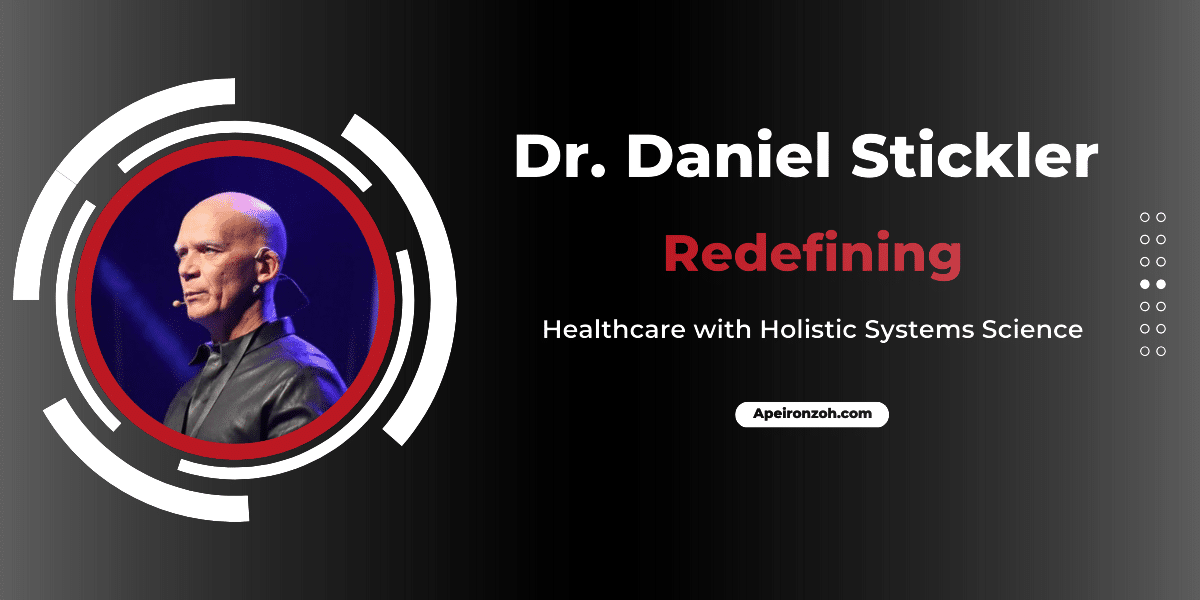
Dr. Daniel Stickler: Redefining Healthcare with Holistic Systems Science

By: Helen Rose

In the rapidly evolving world of healthcare, Dr. Daniel Stickler emerges as an influential leader and innovator in holistic systems health. As the Co-Founder of Apeiron ZOH and a respected voice in human enhancement and longevity, Dr. Stickler is helping to shift traditional medical perspectives with a systems science approach that seeks to transcend conventional healthcare boundaries.

A Revolutionary Approach to Health

Dr. Stickler’s career began in general and vascular surgery, where he spent 10 years excelling in reactive, disease-oriented medicine. However, a pivotal moment led him to question whether there was a better way to practice. “I questioned whether there was a better way to practice medicine rather than in a reactive disease-oriented approach,” Dr. Stickler reflects. He made a significant decision to walk away from traditional medicine and focus on holistic health—a choice he regards as one of the best of his life.

Today, as Chief Medical Officer of Apeiron ZOH, Dr. Stickler oversees research efforts in age rejuvenation and human optimization. His clinical trials highlight notable advancements in areas such as:

  • Follistatin 344 gene plasmid therapy for enhanced physical performance
  • Klotho gene plasmid therapy targeting longevity pathways
  • TB006 compassionate use anti-galectin-3 antibody for cognitive decline and brain inflammation
  • Young fresh frozen plasma (FFP) exchange for age rejuvenation and cognitive recovery
  • Cutting-edge immune age assessment with SapereX

A Global Thought Leader

Dr. Stickler’s influence extends far beyond clinical practice. His expertise is sought after by some of the world’s leading institutions and organizations. He serves as:

  • Clinical Faculty at the Age Management Medical Group
  • Clinical Faculty at the American Academy of Anti-Aging Medicine
  • Medical Director at the Neurohacker Collective
  • Medical Director at Mosaic Biodata
  • Scientific Advisory Board member for TruDiagnostics, DiaDia Health, and Pristine Regenerative Nexus

His work with Silicon Valley companies like Google has focused on exploring how wearable technology, epigenetics, and artificial intelligence could enhance healthcare delivery. As a guest lecturer at Stanford University, he shares his insights on the practical applications of epigenetics in clinical practice, helping to shape the next generation of medical professionals.

Challenging Traditional Paradigms

Dr. Stickler’s journey hasn’t been without challenges. He acknowledges that many of his ideas have been ahead of their time, occasionally encountering resistance from a healthcare system deeply rooted in traditional evidence-based medicine. However, his dedication to innovation and openness to new ideas has helped drive meaningful change in the industry.

“The modern healthcare system is stuck in the dogma of evidence-based medicine and unwilling to consider change even as the evidence mounts,” Dr. Stickler notes. His response has been to lead by example, taking calculated risks and demonstrating the potential value of his holistic systems approach through measurable results.

Leading the Future of Healthcare

Dr. Stickler believes the next frontier in medicine lies in AI-clinician partnerships. Through his work at Mosaic Biodata, he is training AI models to take a holistic systems approach to health, enabling the analysis of massive datasets to guide clinicians more effectively. This work aims to create systems that could provide personalized, holistic healthcare guidance.

His participation in events like the first Longevity Summit in Vaduz, Liechtenstein, further cements his position as a leader in medical innovation. As he puts it, “AI + clinician partnerships is the future and will elevate healthcare exponentially.”

With Dr. Daniel Stickler at the helm, the future of healthcare has the potential to become more integrated, personalized, and effective. His work continues to influence and inspire transformative change in medicine, pushing the boundaries of what’s possible in human health optimization and longevity.


Published by Jeremy S.

Advanced Nanobubble Pool Systems Transform Airpark Pools with AquaLab Innovations

By: Joshua Finley

AquaLab is revolutionizing the pool maintenance landscape in Airpark, AZ, with its advanced nanobubble pool systems. These innovative systems offer a chemical-free solution that relies on nanobubble technology to sanitize pool water efficiently, providing a safer swimming environment without the harsh effects of traditional chemicals. This cutting-edge approach not only enhances water quality but also promotes a more sustainable and eco-friendly maintenance process.

Nanobubble technology is gaining traction for its ability to improve pool cleanliness and safety while reducing the dependence on chlorine and similar substances. The tiny bubbles generated by these systems can penetrate deeper into the water, effectively targeting contaminants and ensuring crystal-clear pools. Residents of Airpark are noticing the benefits, with reduced maintenance costs and improved swimmer safety becoming a reality through these systems.

AquaLab’s commitment to quality and innovation is evident in the widespread adoption of their systems among homeowners in the region. By focusing on sustainability and non-toxic solutions, they are setting a new standard for pool care that resonates with environmentally-conscious individuals. As the demand for safer, more efficient pool systems grows, AquaLab’s nanobubble technology appears poised to lead the charge in transforming how pools are maintained in Airpark.

Overview of AquaLab Nanobubble Pool Systems

AquaLab’s nanobubble pool systems offer an innovative solution for enhancing pool hygiene and water quality through advanced technology. In Airpark, AZ, these systems present multiple advantages, including improved water clarity and reduced chemical usage.

Principles of Nanobubble Technology

Nanobubbles are extremely small gas-filled bubbles that remain suspended in water longer than larger bubbles. This technology leverages their ability to attract and neutralize pollutants, providing effective water sanitization. Nanobubbles create an oxidative environment when they collapse. This helps to destroy contaminants at a microscopic level. The result is cleaner, safer pool water without relying heavily on traditional chemicals like chlorine.

Components of AquaLab Systems

AquaLab systems incorporate advanced components designed to maximize the benefits of nanobubbles. Key features include specialized generators that produce consistent bubble size and distribution throughout the pool. These systems also integrate sensors for real-time monitoring of water quality and automatic adjustments for optimal performance. The equipment is built with durable materials to withstand various environmental conditions common in outdoor pools.

Benefits of Nanobubble-Enriched Water

Nanobubble-enriched water provides several benefits that significantly enhance the swimming experience. The increased oxygen levels and improved clarity lead to a visually appealing pool environment. This technology also minimizes the formation of biofilm and scales, reducing the need for frequent cleaning. By potentially eliminating chlorine use, AquaLab systems help avoid skin and eye irritations, making swimming more enjoyable and health-conscious.

Implementation in Airpark, AZ

The integration of advanced nanobubble pool systems by AquaLab in Airpark, AZ, emphasizes improved residential pool hygiene, streamlined pool maintenance, and a positive impact on local community recreation.

Case Studies: Airpark Residential Pools

In Airpark, residential pools have adopted AquaLab’s nanobubble technology to enhance water quality without relying on traditional chemicals.

Homeowners report a noticeable difference in water clarity and skin comfort, demonstrating the system’s benefits. Nanobubbles, smaller than traditional bubbles, deliver oxygen to the water efficiently, reducing contaminants and algae growth. Specific case studies highlight reduced occurrence of pool closures due to maintenance issues. This underscores the transformative effect of this technology in local residential settings.

Operational Efficiency and Maintenance

AquaLab’s systems simplify pool maintenance by minimizing the need for frequent chemical adjustments.

Technicians in Airpark appreciate the user-friendly nature of these systems, which automate much of the upkeep process. The automated monitoring reduces time spent on water quality checks, allowing more efficient resource allocation. Cost-analysis of local installations shows a decrease in chemical and energy expenses, which contributes to long-term savings for pool owners. These efficiency gains make nanobubble systems a valuable solution for maintaining pools.

Impact on Airpark Community and Recreation

The broader community in Airpark benefits from the healthier pool environments supported by AquaLab’s innovations. By improving pool water conditions, more residents participate in recreational swimming, encouraging a more active lifestyle.

Residents feel more assured about pool safety, resulting in increased pool usage. Public pools, key community assets, have seen an uptick in visits and positive feedback. Aquatic programs have also reported enhanced performance due to improved water quality. The adoption of these systems fosters greater community engagement with swimming and aquatic activities, proving advantageous for Airpark locals.


Published by Mark V.

The Democratization of Hedge Fund Analytics: AI-Powered Platforms Bridging the Gap

The financial industry has long been characterized by a disparity between institutional investors and individual traders, particularly concerning access to sophisticated analytics and data. However, the advent of artificial intelligence (AI) is leveling this playing field, enabling individual traders to harness tools once exclusive to hedge funds.

AI’s Role in Democratizing Financial Analytics

AI-powered platforms are transforming the investment sector by providing individual traders with advanced analytics and insights. These platforms utilize machine learning algorithms to process vast data, providing real-time market analysis and predictive modeling. For example, Solvent.Life integrates AI to deliver personalized investment strategies, allowing users to make informed decisions based on comprehensive data analysis.

According to a report by Mercer, over 90% of investment firms are increasingly adopting AI for asset management, indicating a broader industry trend toward AI integration. This shift is not limited to large institutions; individual traders now have access to AI-driven tools that enhance their trading capabilities.

Bridging the Knowledge Gap

One of the significant barriers for individual traders has been the lack of access to high-quality data and analytical tools. AI platforms address this issue by having user-friendly interfaces that present complex data in an understandable format. These platforms often include educational resources, such as tutorials and webinars, to help users develop their trading skills.

For instance, Solvent.Life provides a comprehensive suite of tools tailored to meet the needs of traders at all levels, from beginners to seasoned investors. This approach empowers individual traders to develop strategies based on data-driven insights, reducing reliance on intuition or limited information.

Cost-Effective Access to Advanced Tools

Traditional hedge funds often require substantial capital and charge high fees, making them inaccessible to many individual investors. AI-powered platforms provide a cost-effective alternative by providing similar analytical capabilities without the associated expenses. This democratization allows individual traders to implement sophisticated strategies that were previously out of reach.

A study by the CFA Institute highlights the impact of AI on asset management, emphasizing its role in reducing costs and increasing efficiency. Individual traders benefit from these advancements, as platforms like Solvent.Life provide access to hedge fund-level analytics at a fraction of the cost.

Real-World Examples of Success

AI-driven platforms have already demonstrated their ability to empower individual traders with tools and insights that were once exclusive to institutional investors. For example, Alpaca Markets, a brokerage integrated with AI tools, allows users to automate trading strategies and backtest them using historical data. This capability enables traders to refine their approaches and continuously improve performance, making AI an invaluable asset in the quest for more precise and effective trading strategies.

Another success story is QuantConnect, a platform that provides algorithmic trading tools to individual investors. With AI, users can design and execute strategies that rival those employed by institutional players. This access to advanced tools has helped bridge the gap between retail and institutional trading, showcasing how technology can democratize financial markets and open doors to innovative trading methods.

Solvent.Life stands out as an exceptional example of how AI-powered platforms are reshaping trading for individual users. The integration of AI-driven market insights, live trading with trusted brokers like Alpaca Markets, and real-time data feeds from stock systems, Solvent.Life enables traders to make informed, strategic decisions. With additional features such as a customizable trading dashboard and an extensive library of educational resources, Solvent.Life empowers users to not only compete with institutional players but also excel in crafting data-driven strategies tailored to their personal trading goals. This blend of advanced functionality and user accessibility places Solvent.Life at the forefront of AI success stories in the financial sector.

Expanding Opportunities for Personalization 

AI-powered platforms excel in producing tailored investment strategies, allowing traders to adapt their approaches to individual preferences and circumstances. Thanks to their tools that align with specific risk tolerance, financial goals, and market preferences, these platforms grant a unique level of control to users. Solvent.Life, for example, empowers traders to train their AI using their personal data, resulting in customized alerts and strategies that reflect their trading habits and priorities.

This personalization transforms the experience for individual traders by allowing them to focus on strategies that align with their financial objectives. Customization also enhances user engagement, as traders can see the direct impact of their inputs on performance outcomes. Deloitte highlights this trend, emphasizing that personalization in financial services, supported by AI and data analytics, leads to more relevant and effective investment solutions.

Platforms like Solvent.Life make these advanced tools accessible positioning traders to make more informed decisions. The ability to personalize every aspect of trading not only makes the process more efficient but also fosters a deeper understanding of market behavior. As users refine their strategies over time, they benefit from a continuous feedback loop that improves their overall approach to investing.

Challenges and Ethical Considerations

While AI has significant advantages, its adoption raises important challenges and ethical considerations that must be addressed. Data privacy remains a key concern, as these platforms require access to users’ sensitive financial information to deliver tailored insights. Ensuring robust encryption, secure data handling practices, and compliance with stringent data protection laws is vital to maintain user trust.

The use of AI in trading also introduces potential risks associated with over-automation. While algorithms can process data at an extraordinary scale, traders must remain active participants in the decision-making process to ensure the strategies align with their goals. Dependence on machine-generated insights without proper oversight could lead to unintended outcomes or misaligned investments.

To mitigate these risks, education and transparency become critical elements of AI integration. Platforms like Solvent.Life addresses these concerns by providing users with tools and resources to understand how algorithms operate and how they should be used responsibly. These platforms balance automation with human judgment, ensuring traders can harness AI’s power while remaining in control of their financial decisions.

The Future of Individual Trading

The integration of AI in financial markets is poised to expand further, with even greater opportunities for individual traders. As these platforms continue to evolve, they will likely incorporate more advanced features, such as natural language processing and sentiment analysis, to enhance decision-making.

Further, the increasing availability of alternative data sources, such as satellite imagery and social media trends, will provide traders with deeper insights into market dynamics. This trend is supported by a PwC report, which predicts that the use of AI in finance will grow significantly in the coming years.

The takeaway from all this is that AI-powered platforms are bridging the gap between institutional and individual trading. They provide access to advanced analytics, personalized strategies, and cost-effective tools. This transformation empowers individual traders to compete on a level playing field, reshaping the financial industry and opening new possibilities for investors of all backgrounds. As these technologies continue to advance, the democratization of financial analytics will only accelerate, leading to a brighter future for individual traders.

Disclaimer: This content is for informational purposes only and is not intended as financial advice, nor does it replace professional financial advice, investment advice, or any other type of advice. You should seek the advice of a qualified financial advisor or other professional before making any financial decisions.


Published by Mark V.

How Healthcare Startups Benefit from Accelerator Programs

Healthcare startups face unique challenges that can make or break their ability to scale and achieve long-term success. These challenges include stringent regulatory requirements, significant capital needs, and the demand for market validation. Accelerator programs have become vital in addressing these hurdles, providing healthcare startups with the resources, mentorship, and opportunities to thrive in a competitive industry. This article explores the multifaceted benefits that healthcare startups gain from participating in accelerator programs.

Access to Capital and Funding

One of the most critical advantages for healthcare startups in accelerator programs is access to capital. Unlike other industries, healthcare innovations often require significant investment for research and development, clinical trials, and regulatory approval processes. Accelerator programs typically connect startups with investors, venture capitalists, and financial institutions that specialize in healthcare innovation. This access to capital is not limited to initial seed funding; accelerator programs often position startups for future rounds of financing, which are crucial for growth.

Moreover, many accelerators provide grants or non-equity financial support, allowing startups to retain control of their company while gaining the financial resources needed to scale. This kind of support is particularly essential for healthcare companies, where the time from concept to market is often longer due to regulatory approvals. The funding provided through these programs can be a lifeline, allowing healthcare startups to continue essential research and product development without the overwhelming pressure to generate immediate revenue.

Mentorship and Industry Expertise

Another key benefit of healthcare accelerator programs is the mentorship offered by industry veterans. This guidance is crucial for startups attempting to navigate the complex healthcare landscape. Mentors often include seasoned healthcare executives, successful entrepreneurs, regulatory experts, and investors who have a deep understanding of the challenges specific to healthcare. Their experience helps startups refine their business models, navigate regulatory frameworks, and strategize for market entry.

For healthcare startups, mentorship provides invaluable insights into how to engage with stakeholders, including hospitals, insurance companies, and government entities. For example, understanding the nuances of healthcare procurement or how to structure reimbursement models with insurers can be the difference between success and failure. Mentors also help startups anticipate market shifts, regulatory changes, and emerging trends that could affect their business strategies.

Regulatory Guidance and Compliance Support

Navigating the regulatory landscape is one of the most daunting challenges healthcare startups face. The healthcare industry is governed by a myriad of regulations, such as FDA approvals, HIPAA compliance, and global healthcare standards, all of which require thorough understanding and meticulous adherence. Failure to comply with these regulations can result in costly penalties, product delays, or even business closure.

Accelerator programs offer regulatory guidance through workshops, training, and consultations with legal and compliance experts. Startups receive support in preparing for clinical trials, managing intellectual property, and ensuring data privacy, which are all essential in healthcare. This guidance is particularly important for companies developing medical devices or pharmaceutical products, as regulatory approval processes can be lengthy and complex. By providing a framework for compliance, accelerator programs help startups avoid potential roadblocks and expedite their path to market.

Networking Opportunities

In addition to financial and regulatory support, accelerator programs offer healthcare startups extensive networking opportunities. These networks can be instrumental in connecting startups with key players in the healthcare ecosystem, such as hospitals, clinics, pharmaceutical companies, insurers, and other potential partners. Networking events, such as demo days, pitch competitions, and industry conferences, allow startups to showcase their products and gain visibility.

Through these networking opportunities, startups often secure partnerships that are critical for conducting clinical trials, securing pilot programs, or gaining early customer feedback. For instance, collaborating with a major healthcare provider could allow a startup to test its product in a real-world clinical setting, providing valuable data for further development and regulatory approval. Furthermore, accelerator programs often have ties with corporate sponsors, who may become early adopters or investors in promising startups.

Scalability and Business Development Support

Scaling a healthcare startup presents unique challenges due to the regulatory demands, capital intensity, and long timelines for product validation. Accelerator programs help startups scale by providing them with business development support, which can range from refining their go-to-market strategies to optimizing operational processes. Startups gain access to resources for improving supply chain management, refining distribution channels, and enhancing customer acquisition strategies.

Accelerators also offer support in hiring and building robust teams. Healthcare startups, in particular, need teams that combine clinical knowledge, technical expertise, and business acumen. Accelerator programs often have a pool of experienced healthcare professionals and executives that startups can tap into when building out their teams.

Moreover, accelerator programs help startups prepare for the scalability challenges that come with product growth, such as managing increasing customer demand, improving production capabilities, and maintaining quality control as operations expand.

Market Validation and Pilot Programs

Market validation is a critical step for any healthcare startup, and accelerator programs play an essential role in helping startups prove their concepts. Through partnerships with healthcare institutions, accelerator programs often provide startups with opportunities to run pilot programs. These pilots allow startups to test their products or services in real-world settings, gather user feedback, and refine their offerings.

For example, a healthcare startup might collaborate with a hospital to test a new medical device or software solution. By demonstrating efficacy in a real-world environment, startups can attract additional investors and customers, while also building a strong case for regulatory approvals. Successful pilot programs not only provide crucial data but also serve as a powerful marketing tool when approaching potential buyers or investors.

Healthcare startups benefit immensely from participating in accelerator programs, which provide a comprehensive suite of resources aimed at overcoming the unique challenges of the healthcare industry. From securing critical funding and receiving expert mentorship to navigating complex regulations and validating products in real-world settings, accelerator programs enable healthcare startups to accelerate their growth and market success. As the healthcare landscape continues to evolve, startups that leverage the opportunities offered by accelerator programs will be well-positioned to lead the next wave of innovation in the sector.

Fast Charging: Does It Erode Phone Batteries Faster?

With the increasing demand for quick and convenient charging solutions, fast charging technology has become a popular feature in modern smartphones. However, many users wonder, does fast charging erode phone batteries faster? This article explores the effects of fast charging on battery health and longevity, providing insights based on authoritative sources.

Understanding Fast Charging

Fast charging technology allows smartphones to recharge their batteries at a much quicker rate compared to standard charging. This is achieved by increasing the power supplied to the battery, usually through higher voltage or current.

Most fast charging technologies use a combination of higher voltage and current to deliver more power to the battery. Common fast charging standards include Qualcomm’s Quick Charge, USB Power Delivery (USB-PD), and proprietary solutions from manufacturers like Apple and Samsung.

The Impact on Battery Health

One of the primary concerns with fast charging is the generation of heat. When a battery is charged quickly, it tends to produce more heat due to the higher power input. Excessive heat can accelerate the chemical reactions within the battery, potentially leading to faster degradation.

Fast charging can put additional stress on the battery’s chemical components. Lithium-ion batteries, which are commonly used in smartphones, undergo chemical reactions during charging and discharging. Rapid charging can strain these reactions, causing wear and tear over time.

Research and Findings

Several studies have investigated the effects of fast charging on battery health. Research conducted by battery manufacturers and independent labs suggests that while fast charging does cause a slight increase in degradation, the difference is not significant enough to outweigh the benefits of faster charging times for most users.

Smartphone manufacturers have implemented various measures to mitigate the impact of fast charging on battery health. These include sophisticated battery management systems that regulate charging speeds and temperature control mechanisms to prevent overheating.

Practical Tips for Prolonging Battery Life

Heat is a major factor in battery degradation. To prolong your battery’s lifespan, avoid exposing your phone to extreme temperatures. This includes not leaving it in direct sunlight or in a hot car.

Using chargers and cables approved by the smartphone manufacturer ensures that the device receives the correct amount of power. Third-party chargers may not be optimized for your phone, potentially causing harm to the battery.

Frequent full discharges and charges can wear out the battery faster. Try to keep your battery level between 20% and 80% to reduce strain. Additionally, avoid overnight charging, as this can keep the battery at 100% for extended periods, which can be detrimental.

Balancing Convenience and Longevity

While fast charging is undoubtedly convenient, it comes with a trade-off between convenience and battery longevity. For most users, the slight increase in degradation may be worth the time saved. However, those who prioritize battery health might consider using standard charging methods more frequently.

The technology industry continues to develop new ways to enhance battery life and charging efficiency. Innovations such as solid-state batteries and improved battery management systems promise to reduce the negative impacts of fast charging in the future.

So, does fast charging erode phone batteries faster? The answer is nuanced. While fast charging does contribute to slightly faster battery degradation due to heat and chemical stress, the effect is generally minimal for most users. By following best practices, such as avoiding extreme temperatures and using manufacturer-approved chargers, you can mitigate these effects and enjoy the convenience of fast charging without significantly compromising your battery’s longevity.

Fast charging technology is a testament to the advancements in the smartphone industry, offering a balance between convenience and durability. As technology evolves, we can expect even more improvements in battery performance and charging efficiency.