Celia Reeves: Empowering You to Make Smart Health Choices

Navigating the healthcare landscape can feel overwhelming with the multitude of medical options available. Knowing these choices is like having a compass in an intricate maze, guiding individuals through the complexities of healthcare decisions that impact them and their families. Celia Reeves emphasizes the importance of understanding these options to make informed decisions.

Celia Reeves, also known as Celia “Cici” Reeves, the dynamic CEO and founder of Medical Coding Mama, points out that surgery, a common aspect of modern medicine, presents various choices from elective procedures to urgent life-saving operations. Deciding whether to undergo surgery involves weighing potential benefits against risks and considering recovery times. It is essential for patients and their families to discuss these aspects thoroughly with healthcare professionals to make informed decisions.

According to Reeves, preparing for unforeseen circumstances through advance directives, such as living wills, is crucial. A living will is a legal document that outlines an individual’s preferences for medical treatment should they become unable to communicate their decisions due to illness or incapacitation. This preparation not only clarifies the individual’s wishes but also reduces the emotional burden on family members, helping them honor these preferences.

Reeves also highlights the importance of involving family in these decisions. By holding family council meetings to discuss available medical options, all members have the opportunity to contribute to the discussion. This is particularly beneficial when making decisions for elderly parents, ensuring that there is a consensus on care preferences and a clear understanding of the advantages and disadvantages of each option.

Celia Reeves Empowering You to Make Smart Health Choices

Photo Courtesy: Celia Reeves

Reeves emphasizes that insurance choices play a pivotal role in accessing healthcare services. Knowing what one’s insurance covers—and what it doesn’t—can have profound implications on the ability to receive treatment without facing financial hardship. Chronic conditions and medication coverage are key factors in choosing an insurance plan that meets one’s needs. Initiating conversations with insurance providers about coverage specifics can prevent unwelcome surprises down the line and ensure that essential treatments are accessible.

Staying informed about medical options extends beyond discussions with healthcare providers and insurance companies. Reeves points out that resources such as disease-specific foundations offer valuable insights into the latest research and treatments available. Moreover, reputable medical websites provide current information that can help patients understand their conditions better and explore potential treatment avenues.

Ultimately, empowering oneself with knowledge about medical options leads to more informed health decisions—for both immediate concerns and long-term well-being. Reeves believes this fosters an environment where patients take active roles in their care journeys alongside their families, guided by clear communication with healthcare professionals.

Understanding surgery options; preparing advanced directives like living wills; wisely choosing insurance plans; leveraging resources such as foundation websites; and consulting trusted medical practitioners—all these elements converge to illuminate pathways toward achieving optimal health outcomes while minimizing stress on individuals and their loved ones.

As people navigate their health journeys, let them remember that knowledge is power—especially when it comes to making informed decisions about their care. By embracing this ethos, Reeves advocates that individuals not only ensure their well-being but also contribute towards creating a more transparent, responsive healthcare system that respects individual preferences while striving for excellence in patient care.


Published by: Khy Talara

Good Condition Is Setting a New Standard in Luxury Skincare

By: Jennifer Down

In a world where the beauty industry is constantly evolving, Good Condition has emerged as a pioneering brand that seamlessly blends luxury with sustainability. Founded by Cherie Baughn in June 2023, this innovative skincare company is capturing the attention of discerning consumers and beauty enthusiasts who prioritize both quality and environmental responsibility.

Good Condition was born from Cherie Baughn’s passion for good design and her commitment to creating sustainable products. With a background as a usability and accessibility expert, Cherie leveraged her expertise to develop a brand that offers the best of both worlds: high-quality skincare products and eco-friendly practices. “I wanted to create a skincare line that not only delivers exceptional results but also aligns with the values of today’s conscious consumers,” Cherie explains.

The brand’s product line features luxurious lotion bars, each meticulously crafted by hand in small batches using only USDA-certified organic ingredients. This ensures that every product is free from synthetic fertilizers and pesticides, providing consumers with pure and safe skincare options. “Our ingredients are carefully selected to ensure the highest standards of quality and safety,” says Cherie. “We believe that what you put on your skin should be as clean and natural as possible.”

Good Condition’s lotion bars are designed to cater to various skin types and preferences. The Plain is a fragrance-free option perfect for sensitive skin, while The Luxe features natural, unrefined cocoa butter for a truly indulgent experience. Other offerings include The Standard, infused with plum kernel oil and coconut essential oil, and The Repair, which combines French lavender and vanilla for soothing skin repair. For facial care, the brand offers The Day Glow, enriched with Vitamin E and squalane for daily nourishment, and The Night Recovery, which contains natural retinol for gentle nighttime skin renewal.

One of the standout features of Good Condition is its commitment to sustainability. All products are packaged in biodegradable, compostable, and 100% recyclable paper holders, eliminating the need for plastic. This eco-friendly approach not only reduces waste but also resonates with consumers who are mindful of their environmental footprint. “Our packaging reflects our dedication to sustainability,” Cherie notes. “We want to make it easy for our customers to make choices that are good for their skin and the planet.”

In addition to its exceptional product offerings, Good Condition operates with a strong ethical foundation. The brand is MADE SAFE® and Leaping Bunny® certified, ensuring that all products are free from harmful chemicals and have not been tested on animals. This commitment to ethical practices further solidifies Good Condition’s reputation as a leader in the luxury skincare market.

Good Condition recently opened a flagship store in the historic San Marco district of Jacksonville, Florida. This new location allows customers to experience the brand’s products firsthand and learn more about its sustainable practices. “We’re excited to have a physical space where we can connect with our customers and showcase our commitment to quality and sustainability,” says Cherie.

Good Condition Is Setting a New Standard in Luxury Skincare_2

Photo Courtesy: Good Condition

As the brand continues to grow, it has become a favorite among influencers and beauty aficionados who appreciate its unique blend of luxury and responsibility. With seasonal releases and plans for new specialty facial treatments, Good Condition is poised to continue its upward trajectory. “We’re constantly looking for ways to innovate and expand our product line while staying true to our core values,” Cherie shares.

Good Condition’s rise in popularity is a testament to the growing demand for products that are both effective and environmentally friendly. As Cherie and her team continue to push the boundaries of what luxury skincare can be, it’s clear that Good Condition is not just a brand—it’s a movement towards a more sustainable and luxurious future in beauty.

Explore the full range of products at Good Condition and join the community of those who believe that luxury and sustainability can go hand in hand.

Published by: Martin De Juan

Different Types of Aggregate Screens: A Comprehensive Guide

In the construction and mining industries, aggregate screens play a crucial role in the processing and classification of various materials. Selecting the appropriate type of aggregate screen can significantly impact the efficiency and quality of the final product. This comprehensive guide explores the different types of aggregate screens, their specific applications, and the advantages they offer.

What is an Aggregate Screen?

An aggregate screen is a mechanical device that separates and classifies different sizes of aggregate materials, such as sand, gravel, and crushed stone. These screens are essential in ensuring the quality and consistency of materials used in construction projects, including roads, buildings, and infrastructure.

Types of Aggregate Screens

Vibrating Screens

Vibrating screens are one of the most common types of aggregate screens. They utilize vibration to move materials across the screen surface, allowing smaller particles to pass through the openings while larger particles remain on top. These screens are highly efficient and can handle a wide range of materials.

Applications: Ideal for sorting and grading materials in mining, quarrying, and recycling operations.
Advantages: High efficiency, handling large volumes, and customizable screen sizes.

Trommel Screens

Trommel screens are cylindrical drums with perforated sides that rotate to separate materials based on size. As the drum rotates, smaller particles fall through the holes while larger particles continue to move along the drum’s length.

Applications: Commonly used in waste processing, composting, and aggregate screening.
Advantages: Effective for screening moist and sticky materials, easy to maintain, and versatile.

Different Types of Aggregate Screens: A Comprehensive Guide

Photo Courtesy: SRK Metals

Grizzly Screens

Grizzly screens consist of a series of heavy-duty bars or rails set at a specific angle. These screens are used to initially screen large rocks and boulders, allowing smaller materials to pass through while retaining the larger ones.

Applications: Suitable for primary screening in mining and quarrying operations.
Advantages: Robust construction, handling large and heavy materials and low maintenance.

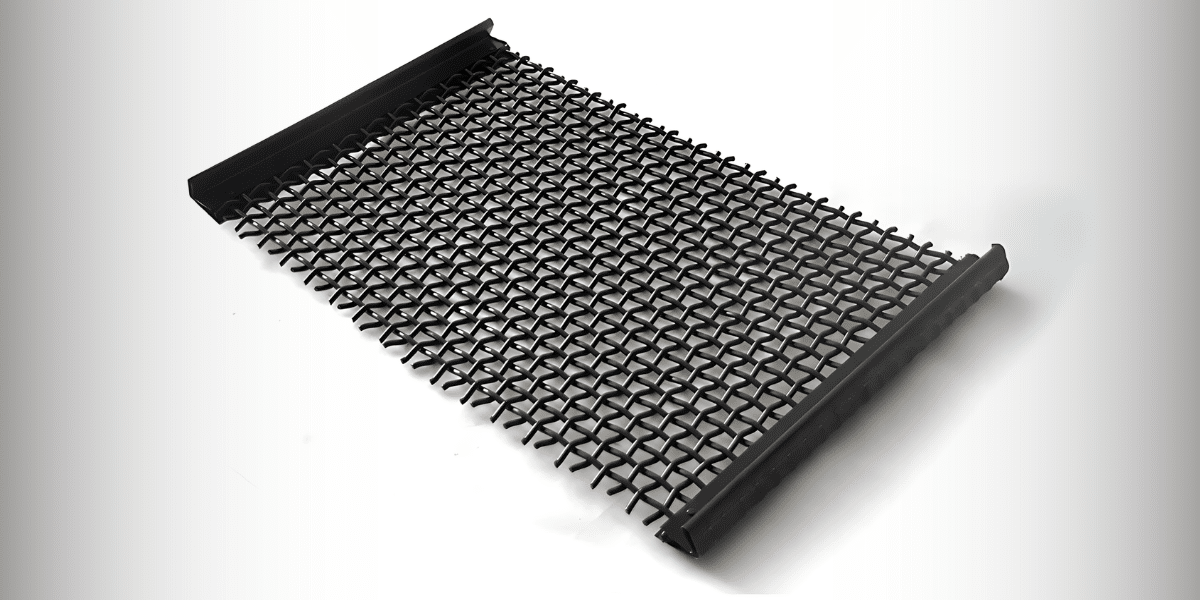
Plain Weave Screens

A plain weave screen is a woven wire screen that provides precise and consistent openings. These screens are commonly used for fine screening and classification of materials.

Applications: Used in construction, mining, and industrial processes for fine material screening.
Advantages: High precision, durability, and cost-effectiveness.

Self-Cleaning Screens

Self cleaning screens are designed to prevent clogging and blinding and ensure continuous operation. They feature unique wire configurations that allow the screen to flex and release trapped materials.

Applications: Ideal for screening materials prone to clogging, such as damp or sticky aggregates.
Advantages: Reduced downtime, increased efficiency, and minimal maintenance.

Different Types of Aggregate Screens: A Comprehensive Guide

Photo Courtesy: SRK Metals

Piano Wire Screens

Piano wire screens are made from individual wires that are tensioned and arranged parallel to each other. These screens offer high open areas and excellent screening efficiency, making them suitable for fine and difficult-to-screen materials.

Applications: Used in quarrying, mining, and recycling for fine and accurate screening.
Advantages: High open area, efficient material separation, and adaptability to various materials.

Optimizing Aggregate Screening

To optimize aggregate screening, choosing the right screen type for the specific application is essential. Factors to consider include the material type, moisture content, particle size, and desired throughput. Additionally, regular maintenance and inspection of screens are crucial to ensure optimal performance and longevity.

Final Thoughts

Understanding the different types of aggregate screens and their specific applications is crucial for optimizing material processing in the construction and mining industries. By selecting the right screen and maintaining it properly, you can ensure efficient and high-quality screening results.

For more information on the various types of aggregate screens and to find the right screening solutions for your project, visit SRK Metals. Explore its range of products, including plain weave screens, self-cleaning screens, and piano wire screens, and discover how it can help you achieve superior screening performance.


Published By: Aize Perez