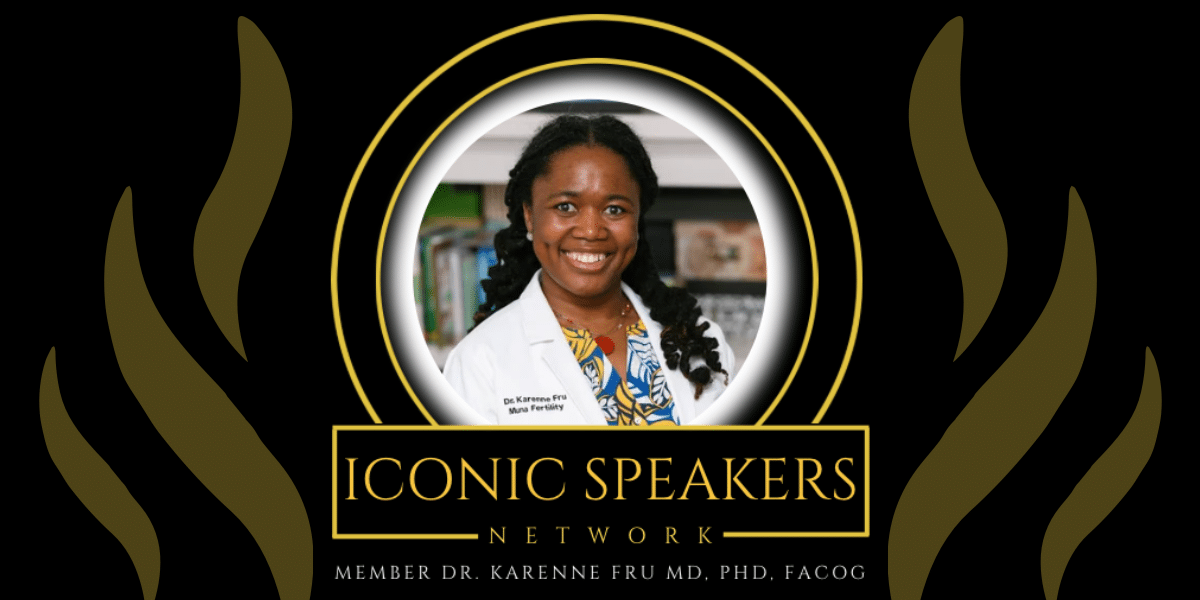
Innovation in Fertility Care: Muna and Dr. Karenne Fru’s Revolutionary Approach to Reproductive Health

In the realm of reproductive health, the journey to parenthood is often filled with obstacles, complexities, and deeply personal choices. Muna Fertility emerges as a beacon of hope and innovation for many who feel sidelined by conventional fertility services. The foundation of Muna Fertility is built on inclusivity, tailored care, and advanced technology, revolutionizing the delivery of fertility support to meet the diverse needs of individuals.

The ethos of Muna Fertility draws from the vision of its founder, Dr. Karenne Fru, who was inspired by a personal mission to create a fertility care model that prioritizes the often overlooked or marginalized. Dr. Fru’s approach emphasizes the importance of highly personalized care plans, enabling a collaborative partnership between doctor and patient. This philosophy is pivotal to Muna’s operations and represents a shift in how reproductive services engage with their communities.

The latest facility of Muna Fertility exemplifies this blend of compassion and innovation, designed to provide a comforting and understanding space. Beyond being a clinic, it serves as a haven where individuals and couples receive support and knowledge throughout their fertility journey.

Muna has committed to making its services affordable, addressing the financial barriers that often hinder family-building aspirations. By creating accessible pricing models, Muna not only makes high-quality fertility treatments available to a wider audience but also upholds its dedication to social equity.

Education and patient care stand as foundational pillars of Muna, which shines as a beacon of transparency and empowerment in an industry frequently critiqued for its lack of clarity. Muna’s emphasis on education, personalized counseling, and open communication arms patients with the information necessary to make informed choices about their treatment options.

The range of treatments offered at Muna mirrors its commitment to customized care, encompassing everything from traditional IVF to egg freezing and services for LGBTQ+ families. This diversity in services conveys that fertility solutions should be as unique as the individuals seeking them.

Through social media, Muna builds a vibrant community, sharing stories of journeys and successes in reproductive health. These narratives emphasize that success encompasses more than positive outcomes; it’s about feeling acknowledged and supported throughout the experience.

At the core of Muna is Dr. Karenne Fru’s vision of an inclusive world where everyone can pursue parenthood without facing discrimination or exclusion. This vision has propelled Muna beyond a mere fertility clinic, positioning it as a pioneer in inclusive healthcare practices.

Looking to the future, Dr. Fru and her team at Muna Fertility maintain a steadfast belief in the potential to overcome barriers and nurture dreams, offering personalized care for every individual.

In sum, Muna offers more than just fertility treatments—it offers hope. This hope is based on concrete actions to make inclusive reproductive healthcare available to all, continuing the journey towards fulfilling Dr. Fru’s vision where every prospective parent can confidently embrace the phrase “My Child.”

Published by: Nelly Chavez

Exploring the Interplay of Dance, Rotational Inertia, and Quantum Mechanics: A Fusion of Art and Science

In the context of dance, the concept of rotational inertia, or the resistance of an object to changes in its rotation, becomes crucial in understanding the fluidity and grace of dance movements. As dancers spin and turn, their bodies exhibit varying levels of rotational inertia, which impacts the speed and precision of their movements. This exploration of rotational inertia also leads to a deeper understanding of eleven-dimensional hyperspace.

To fully grasp the complexities of eleven-dimensional hyperspace, it’s essential to delve into the use of increasing partial derivatives applied to the limits of integrals. This mathematical approach allows for a more thorough exploration of the multidimensional space, revealing patterns and connections that may not be immediately apparent. By applying these mathematical principles in the study of dance and rotational inertia, a deeper insight into the basic mechanics of movement and space can be achieved.

Fundamentally, by focusing on the intricate relationship among rotational inertia, dance, and mathematical concepts such as partial derivatives and integral limits, we can gain a more comprehensive and integrated understanding of eleven-dimensional hyperspace. This interdisciplinary approach sheds light on the interconnectedness of seemingly disparate fields, offering new perspectives and insights into the nature of movement and space.

Fundamentally, the performer has the ability to immediately adjust their actions to enhance the influences affecting their immediate environment. This skill can result in a more dynamic and powerful performance as the performer can manipulate the surroundings in real-time. As the performer delves deeper into their movements, they can uncover new domains of expression and creativity. This increased control allows for a more precise and fluid execution of their movements, ultimately enhancing the overall performance quality. One of the most intriguing findings of the study was the relationship between gravitational acceleration and higher derivatives (changes in physical entities in space). As the dancers traversed each dimension, the gravitational acceleration amplified, leading to a more animated and vigorous performance. This discovery not only illuminates the physics of dancing in an eleven-dimensional hyperspace but also lays the groundwork for dancers to explore and push the boundaries of their artistry.

The study not only explored the concept of gravitational energy but also investigated its effect on the fabric of space-time. By understanding how gravitational energy distorts space-time, researchers were able to gain knowledge about the fundamental forces at work in the universe.

A key finding of the study was the essential role of circular motion in harnessing the power of gravity to enhance strength. By using the gravitational force in a circular manner, individuals can increase their physical abilities and build muscle mass more effectively. This highlights the interconnectedness of gravity and motion in shaping our physical capabilities.

In conclusion, the study shed light on the intricate relationship between gravitational energy, deformation of space-time, and physical strength. By probing these connections further, researchers hope to discover new possibilities for enhancing human performance and understanding the fundamental laws of the universe.

Incorporating the concept of rotational inertia into dance can truly transform our understanding and appreciation of dance. By applying the principles of rotational inertia, dancers can reach a level of smoothness and elegance that was previously unreachable. This not only improves the technical elements of dance, but also introduces new avenues for creativity and expression.

The idea of rotational inertia enables dancers to move in a more vibrant and effective way, generating a feeling of momentum and vitality that brings richness and intricacy to their movements. By grasping how rotational inertia impacts their bodies and movements, dancers can discover new methods of conveying emotions and narrating stories through their dance.

Moreover, incorporating quantum mechanics into dance paves the way for a plethora of new opportunities. The principles of uncertainty and superposition in quantum mechanics can motivate dancers to challenge the limits of conventional dance styles and delve into uncharted territories of movement and expression. This blend of science and art could potentially lift dance to an unprecedented level of creativity and innovation.

To sum up, the amalgamation of rotational inertia and quantum mechanics into dance can significantly revolutionize this art form. By adopting these scientific concepts, dancers can unleash new heights of creativity and expression, extending the limits of what can be achieved in the dance world.

This study holds significant implications that extend beyond the realm of dance and penetrate into the field of quantum mechanics. By demonstrating the possibility of applying scientific concepts to artistic expression, it reveals a multitude of opportunities for groundbreaking discoveries. This fusion of art and science highlights the interconnectedness of seemingly disparate fields and the potential for collaboration and innovation. The study challenges traditional boundaries and showcases the power of interdisciplinary approaches in pushing the boundaries of knowledge and creativity. It emphasizes the importance of unconventional thinking and exploring new ways of addressing problems and challenges. Essentially, the implications of this study are vast and have the potential to revolutionize both the fields of dance and quantum mechanics.

For more information, contact Gavriel Dardashti at 786-930-1880 or email gavieldardashti@gmail.com

You are welcome to visit their website at www.emotionbasedmathematics.com


Published by: Khy Talara

Empowering Through Education: An Interview with Bill Taverner

By: Travis Hutton

Bill Taverner, a pioneering figure in sex education, has dedicated over three decades to advancing the field with an unwavering commitment to professional development, inclusivity, and social justice. Born and raised in Staten Island, New York, Taverner’s early engagement with community theatre and a profound love for the New York Mets hinted at his future prowess in fostering connections and addressing audiences with empathy and insight. He embarked on his academic journey at the State University of New York at Albany, earning a Bachelor of Arts in psychology, followed by a Master of Arts in human sexuality from New York University. His studies also took him abroad to Copenhagen, Denmark, for a cross-cultural international program, enriching his perspective on global sexual health issues.

As the Executive Director of the Center for Sex Education (CSE) and the founder and president of the Sex Ed Lecture Series, Taverner has been instrumental in creating platforms for educators to share knowledge and resources, especially during challenging times like the COVID-19 pandemic. His role as editor-in-chief of the “American Journal of Sexuality Education” further underscores his commitment to academic rigor and accessible education.

Taverner’s extensive publishing record, including over 85 works ranging from curricula to articles and books, demonstrates his versatility and dedication to spreading comprehensive sex education. His latest works focus on demystifying sex education research and advocating for diversity and inclusion within the field.

His advocacy efforts have not gone unnoticed, as evidenced by multiple awards and recognitions, including prestigious acknowledgments from AASECT and the American Board of Sexology. Taverner’s impact extends beyond the United States, with training sessions conducted in various countries, highlighting his global influence on sexual health education.

Beyond his professional achievements, Taverner remains a devoted Mets fan, a loving father to his adult children, and an advocate for a balanced life. His journey from a passionate young actor to a leading sex educator embodies a commitment to lifelong learning, collaboration, and the pursuit of social justice in sexual health.

Q&A with Bill Taverner, Pioneer in Sex Education

Can you share how your early interest in community theatre has influenced your approach to sex education?

My time in community theatre taught me the power of storytelling and how to connect with an audience. In sex education, it’s crucial to engage your audience with compelling narratives that resonate with their experiences. Theatre also instilled in me the importance of empathy and understanding diverse perspectives, which is essential when addressing sensitive topics like sexuality.

What inspired you to pursue a career in sex education?

My inspiration stemmed from a realization of the significant gap in comprehensive, inclusive sex education. This gap included my own lack of understanding, which became quickly apparent with my first undergraduate course in human sexuality. During my studies in psychology and human sexuality, I recognized the profound impact that knowledgeable, compassionate sex education could have on individuals and society. I wanted to contribute to a world where everyone has access to the information they need to make informed decisions about their sexual health and relationships.

How did the Sex Ed Lecture Series come about, and what impact has it had since its inception?

The Sex Ed Lecture Series was born out of a necessity during the COVID-19 pandemic to keep the community of sexuality educators connected and continuously learning. We’ve hosted over 200 webinars, providing a rich repository of resources for professionals. The impact has been phenomenal, fostering a sense of unity, promoting ongoing professional development, and expanding the reach of comprehensive sex education practices worldwide.

With such a vast number of publications, how do you decide what topics to tackle in your work?

My decisions are often guided by identifying gaps in the current sex education literature, feedback from the community, and emerging trends and needs in sexual health education. I aim to address topics that will have the most significant impact, promote inclusivity, and support educators and learners in navigating the complexities of human sexuality.

Reflecting on your awards and recognitions, which achievement do you find most rewarding, and why?

While each award holds a special place for me, being recently named a Diplomate by the American Board of Sexology stands out. It’s not just a recognition of my contributions but also a testament to the progress and increasing recognition of sex education as a vital field. This acknowledgment fuels my commitment to advancing the field further.

Alternate answer: Every year The Center for Sex Education gives out a Golden Brick Award, named for Peggy Brick, who led the Center before me and was one of my mentors. The award recognizes one’s contributions to sex education throughout the United States. One year, the Planned Parenthood education staff surprised me with an honorary Golden Brick Award, knowing how much Peggy meant to me, and knowing that I would never issue the award to myself! Peggy was a force in my professional career, teaching me how to develop interactive lesson plans that center the needs of the learner.

How do you see the future of sex education evolving, and what challenges do you anticipate?

The future of sex education is digital, global, and inclusive. We’re moving towards more accessible, interactive, and personalized education platforms. However, challenges remain, such as combating misinformation, ensuring equity in access to quality sex education, and continuously adapting to societal changes. The key is to remain flexible, innovative, and committed to inclusivity.

What advice do you have for those aspiring to work in sex education?

My advice is threefold: First, invest in your education and stay informed about the latest research and trends in the field. Second, engage with the community—networking is crucial for growth and learning. Lastly, approach this work with empathy, patience, and an open mind. Sex education is not just about imparting knowledge; it’s about fostering understanding, respect, and compassion.

Key Takeaways

  • Collaboration is Crucial for Success: Bill Taverner emphasizes the importance of collaborative efforts in achieving meaningful progress in sex education. His work, ranging from organizing the National Sex Ed Conference and founding the Sex Ed Lecture Series to editing significant publications, highlights how partnerships and sharing expertise are vital for advancing the field and creating impactful educational materials.
  • Commitment to Inclusivity and Social Justice: Taverner’s career is marked by a steadfast commitment to inclusivity and social justice. His advocacy for comprehensive sex education at congressional briefings, along with his efforts to ensure educational content is inclusive of diverse backgrounds and perspectives, reflects his dedication to creating a more equitable and informed society.
  • Lifelong Learning and Professional Development: Taverner’s journey illustrates the importance of continuous learning and professional growth. Through his extensive publications, participation in global training programs, and leadership roles in educational initiatives, he demonstrates that being open to new knowledge and experiences is key to personal and professional development in the field of sex education.


Published By: Aize Perez